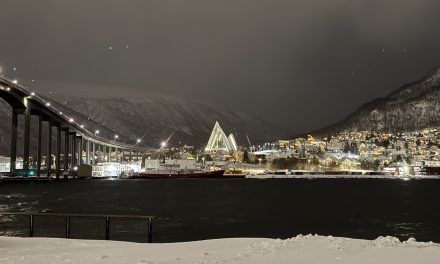
Latitude: 68.4°
Weather: -2, ☃️ Sunrise: – Sunset: –
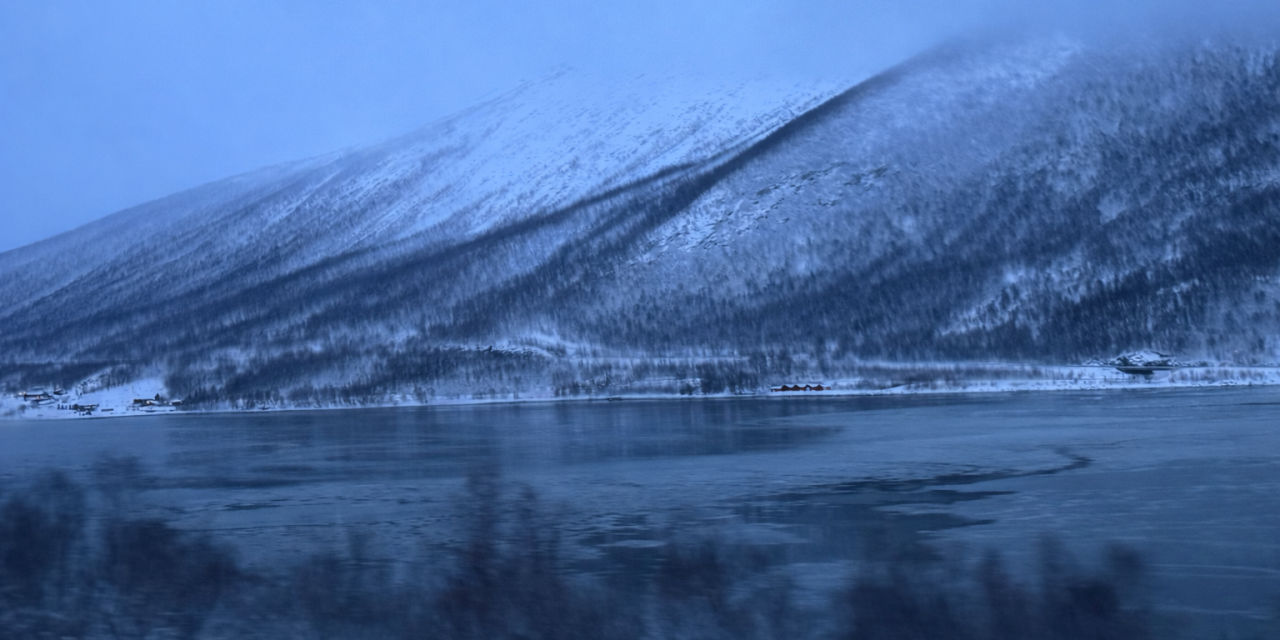
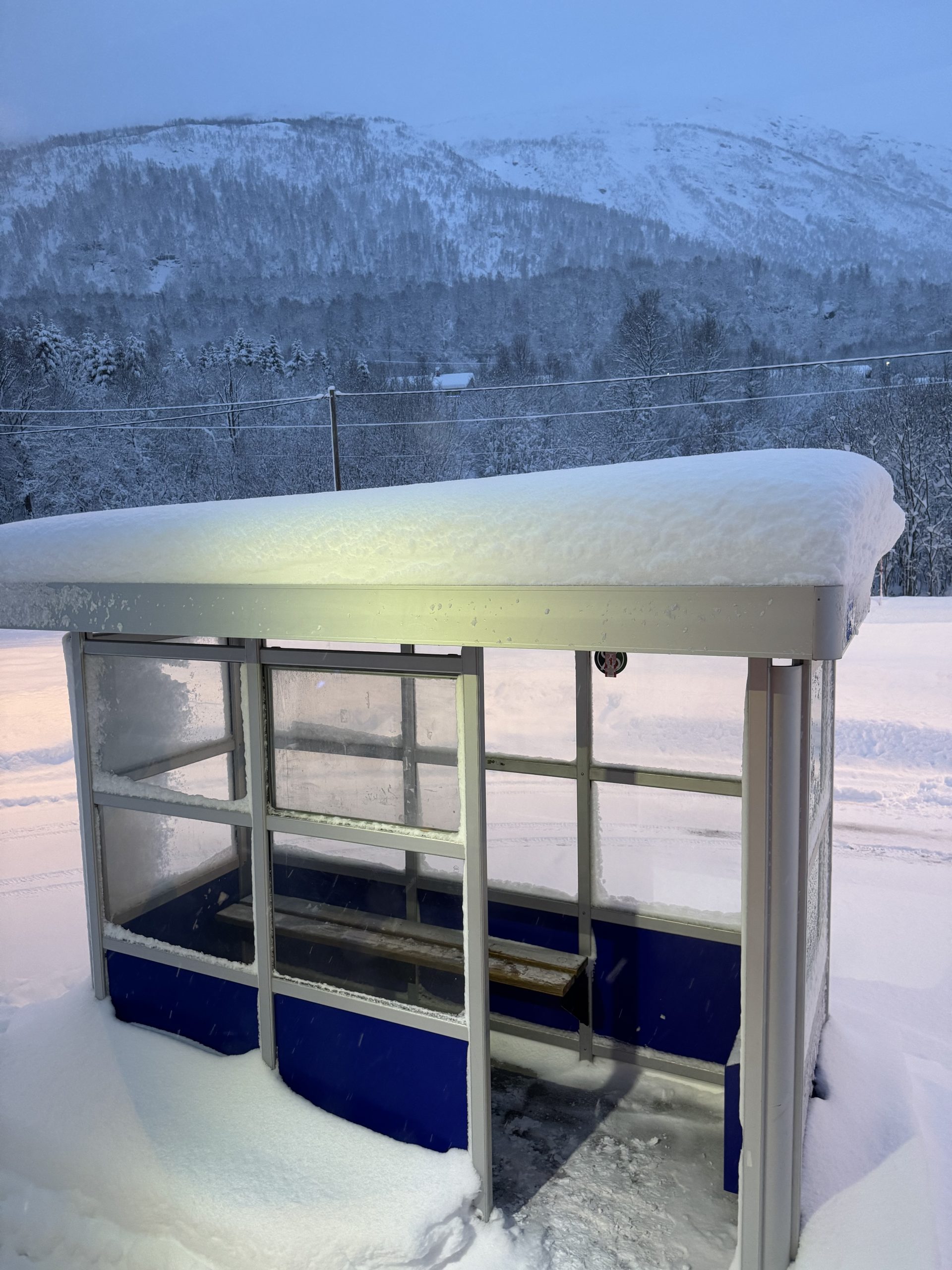
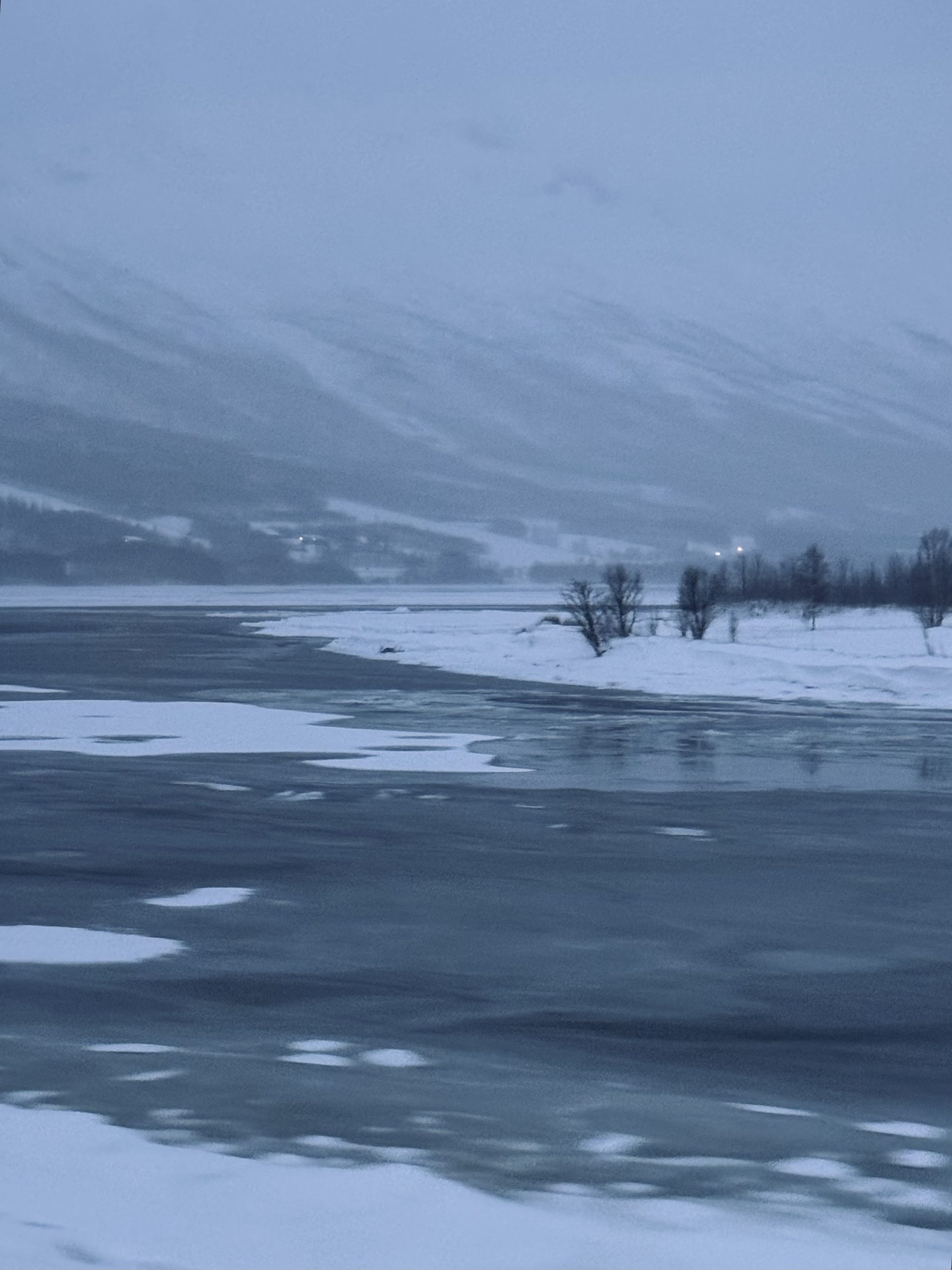
Something I never thought I’d hear myself say: today’s 4-hour bus ride was dreamy. Small inlets on coastal fjords, frozen rivers and hour after hour of snow-laden trees – a grandstand view of northern Norway’s dramatic scenery. The arctic half-light turns the world monochrome, like sitting inside an Alfred Wainwright pencil sketch. Pure white snow. Smudge-grey forests. A shadow-hint of high mountains emerging from snow clouds. It’s a strangely calming palette, only broken up by the warm and welcoming lights of small villages and forest cabins.
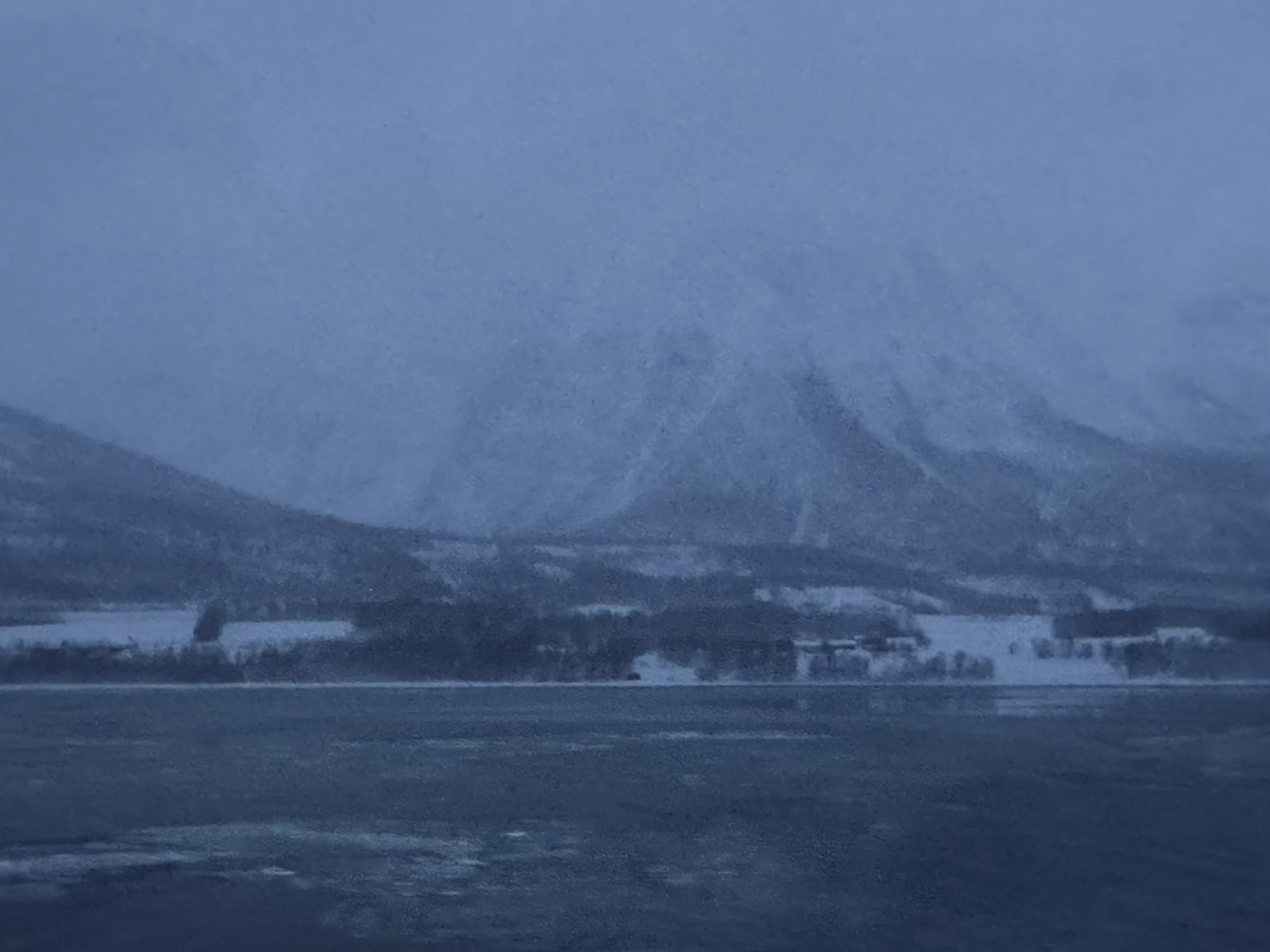
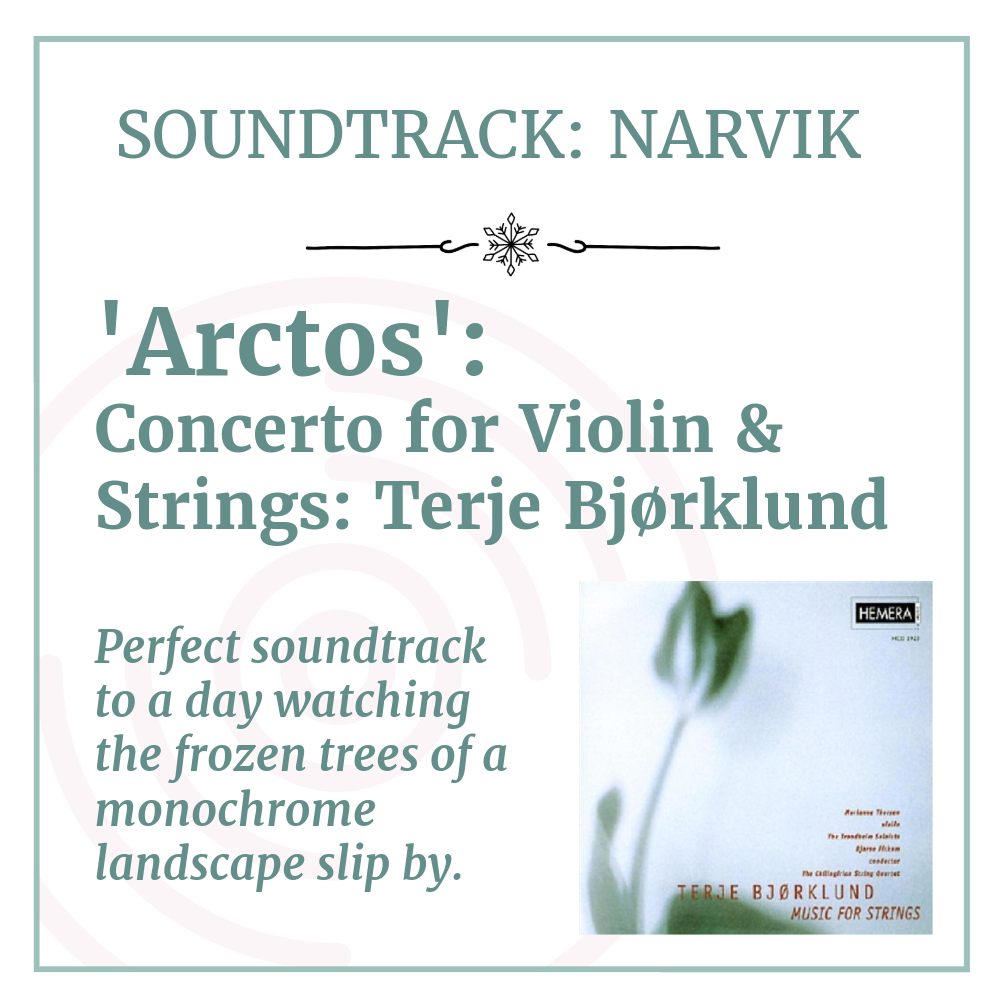
As the forests slipped by, today’s soundtrack was an evocative collection of slightly other-worldly string music from Terje Bjørklund (a native of Narvik). It matched the sparse colours and bleak landscapes perfectly and gave me a very meditative and peaceful few hours.
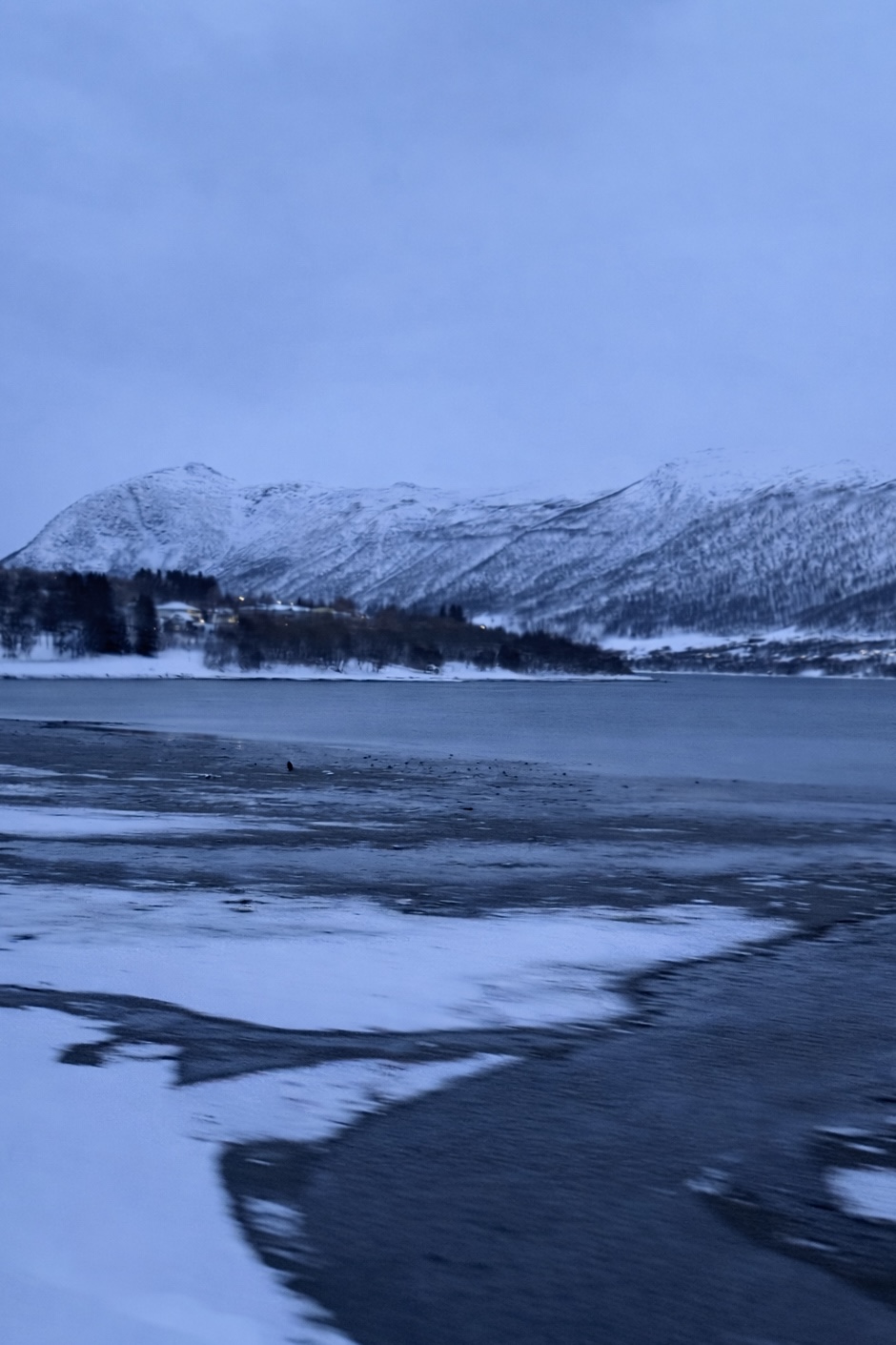
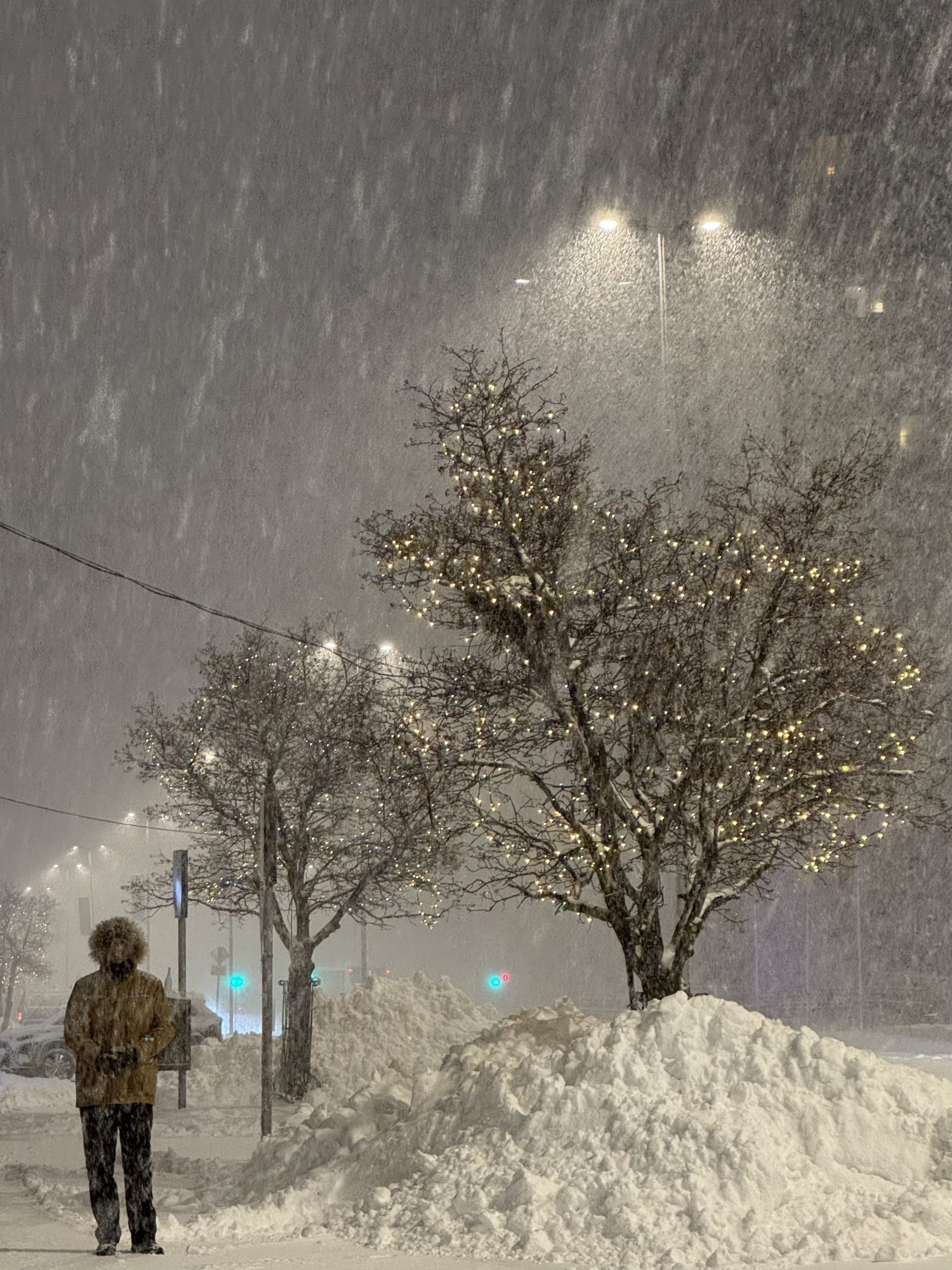
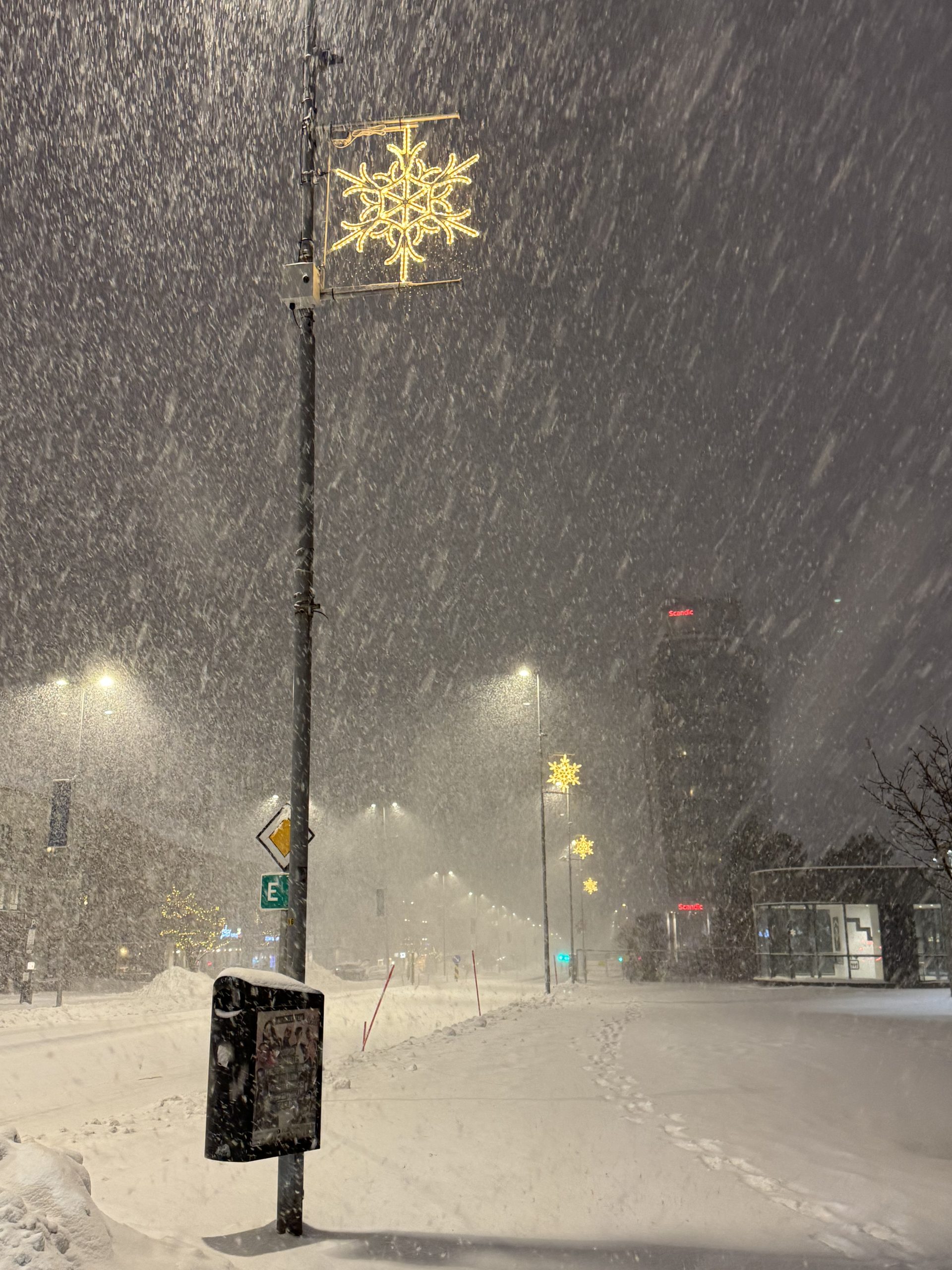
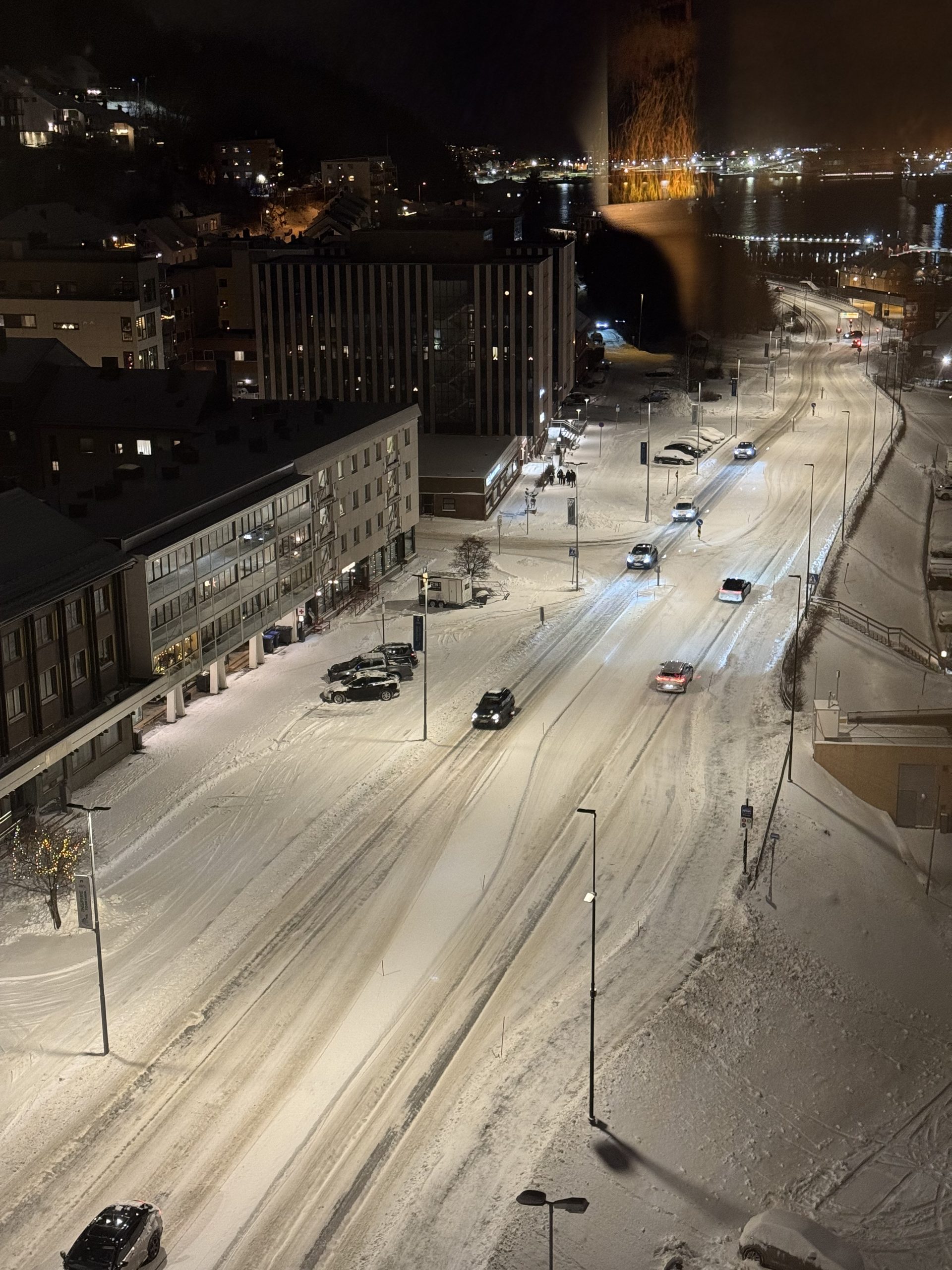
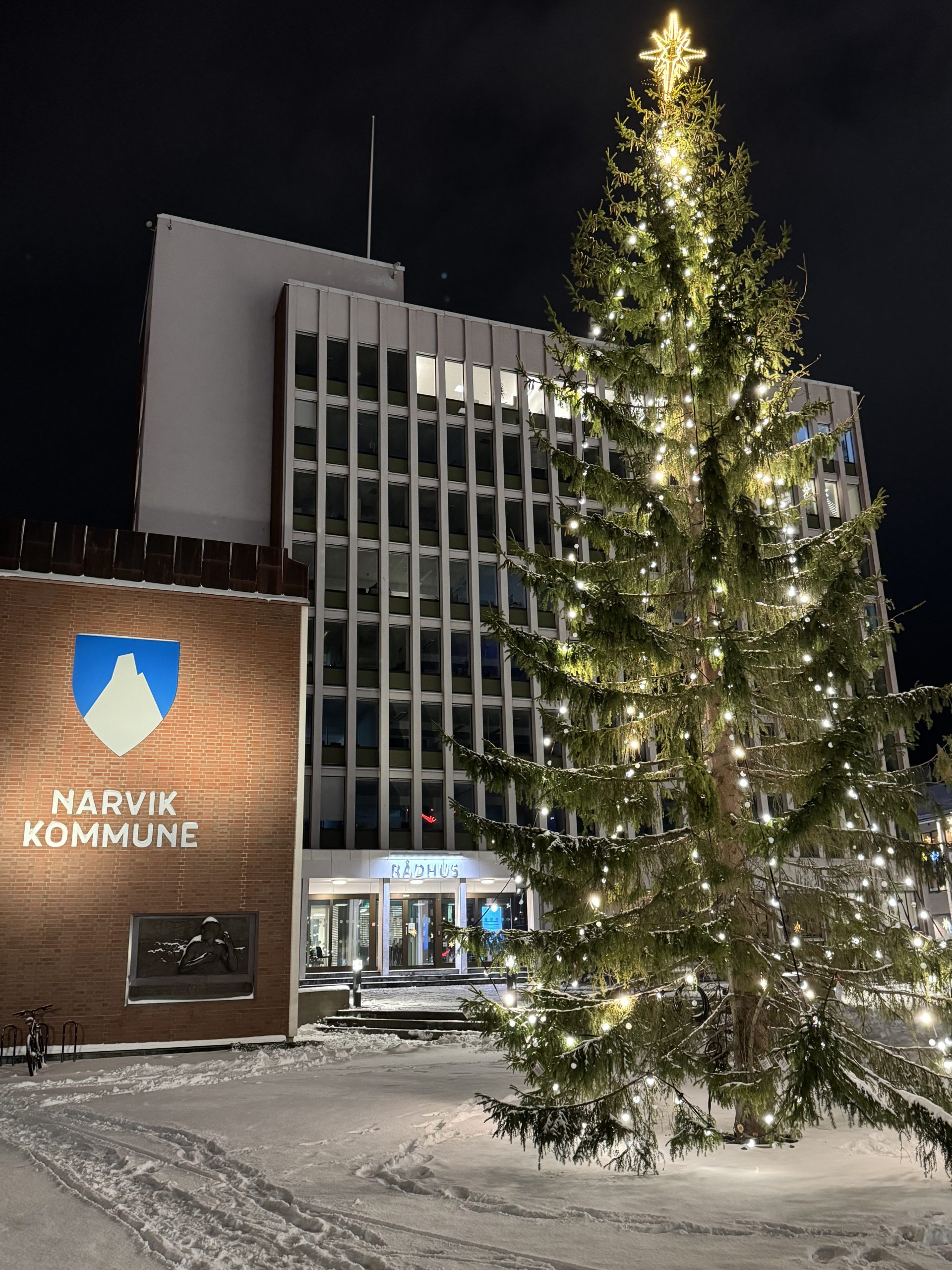
Narvik itself seems on first sight to be a fairly functional but welcoming place. It’s a busy port town with a growing tech sector and modern university. The town sits on the side of a fjord, overlooked by a ski slope, with a snowy central avenue and a glittering Christmas tree.
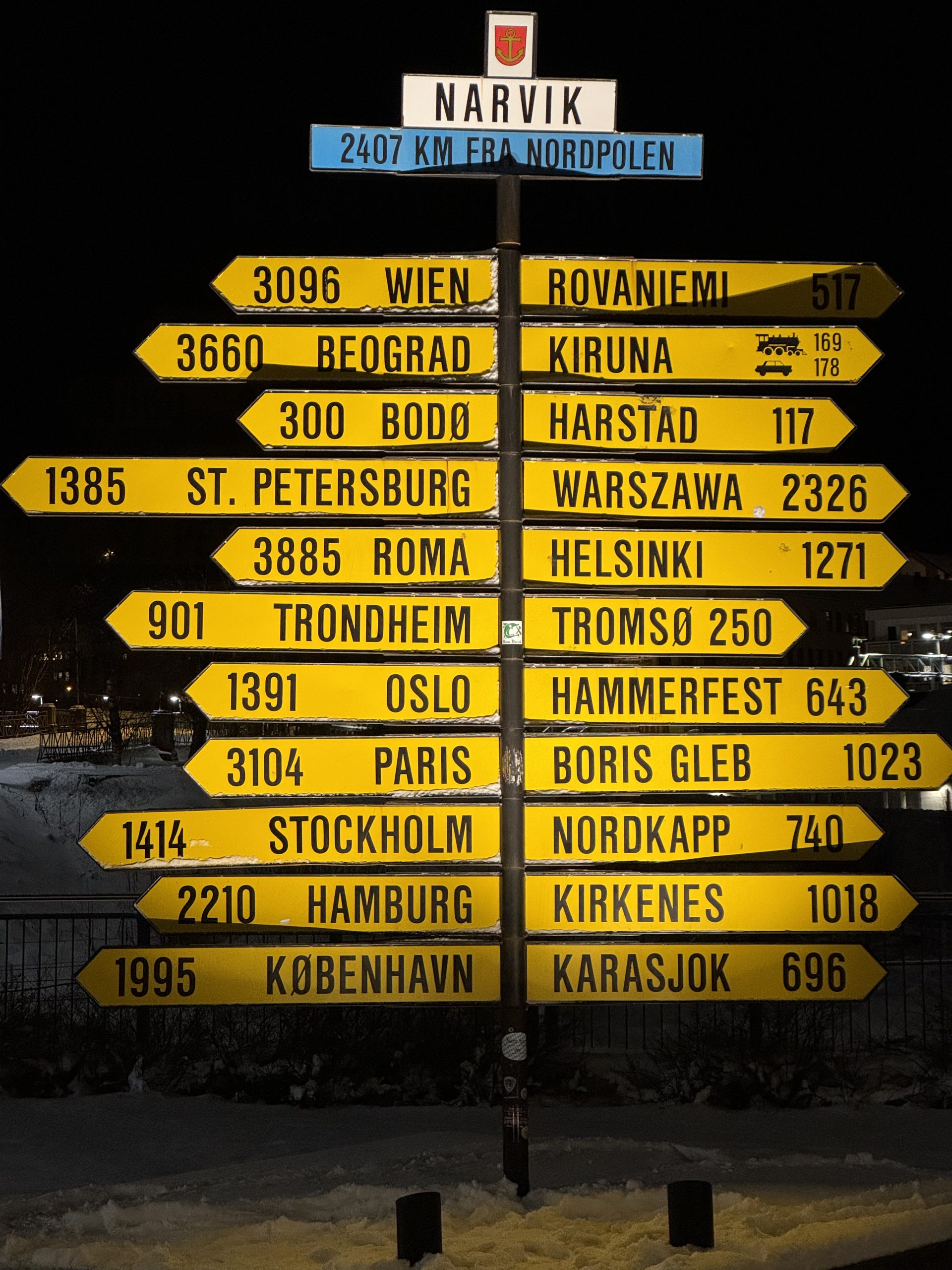
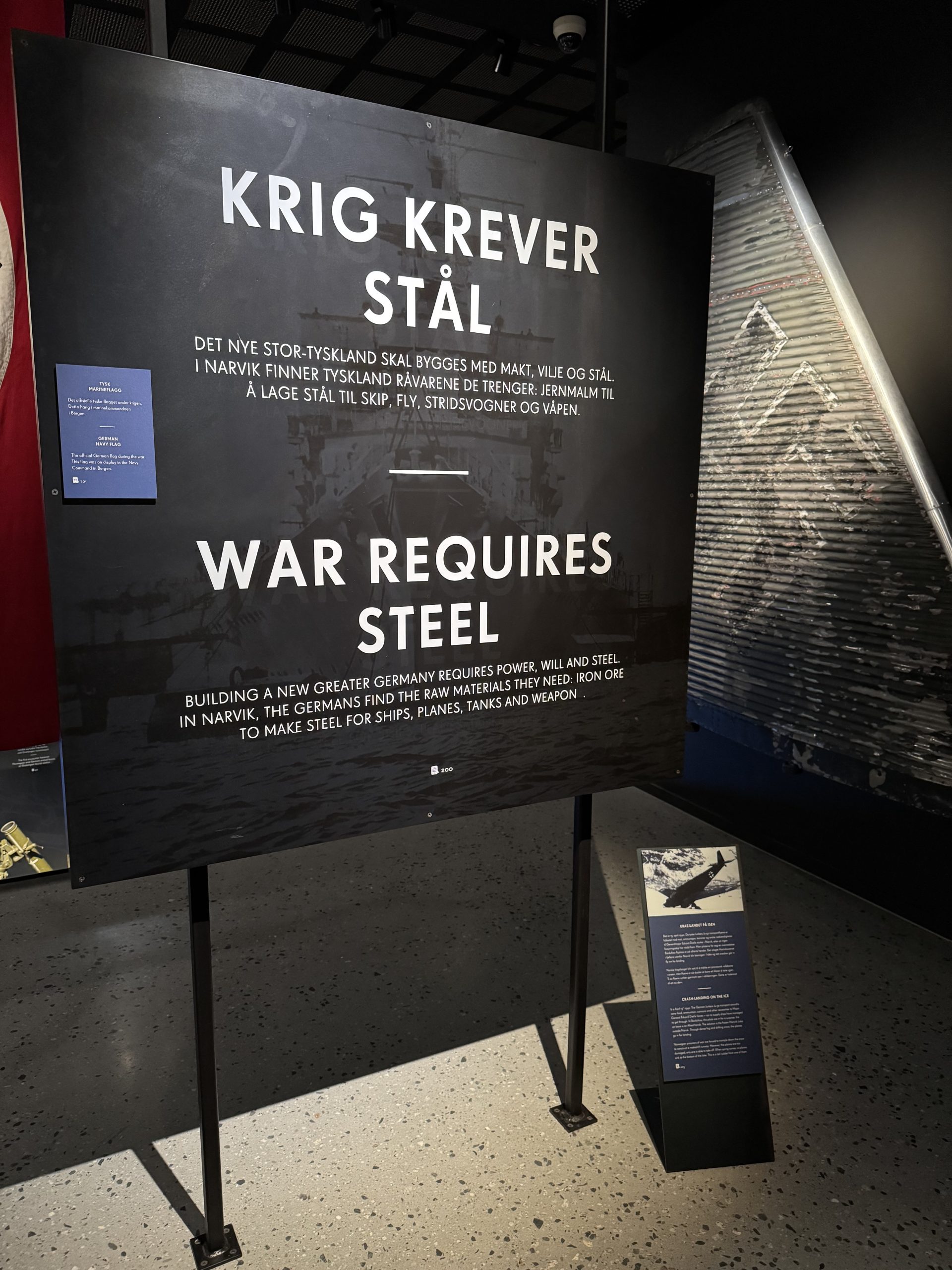
To understand Narvik, you need to learn something about its WWII history. The fjord and town offered an ice-free sea route to the iron ore fields of northern Sweden. Efforts to secure a strategic route to this vital resource led in 1940 to fierce clashes between German and British forces both on the sea and on land, drawing the thus-far neutral Norwegian military into the war. The Germans were briefly defeated (Hitler’s first real defeat of the war) but Narvik was ultimately retaken and lived under German rule for the rest of the war. Much of the town was flattened in the fighting, meaning that Narvik today is a modern, rebuilt town.
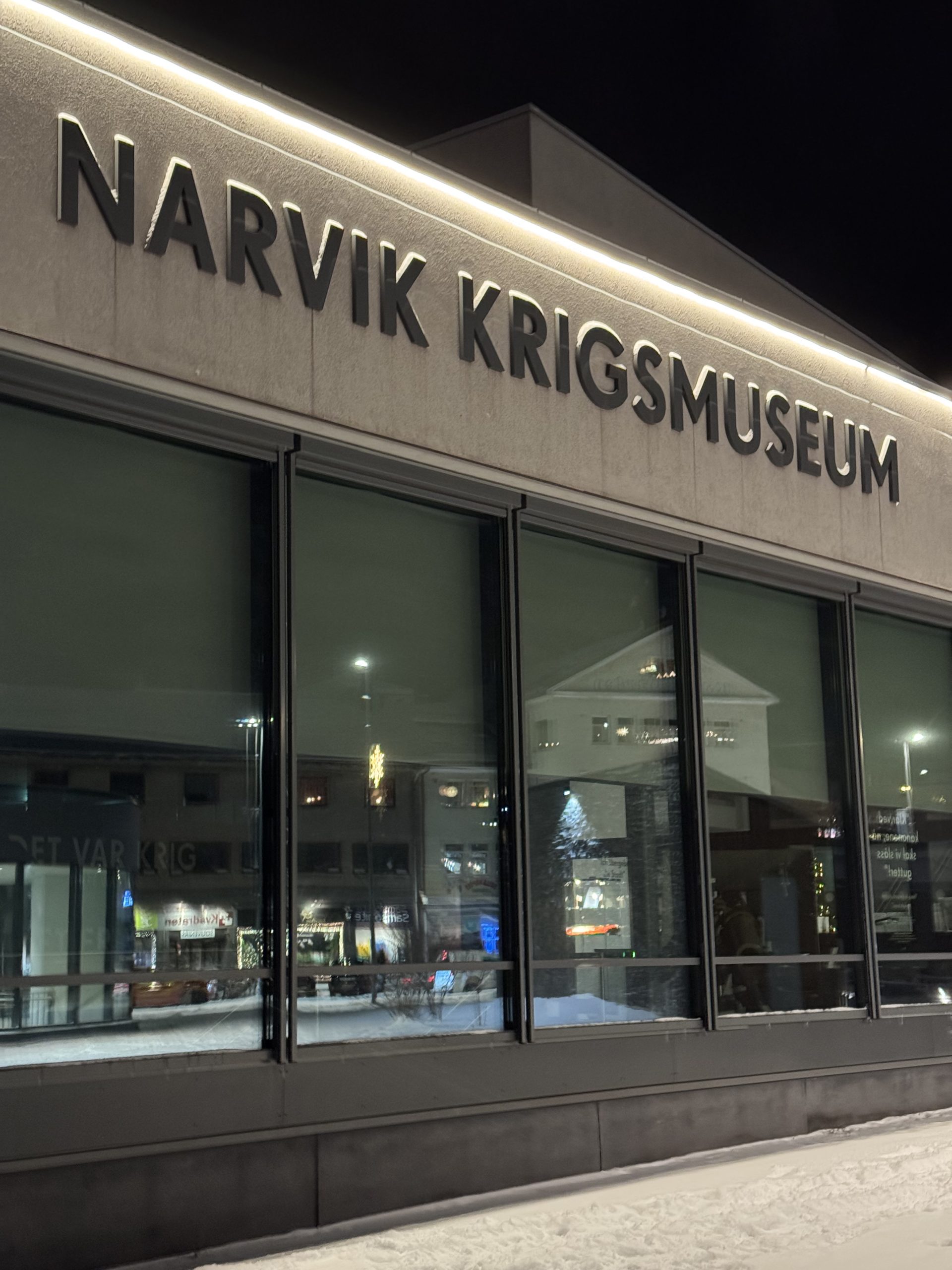
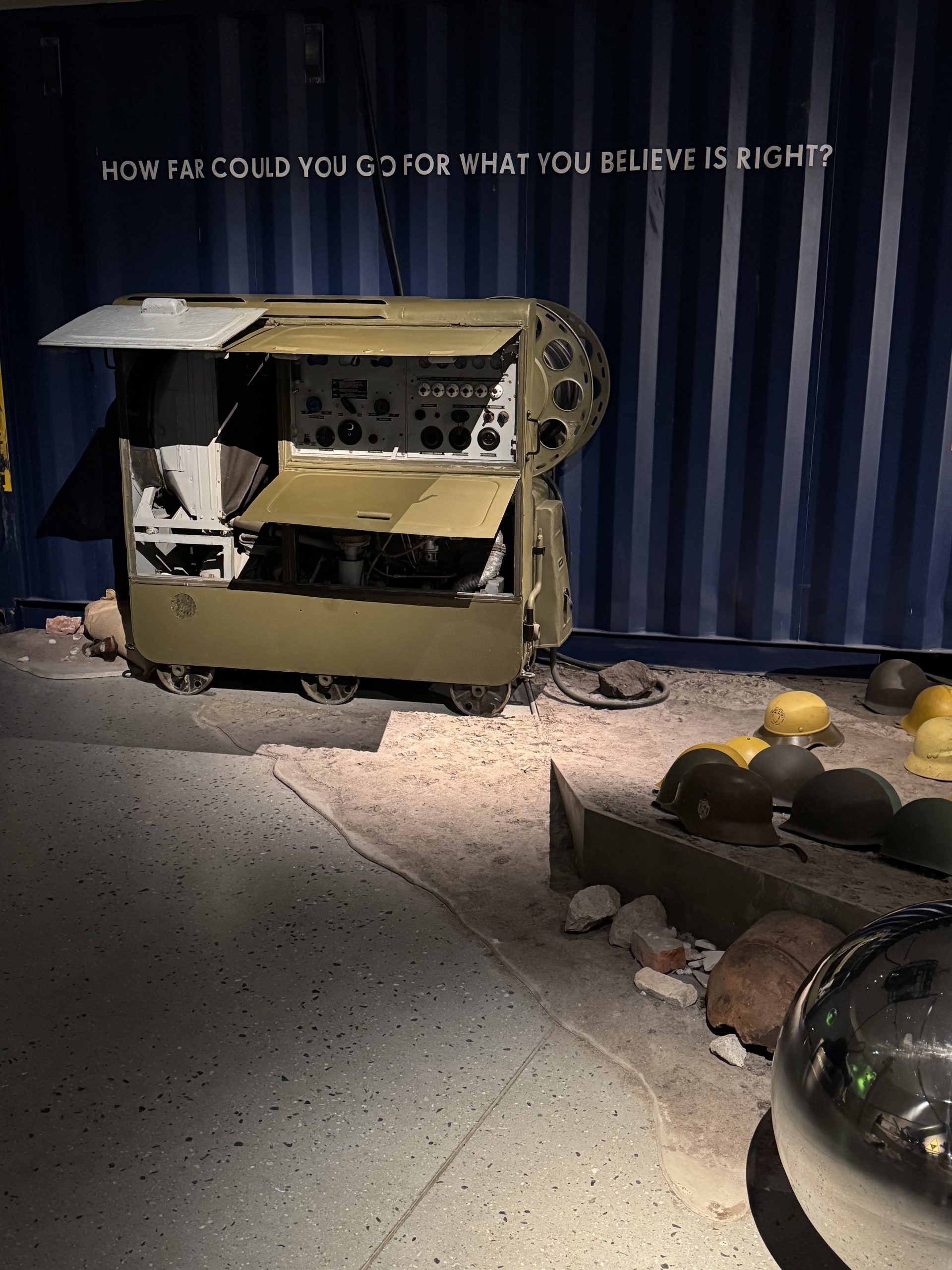
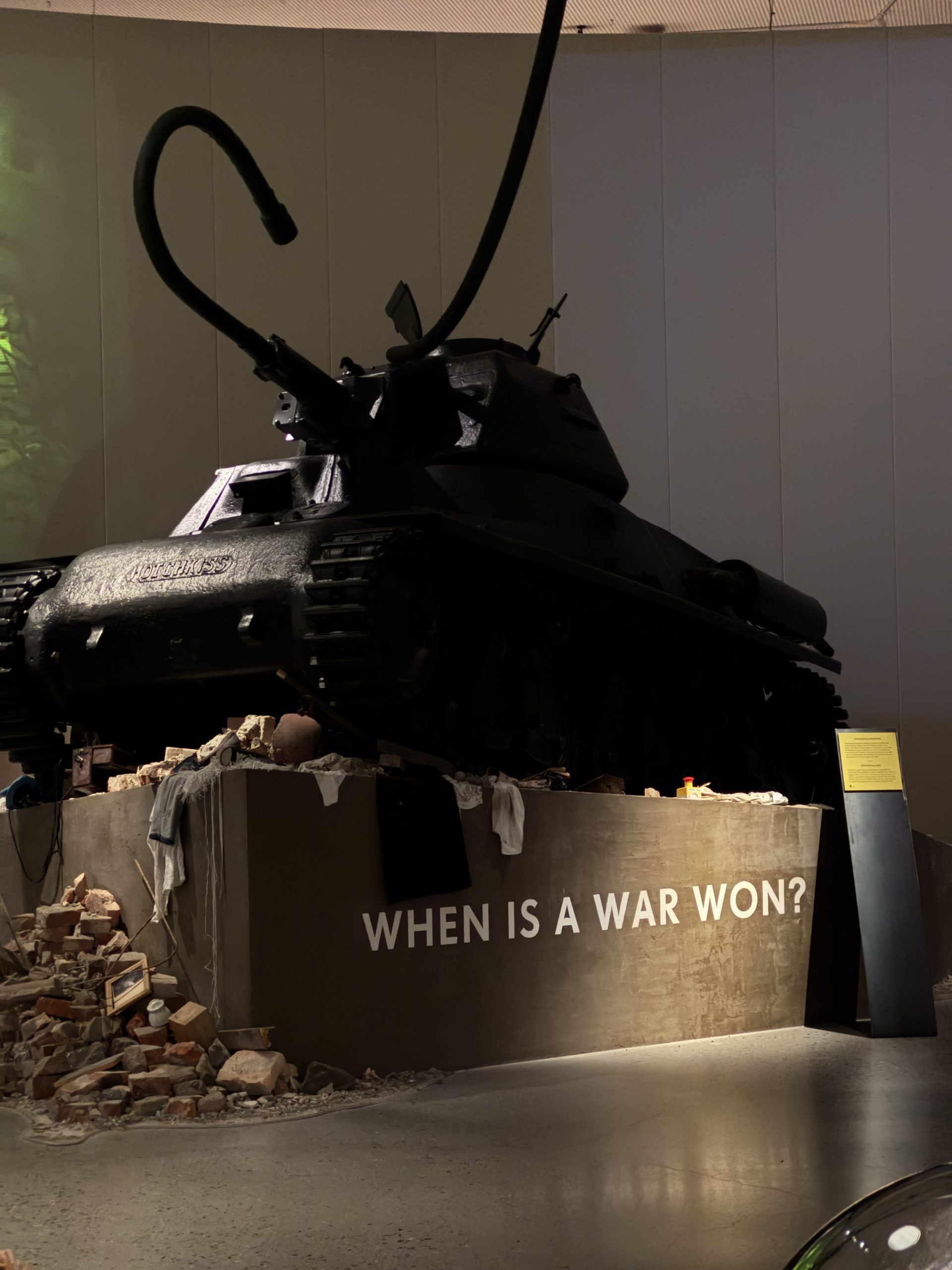
The Narvik War Museum is a must-visit and gave us a lot to think about. It brings to life the history of a side of the Second World War that I’m ashamed to say I knew nothing about – and does that in a very human way, sharing the big picture of events and battles alongside the very personal stories of those caught up in the conflict. Even more powerful were the questions the museum poses on the back of this: challenging you to think hard about the meaning of truth and lies, fact and propaganda, and where the real battles are fought in today’s digital world. I found it sobering and hard-hitting and can’t recommend it highly enough.
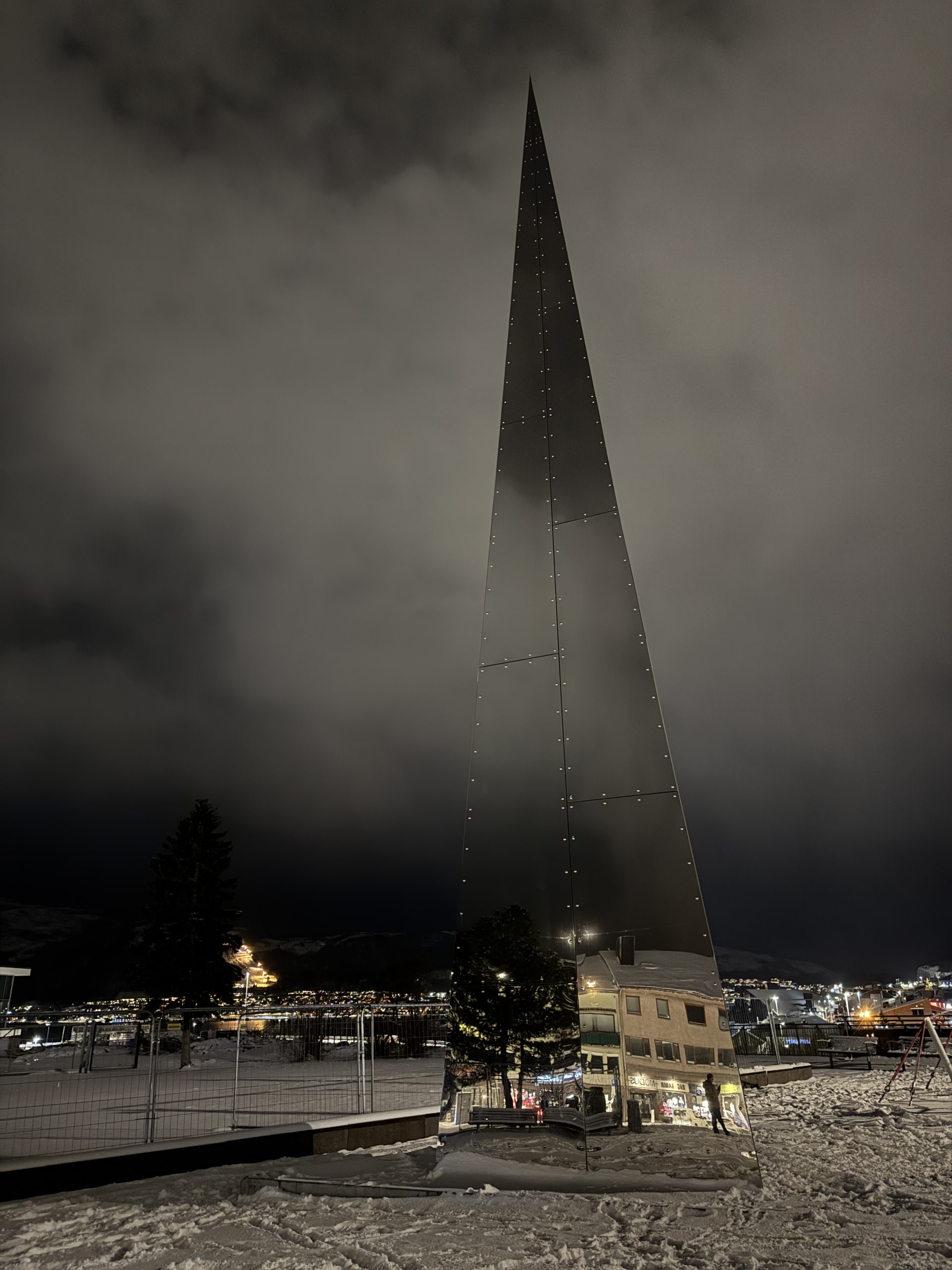
Outside of the museum is Trinigon 3, a mirrored triangular monument erected to honour the 50th anniversary of the end of WW2. It somehow manages to both blend with what’s behind it and reflect what’s in front – clever, thoughtful and (quite literally) reflective public art. Nice work, Narvik.
It’s fair to say that Narvik is significantly closed between Christmas and New Year. Most of the bars and restaurants are taking a well-earned break, our hotel bar has closed so subtly that even reception hadn’t realised, and chips are off due to ‘something happening’ to the fryer. An excuse for an early night with a book and a cuppa before we head for our first train of the trip in the morning.
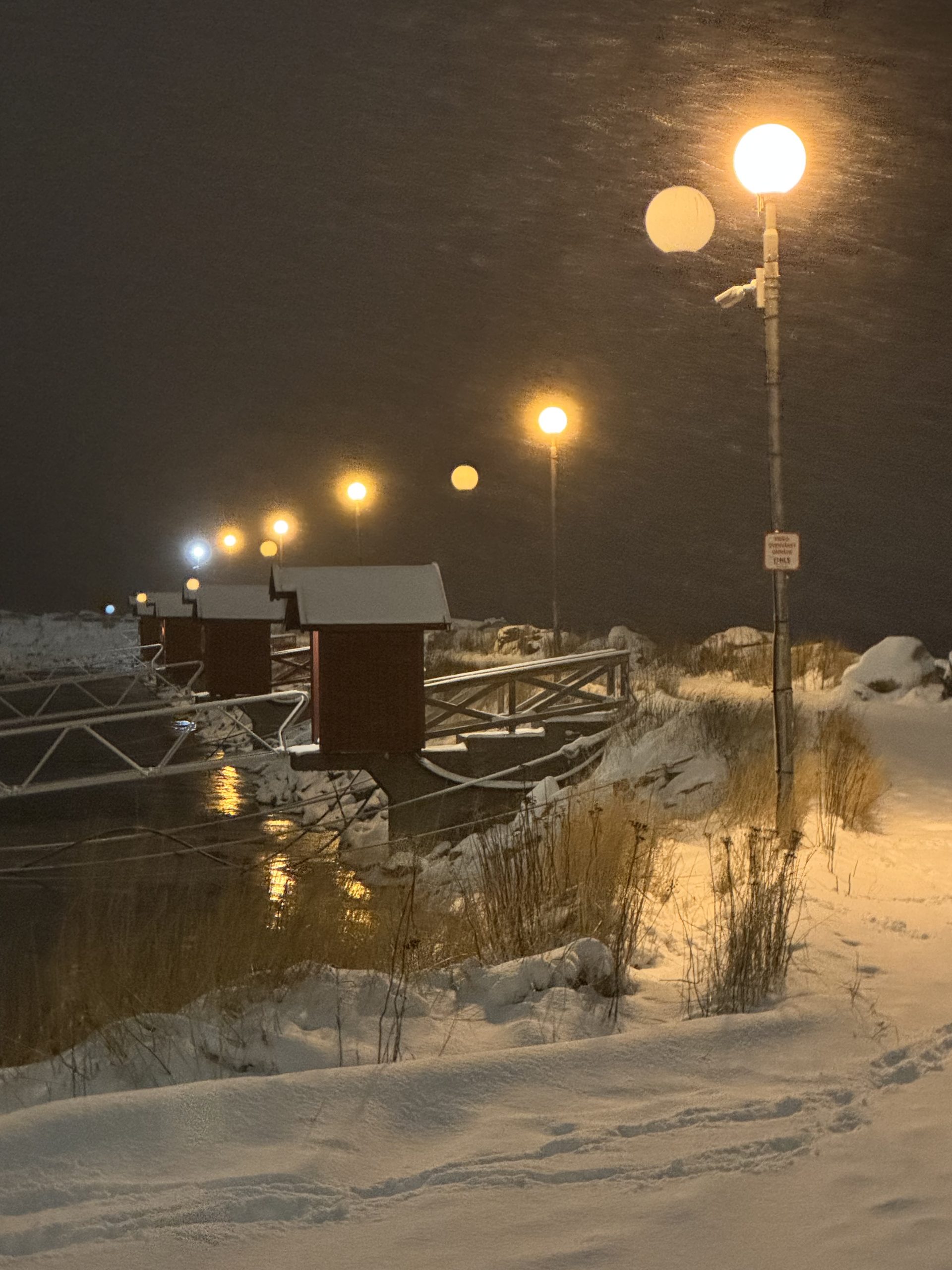
An early morning walk gave us another dimension to Narvik. A couple of extra inches of snow settled overnight, and off the main roads the town is definitely still enjoying a Christmas rest. In the silence of fresh snow, darkness lit by candles in windows, it felt like we were tiptoeing through a hushed town. Peaceful, still, sleeping.
We found the harbour, the Polish war memorial, and then hunted out the only coffee in the otherwise closed town – behind the escalators, in the basement of the bus station. Phew.
The snow was falling heavily as we walked with our rucksacks to the station – leaving Narvik feeling just a little bit more magical than when we arrived.