Latitude: 67.8°
Weather: -15° to -22° Sunrise: – Sunset: –
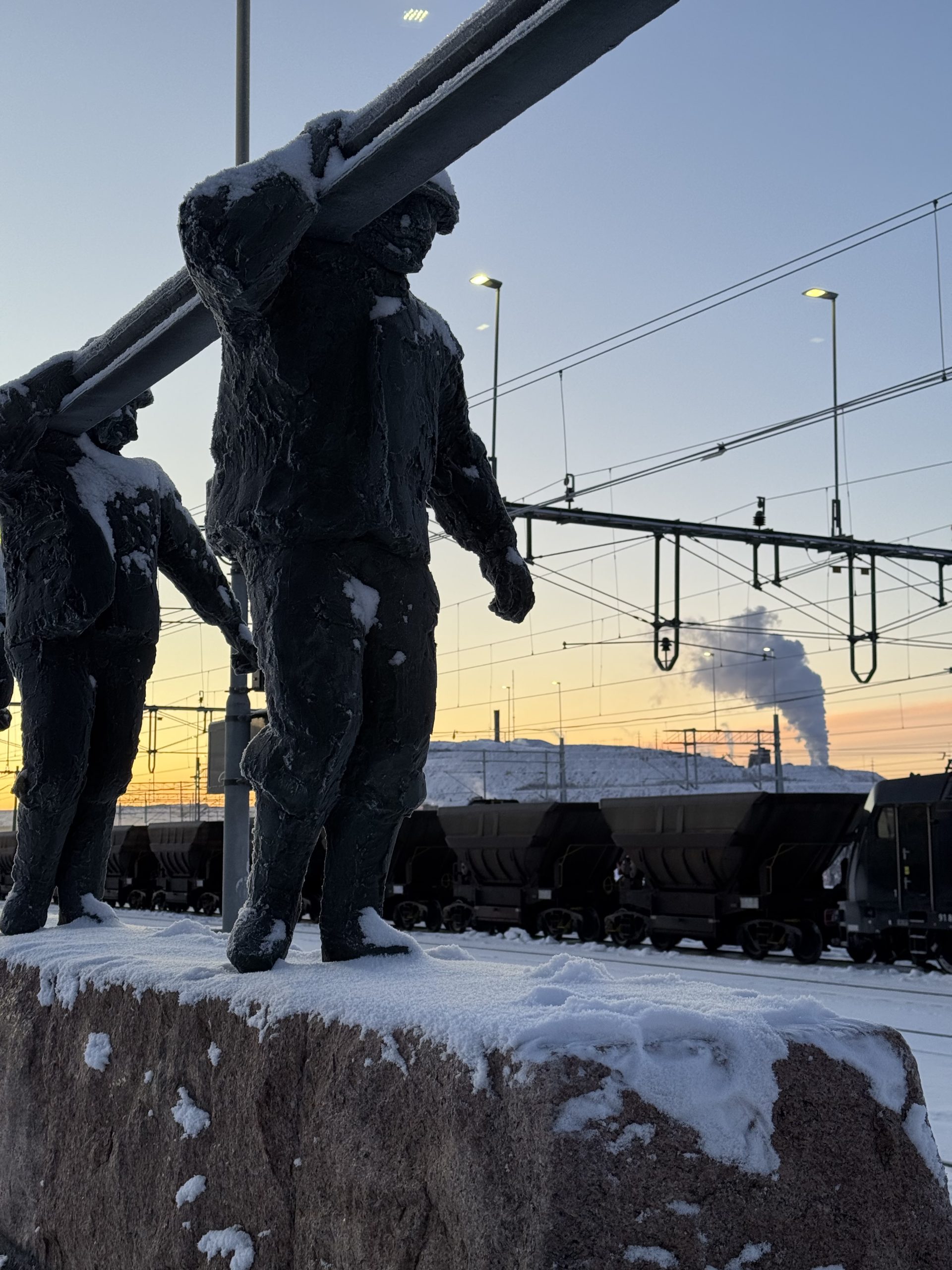
Narvik to Kiruna on the iron ore line – two towns, two countries, two very different stories of the impact of iron. From the willingness for states to engage in bitter battle to access it – to the very personal impact on the town living on top of it.
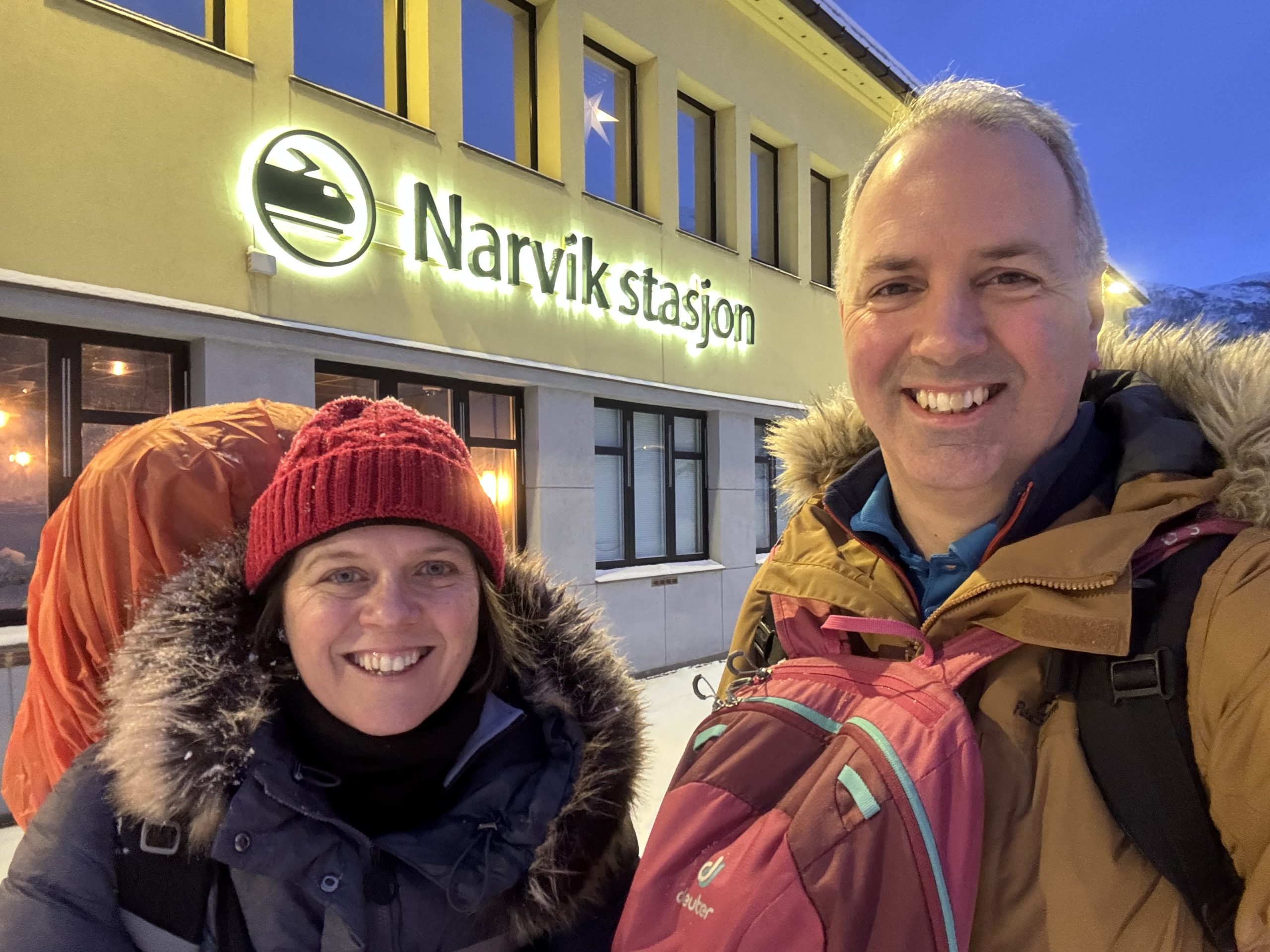
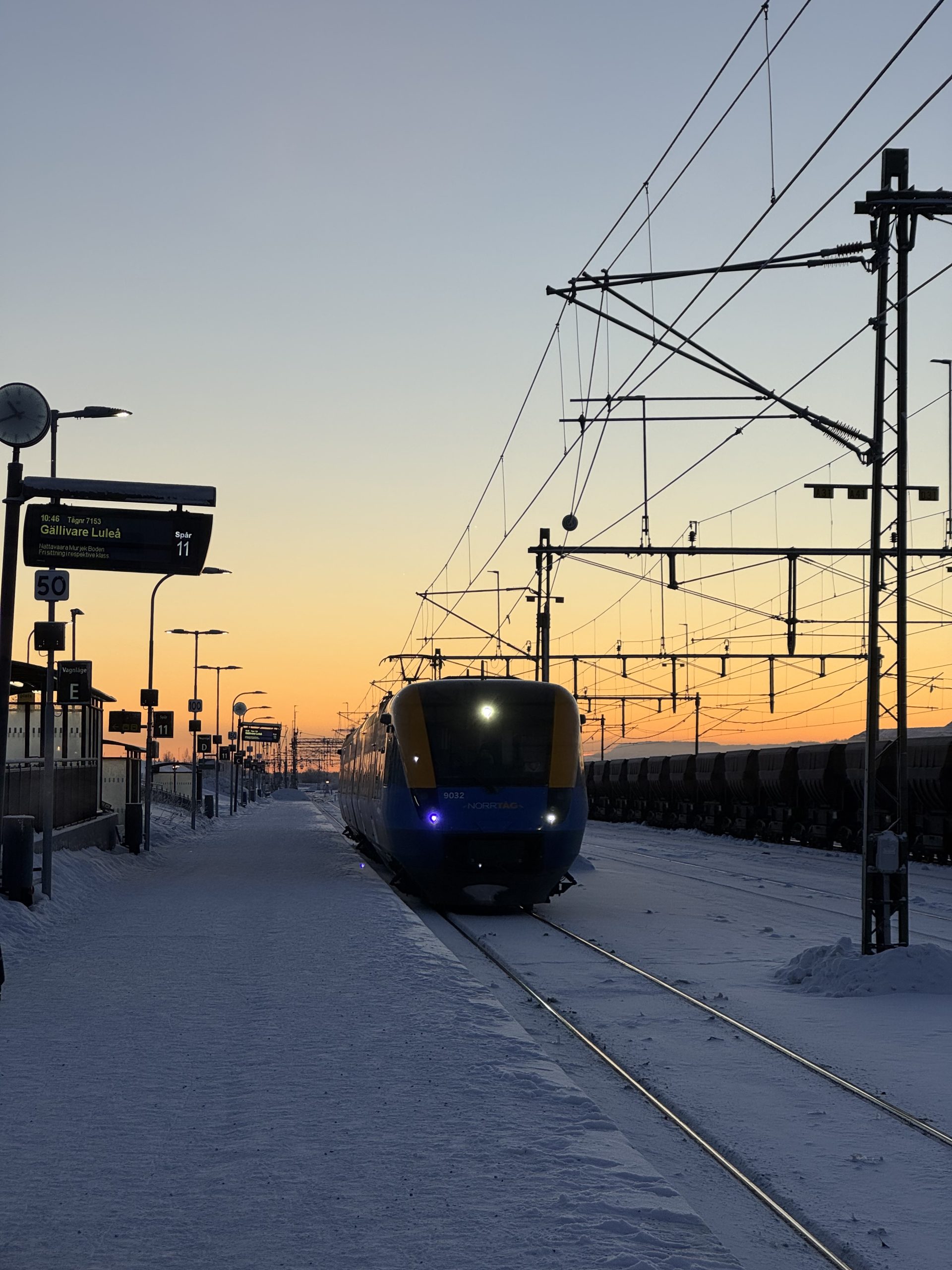
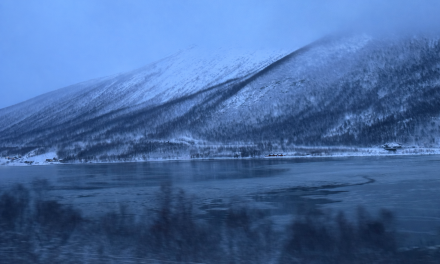
But first, we took the railway line that traces in reverse the iron ore’s route to the coast, heading inland and across the border into Sweden. We left Narvik station in heavy snow and trundled almost immediately into winter heaven. The train ride to Kiruna was a delight from beginning to end. The train pootled along slowly, revealing deep frozen fjords and vast snowy uplands. We stopped at tiny remote stations, snow banked up against red wooden buildings. Our carriage was only around half full for most of the journey, allowing us to move around and make the most of the views. In doing so, we chatted to new friends who were loving it as much as we were. The German man in the seat in front had got stuck on the Lofoten Islands in a storm and was aiming to catch a lift in a goods train. The family opposite from were from Brazil, escaping the heat of their summer for winter thrills.
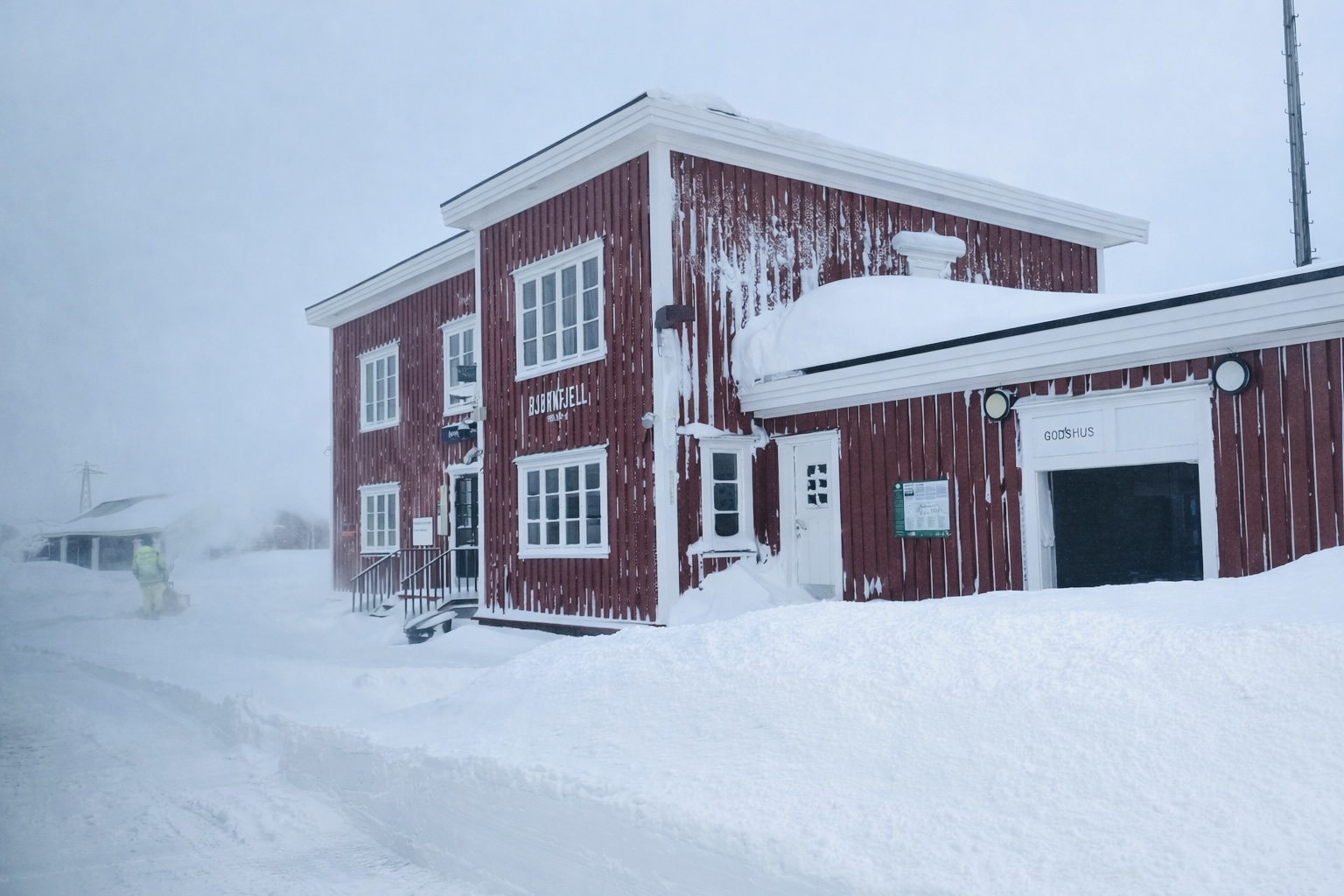
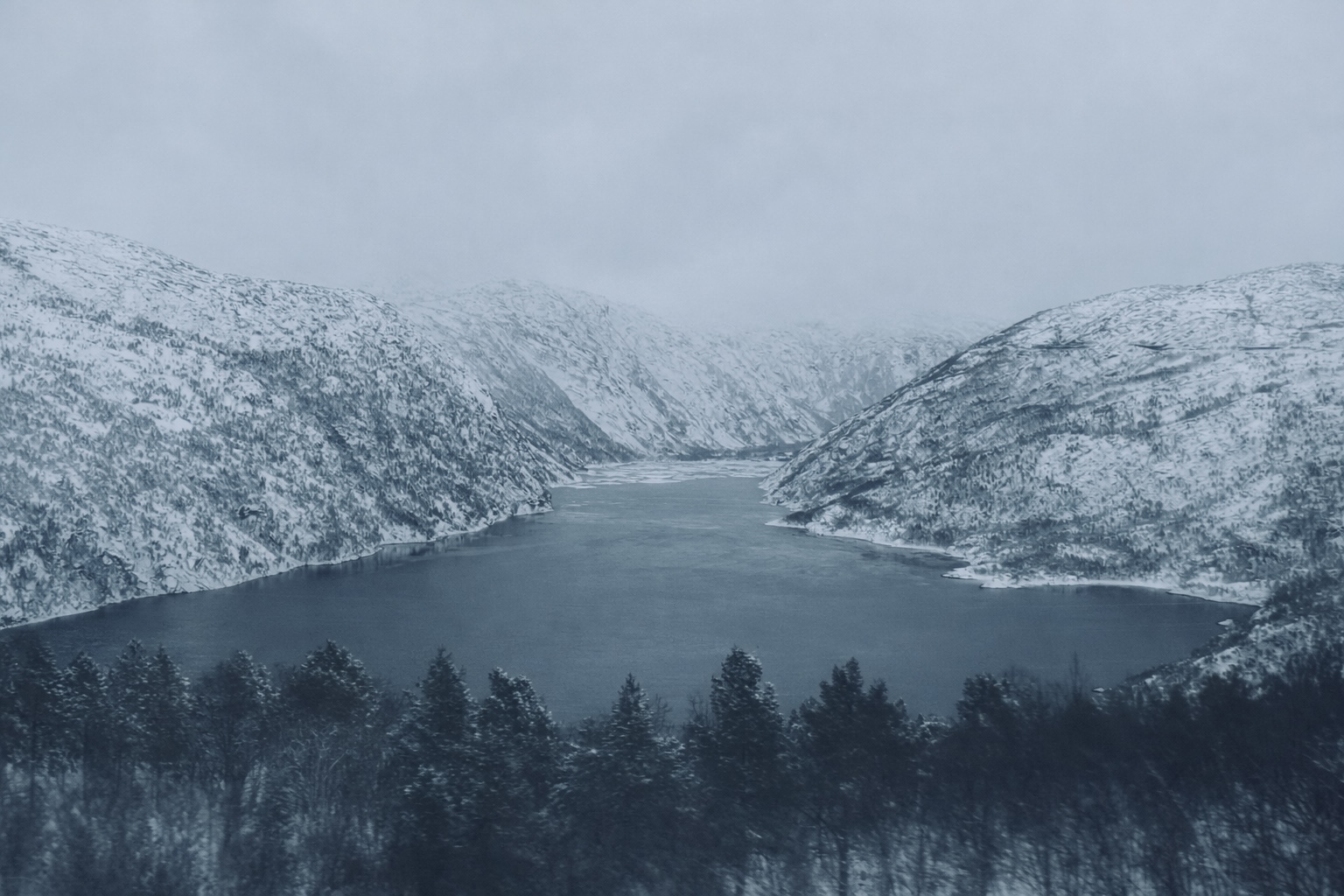
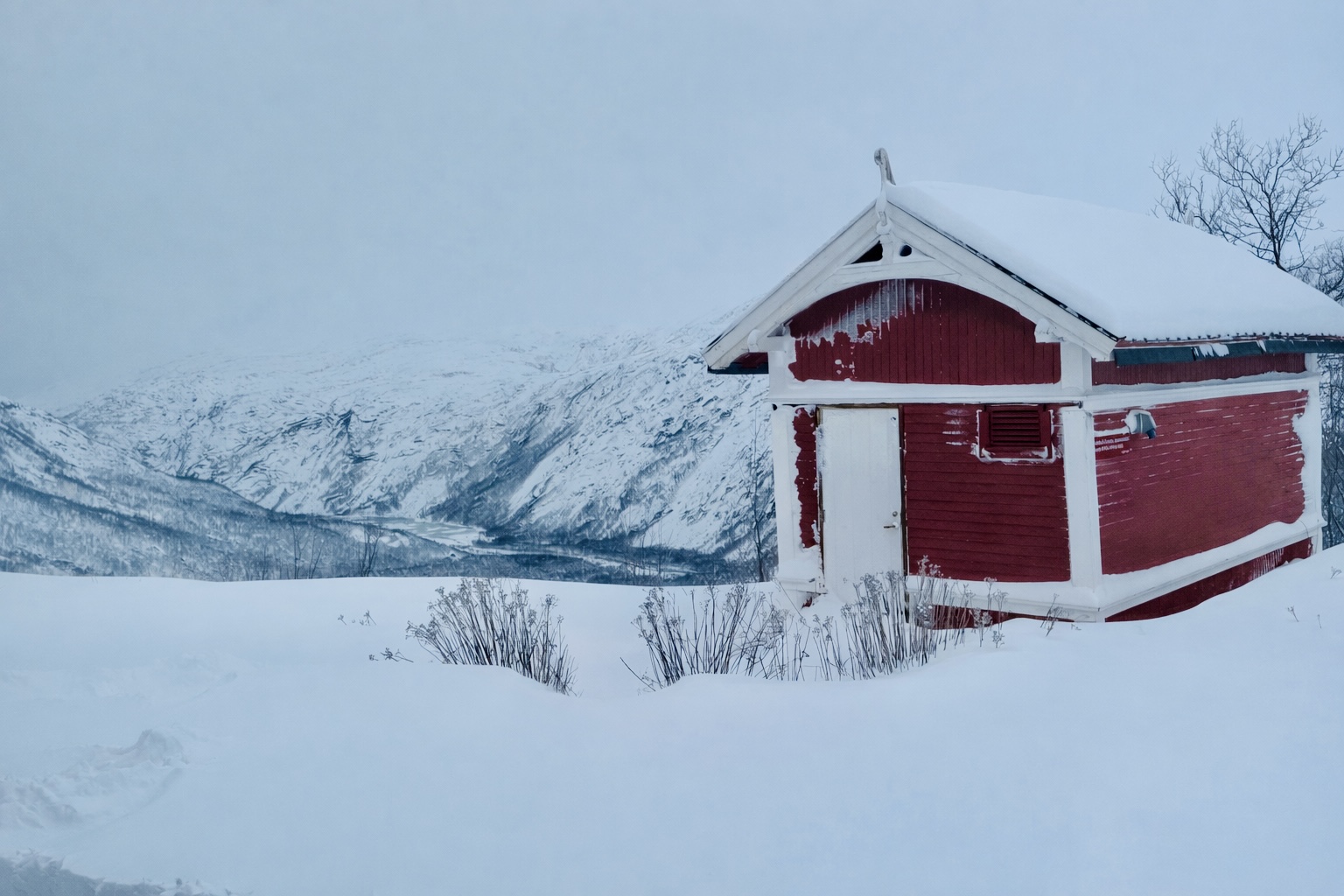
Arriving into Kiruna 3 hours later, the difference was immediately clear when we stepped from the train and our nostrils started to freeze. It was around -15 at that stage, and dropped later to beneath -20. Crisp, dry cold that feels fresh, clean and energising. I love it.
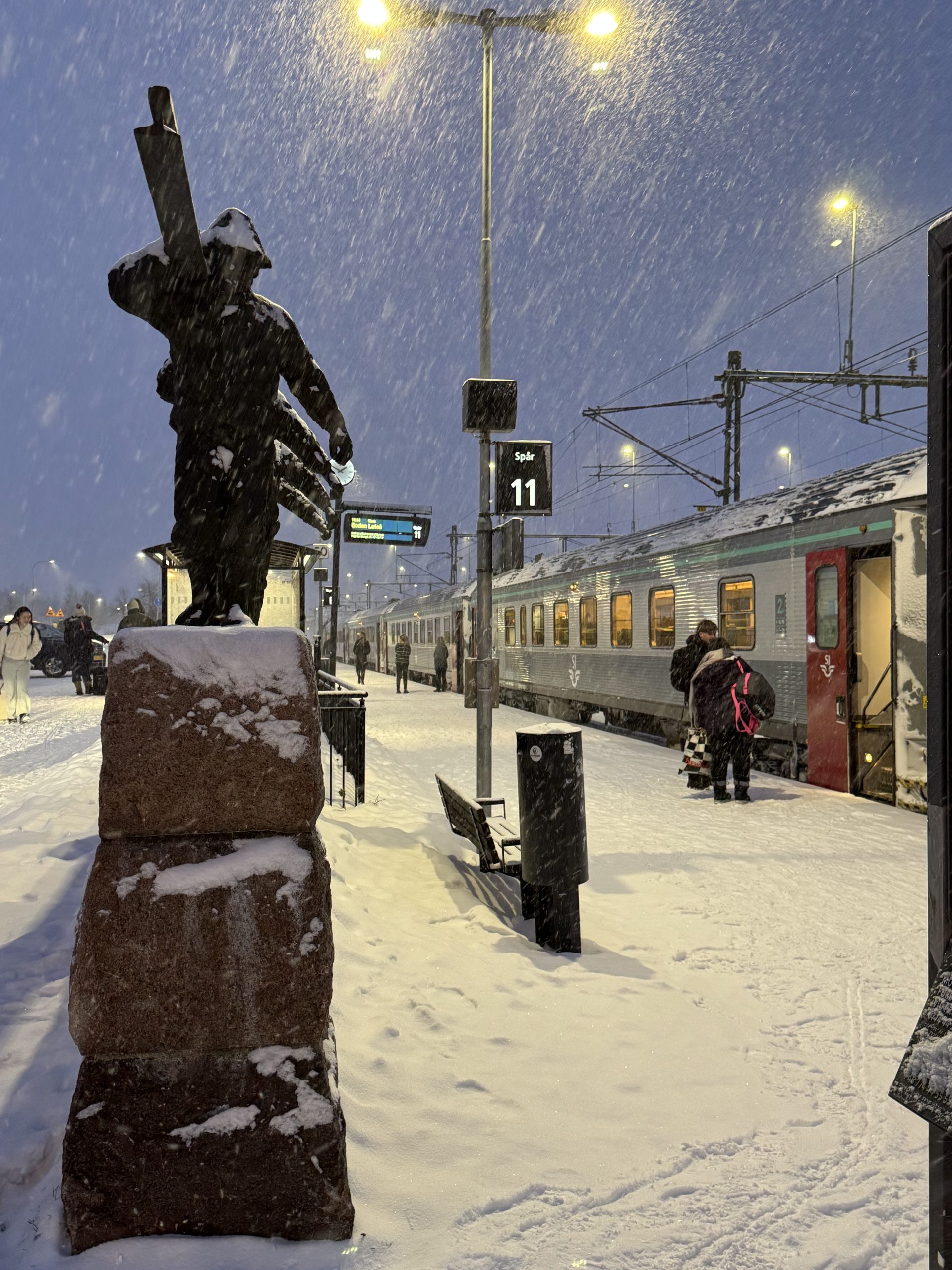
Kiruna is Sweden’s most northerly city – and has gained worldwide fame as ‘the city on the move’. The iron ore mine dominates the horizon and is huge (the world’s largest – it produces 80% of the EU’s iron ore). The mining operations have made the town which sits on top of it top unstable and at risk of subsidence. And so, a multi-billion pound project is moving the town 3 kilometres to the east, building by building, paid for by the state-owned mining company.
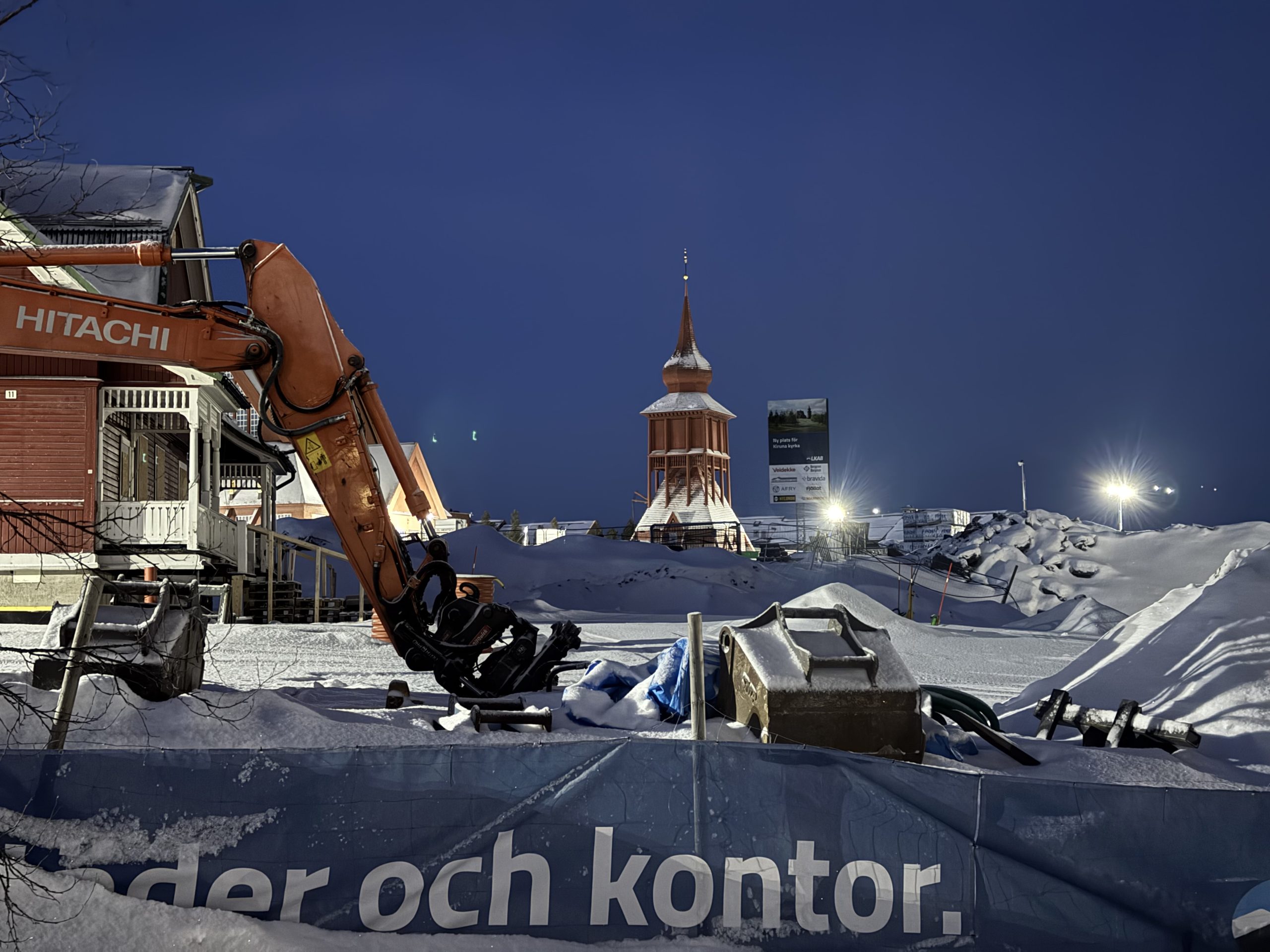
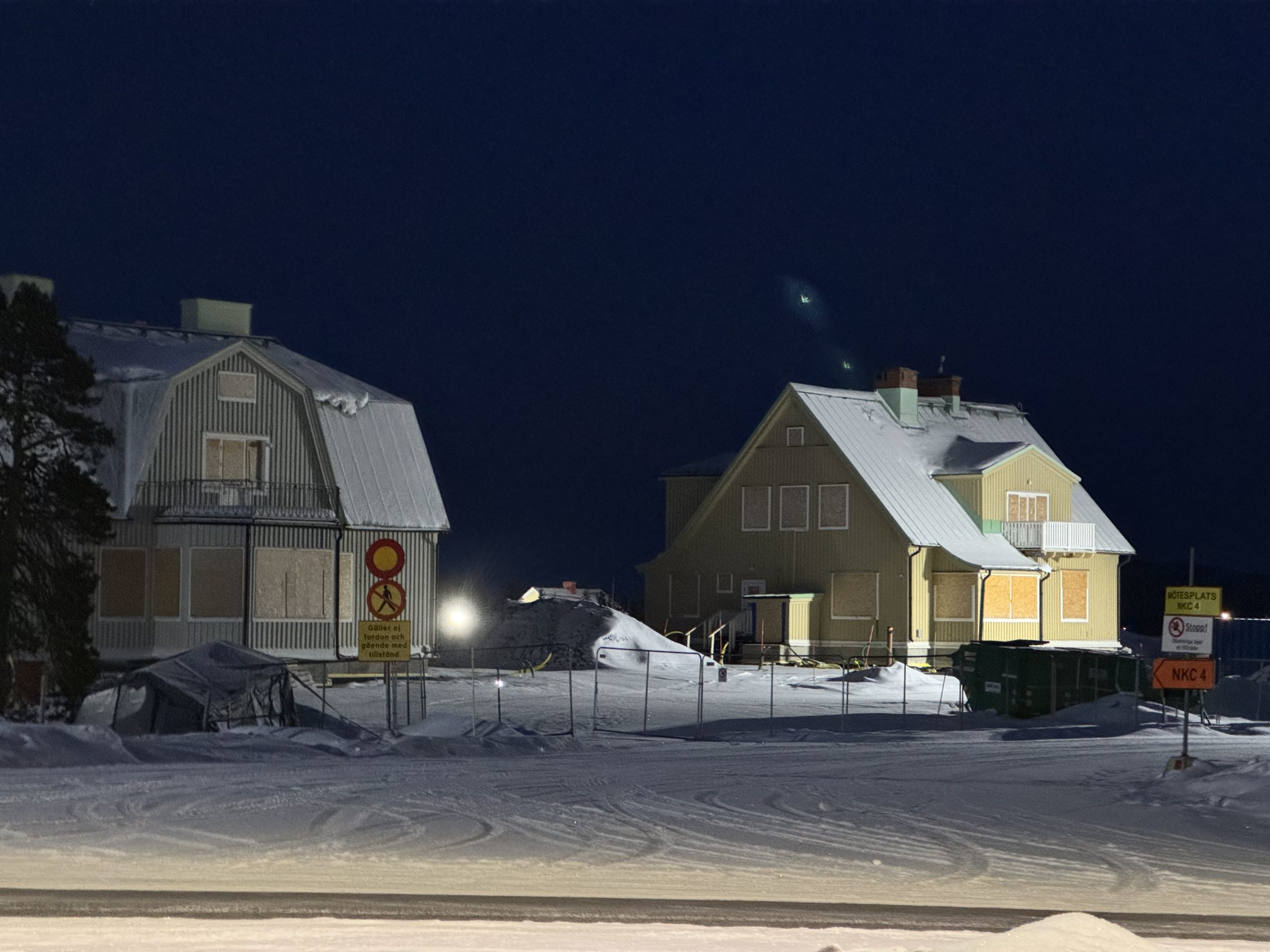
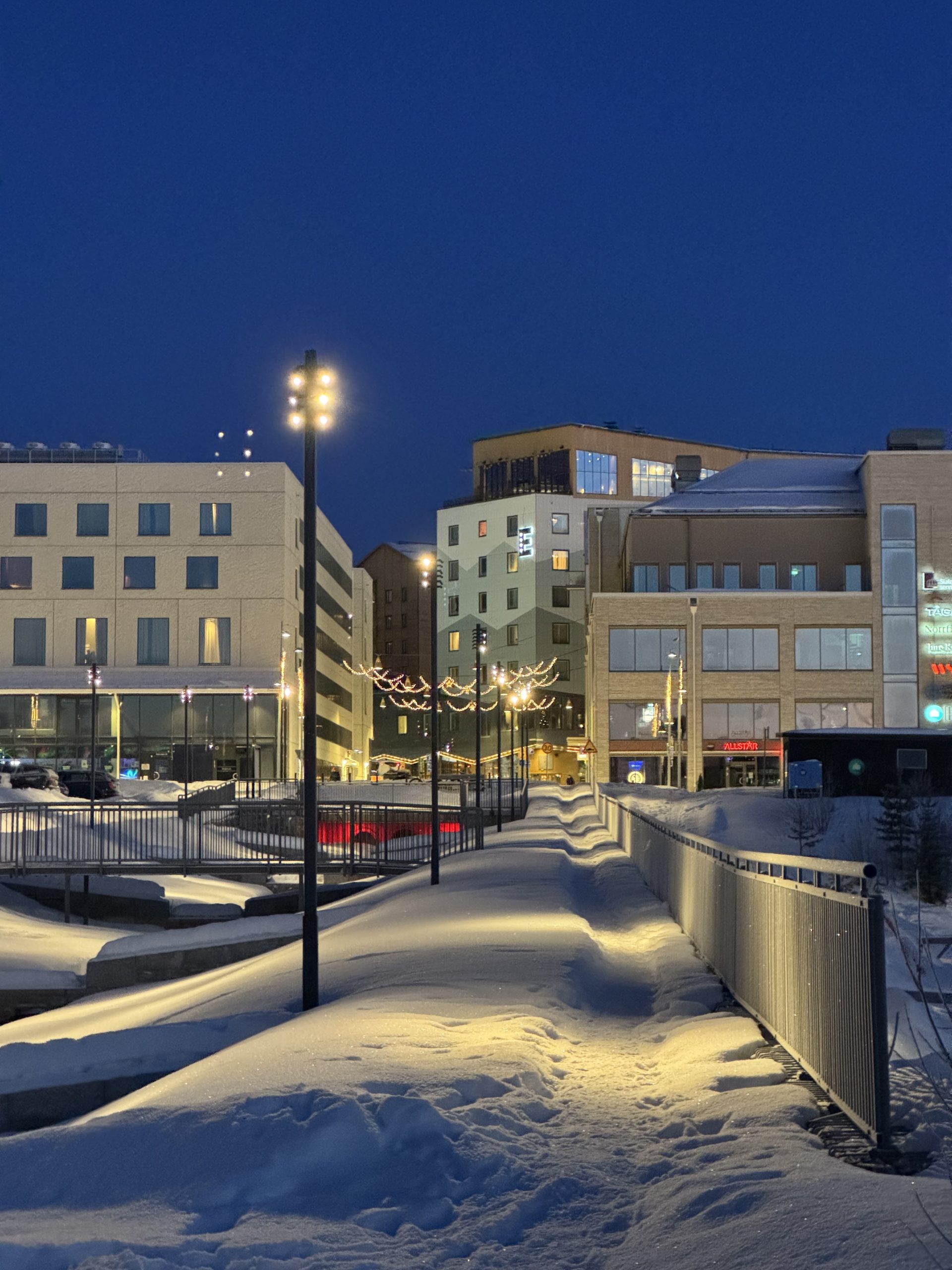
We stayed in the new city centre, which is modern and well-designed, with everything you need close at hand along a couple of grid-style blocks. Driving in, you pass the old town, where people are still living while they wait their turn to move, and a raft of construction sites building new homes and a sports centre.
This summer, a huge project moved the church into its new home. The church is at the heart of the community here and is designed to resemble a traditional Sami hut – bringing together Christian and Sami beliefs. The move was an astonishing logistical undertaking. Street lights had to come down to widen roads. Bridges had to be removed. Finally, over the course of a day, the church was moved to its new home, complete with its bell tower. It’s not yet open to the public while they finish making it safe, but it seems to have been a successful project.
Outside of the logistics, there’s a very personal story to tell here, of uncertainty, upheaval, and family homes lost after many generations – not to mention the decades of impact on Sami ways of life. The strategic importance of iron ore – and the continued effect on people’s lives.
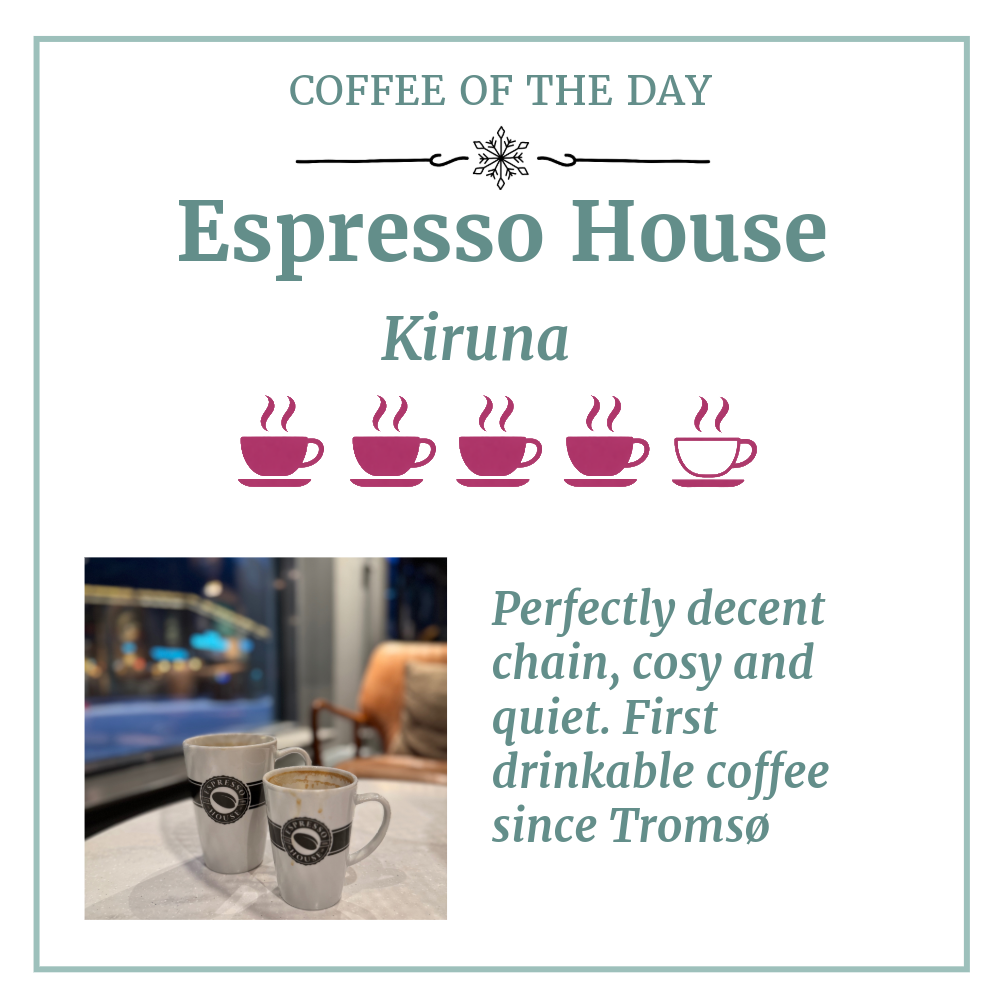
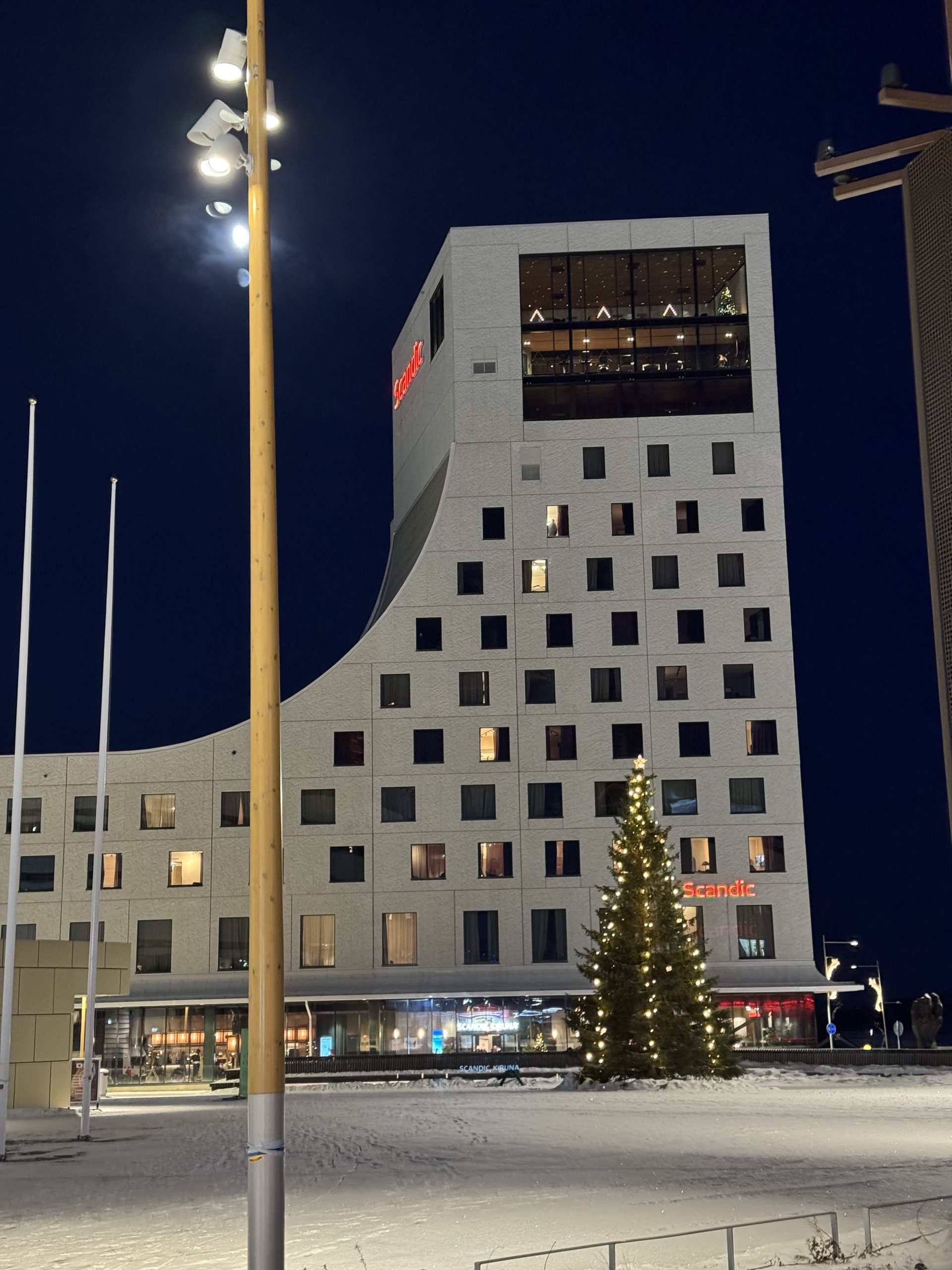
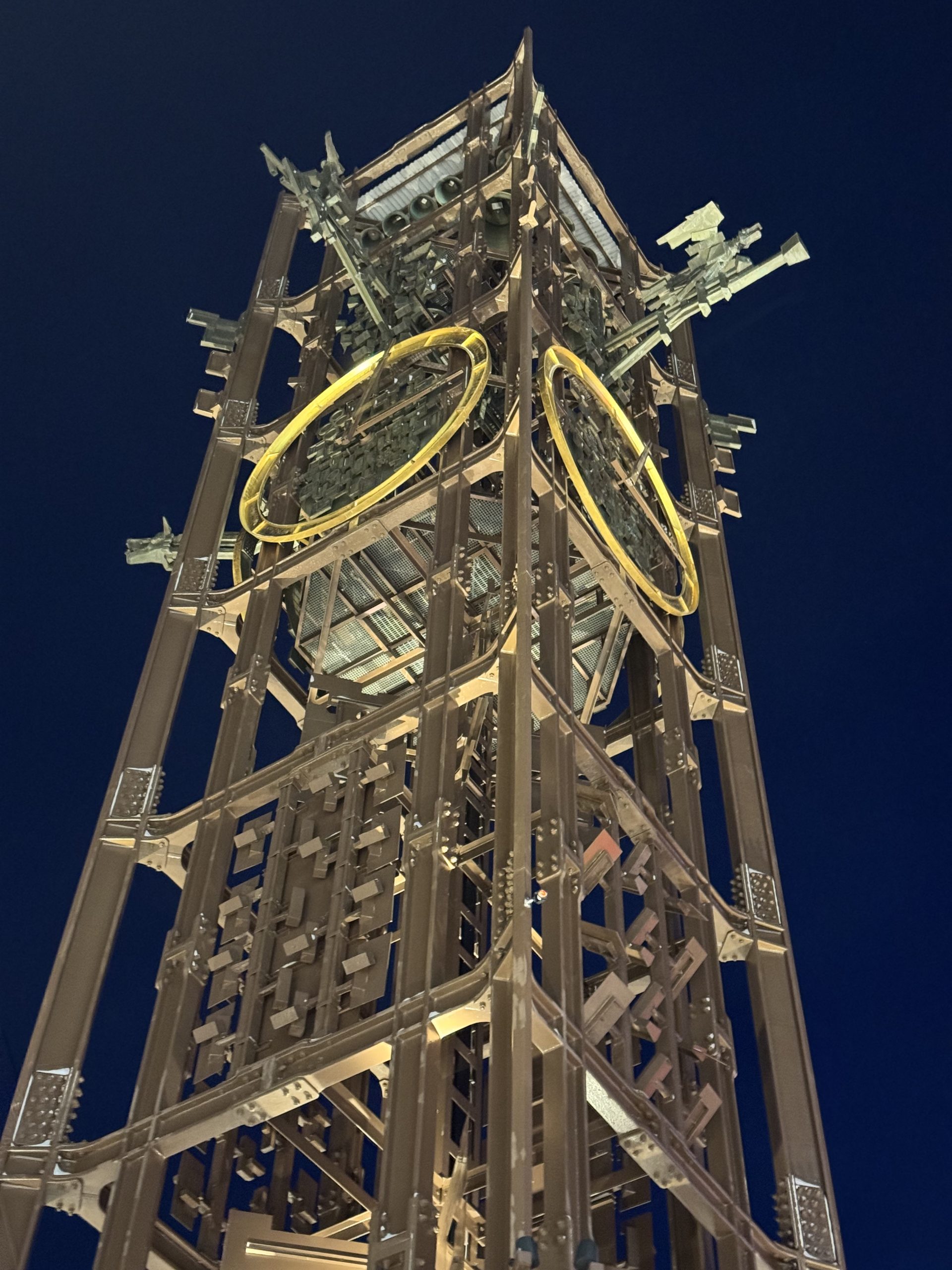
As a visitor, the new city centre is great. A few smart hotels, a couple of cafes, a stunning new town hall and central square – everything right there.
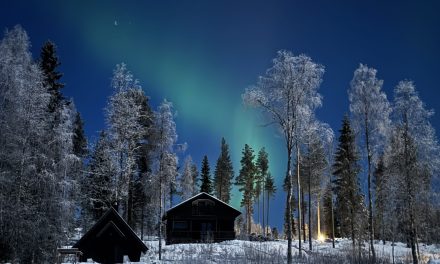
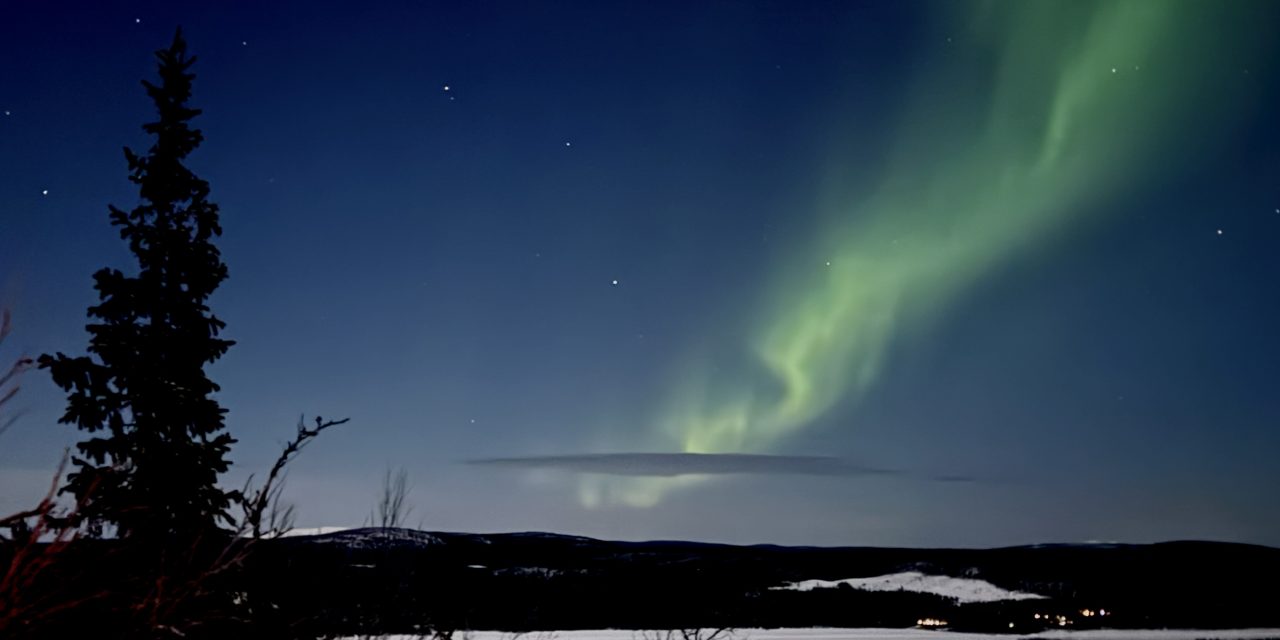
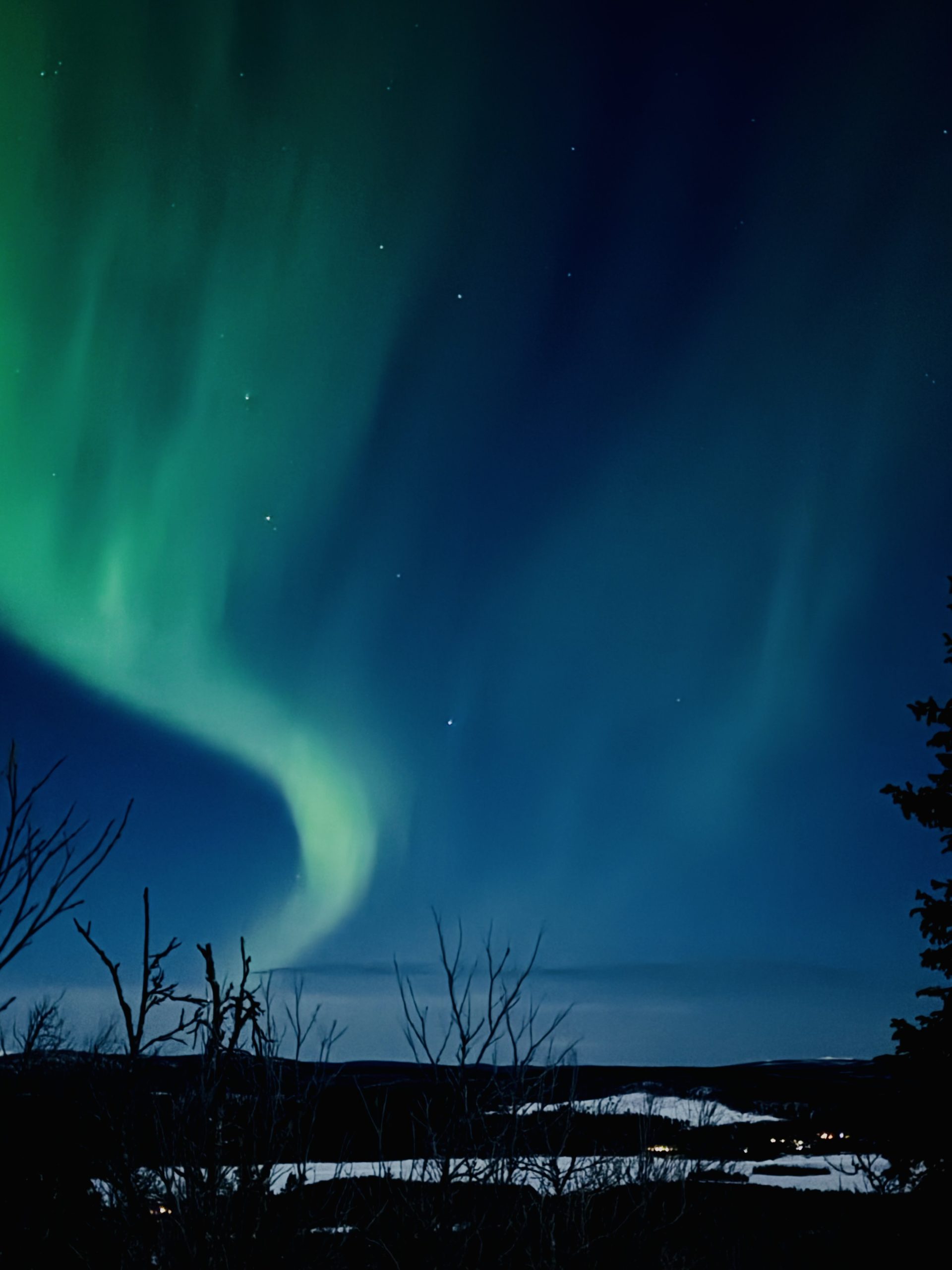
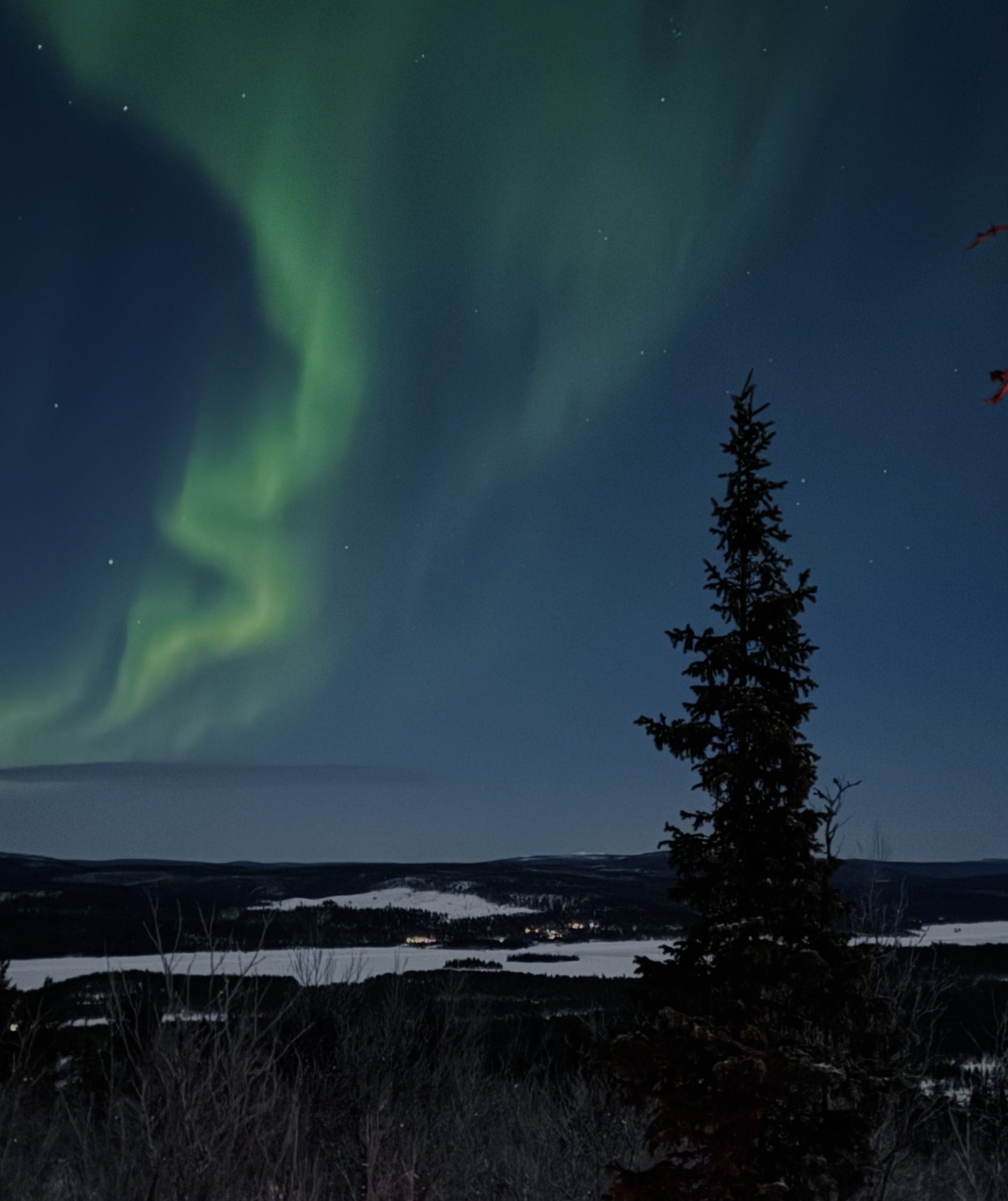
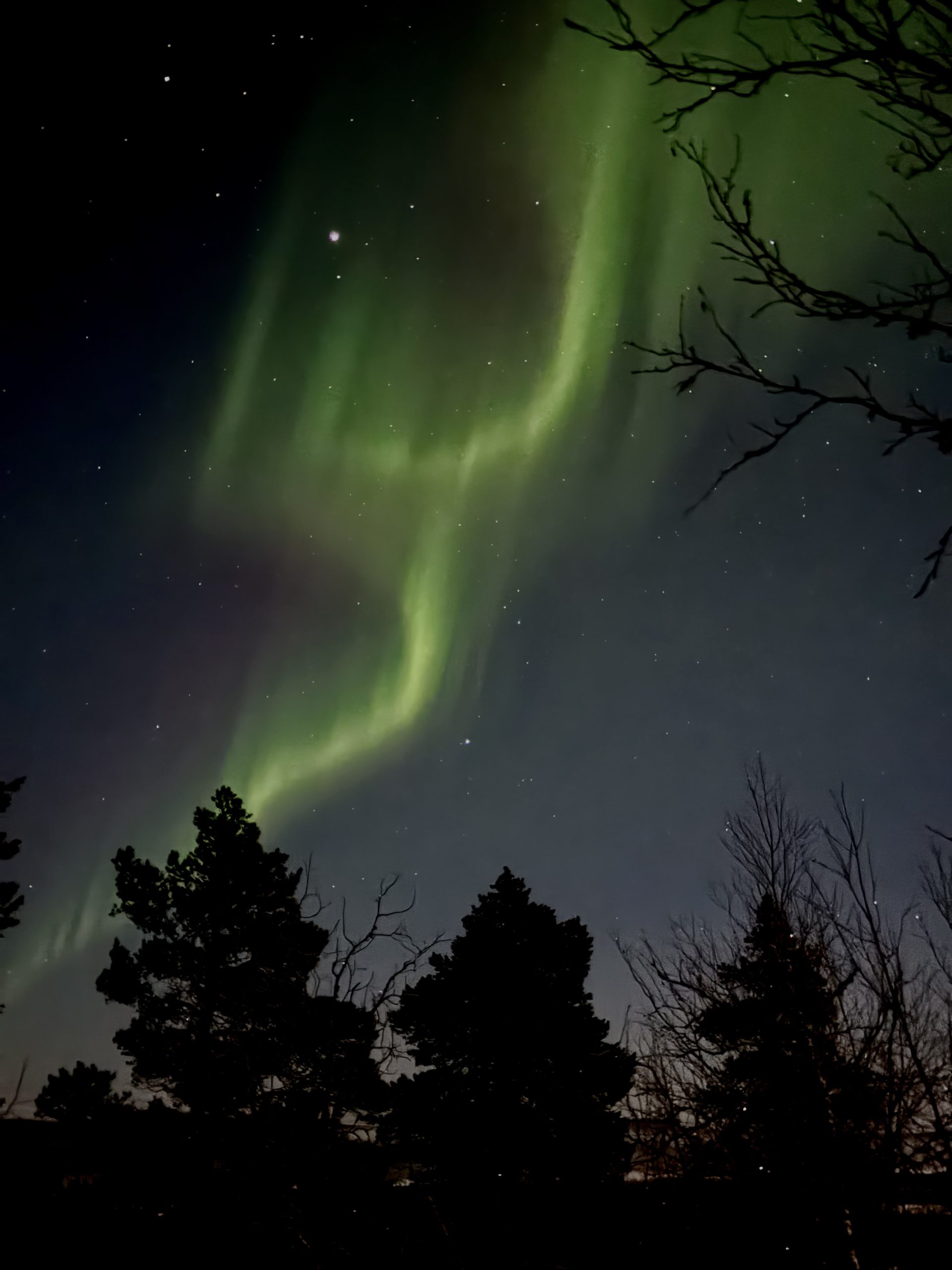
We wanted to get out into nature here, so booked a snow shoeing tour (thanks for the Christmas present, Mum and Dad!). We headed out in a small group with Tilda as our guide to spend the evening hiking up a mountain and back. It was easy going on compacted, icy snow, allowing us to lean into the crunch of the snow shoes and the gentle sparkle of snow under bright moonlight. Halfway up, delicately spun strands of white began to appear in the sky and we stopped to gaze at the Northern Lights. For an hour, each time we looked up there were new shapes and patterns to enjoy. The strong moonlight made them delicate to the naked eye – strong shapes with a just hint of green. At one moment, a twisting spiral curtain falling from the sky. Soon, broadening into a full 180° ‘rainbow’ directly overhead. Even without the full intensity of the colours, they were mesmerisingly beautiful.
At the top of our hike, Tilda made a fire and told stories of the local history and Sami culture while we drank hot lingonberry juice. The lights were still dancing, now sitting above the white line of the distant frozen river – and much greener to the naked eye. Despite a ‘feels like’ temperature of -29, it was warm and cosy by the fire and a really beautiful way to spend an evening. The moonlight and snow made the forest sparkle with light on the hike back down – no head torch needed. We spread out and enjoyed some quiet time – enjoying the bite of the crampons into the icy snow as we made our way back to the car.
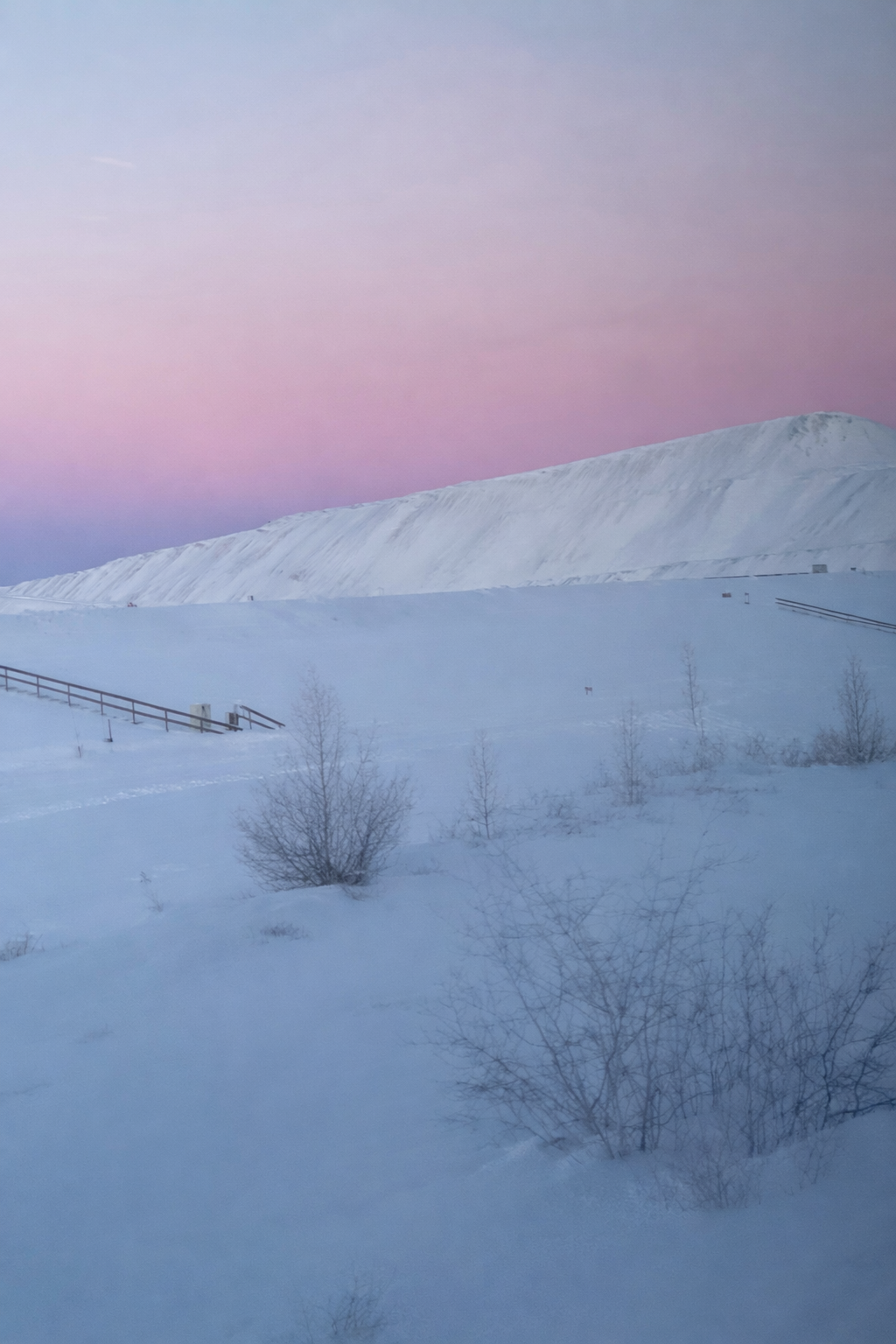
Our morning walk rewarded us with an almost-sunrise to go with a crisp (-23) start to the day – stunning colours over the distant hills which softened into the most beautiful pastel pink haze on the horizon. From here we head south for new year, so tomorrow will come with real daylight. I’ll miss the magic of the polar night and the extra meaning it brings to the warmly-lit windows in these northern towns.