Latitude: 54.7° north
Weather: -16, ☃️ Sunrise: 08:30 Sunset: 16:25
It was late and dark by the time we emerged from the train into Vilnius. Not the easiest time to arrive into any city, let alone an unknown capital in a new country.
We crossed the snowy platform, stamped the snow back off our boots and stepped into a warm, bright, modern station building, cafes aglow and a lovely feeling of quiet calm. First impressions, Vilnius: spot on!
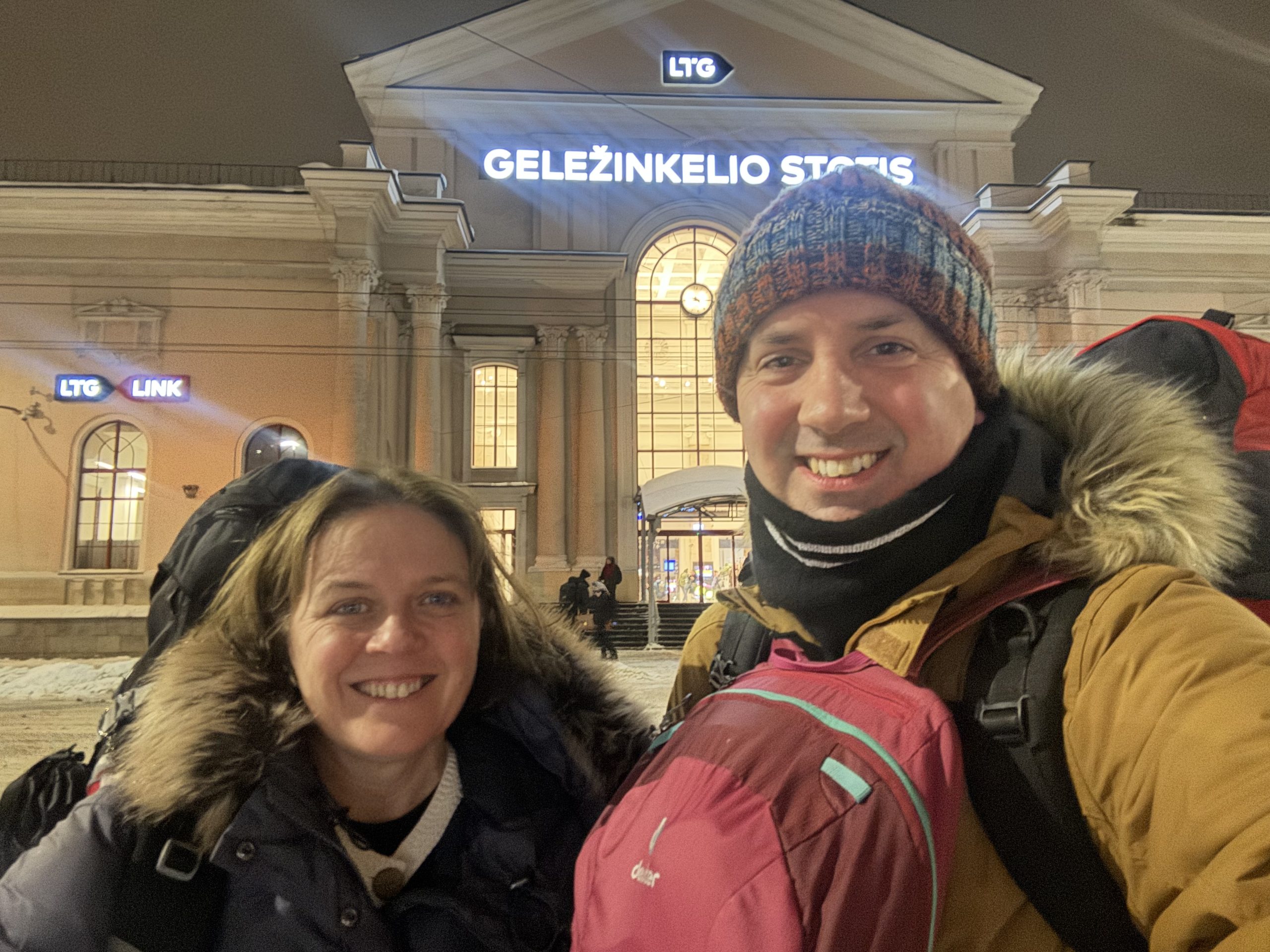
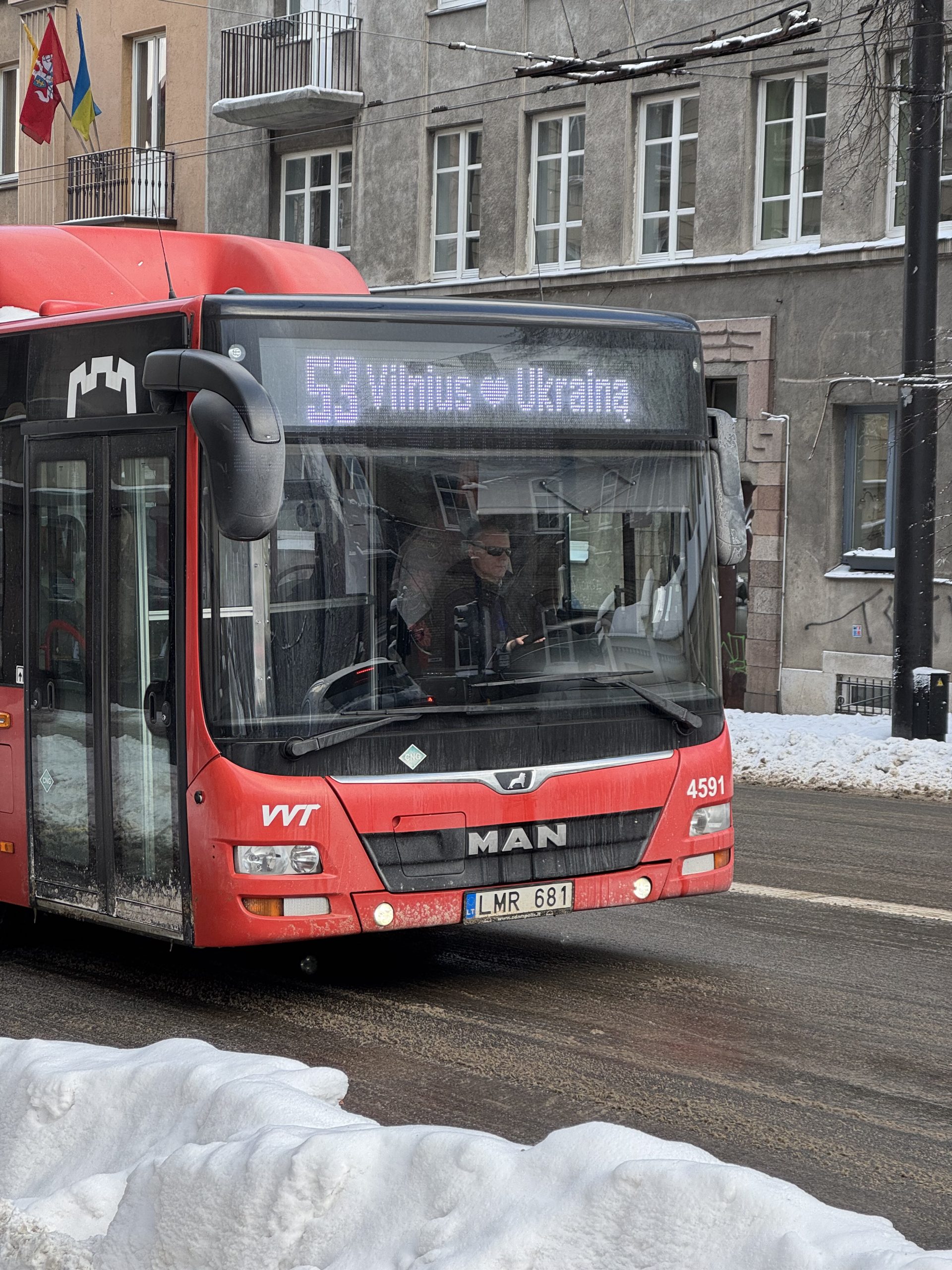
It was a short walk to our apartment and the city felt peaceful. Two buses parked up by the side of the road had their digital displays showing ‘Vilnius 🖤 Ukraine’. By the time we were into our lovely little apartment, minutes from the station, I was already feeling warm and fuzzy toward Vilnius.
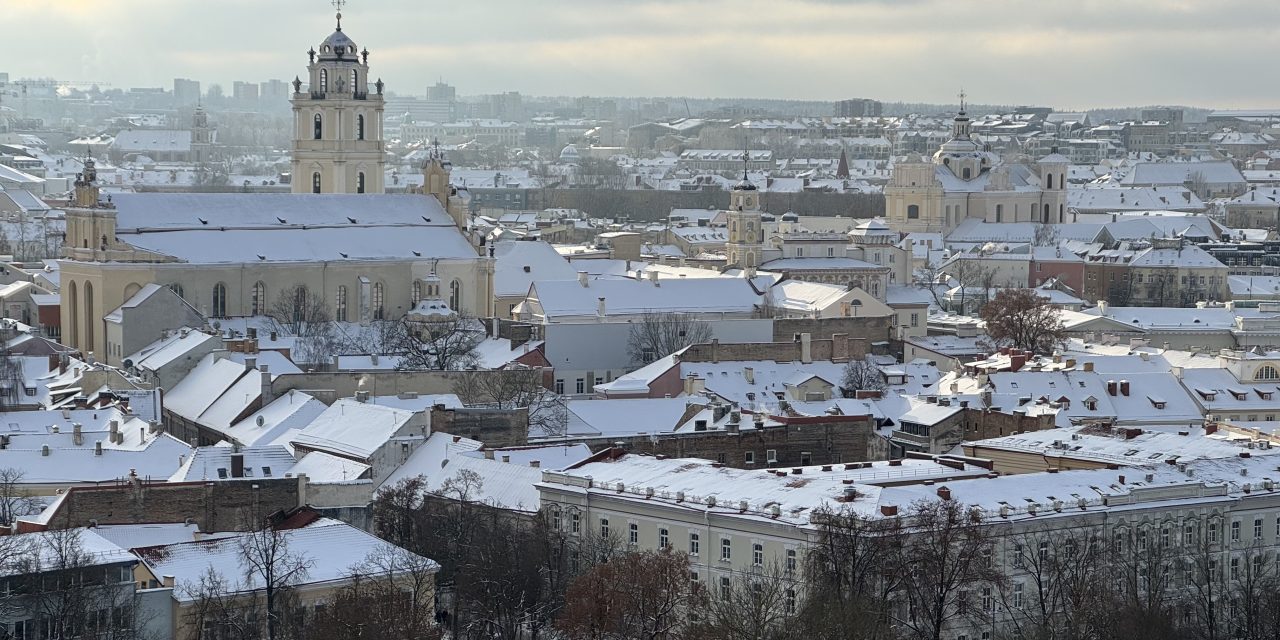
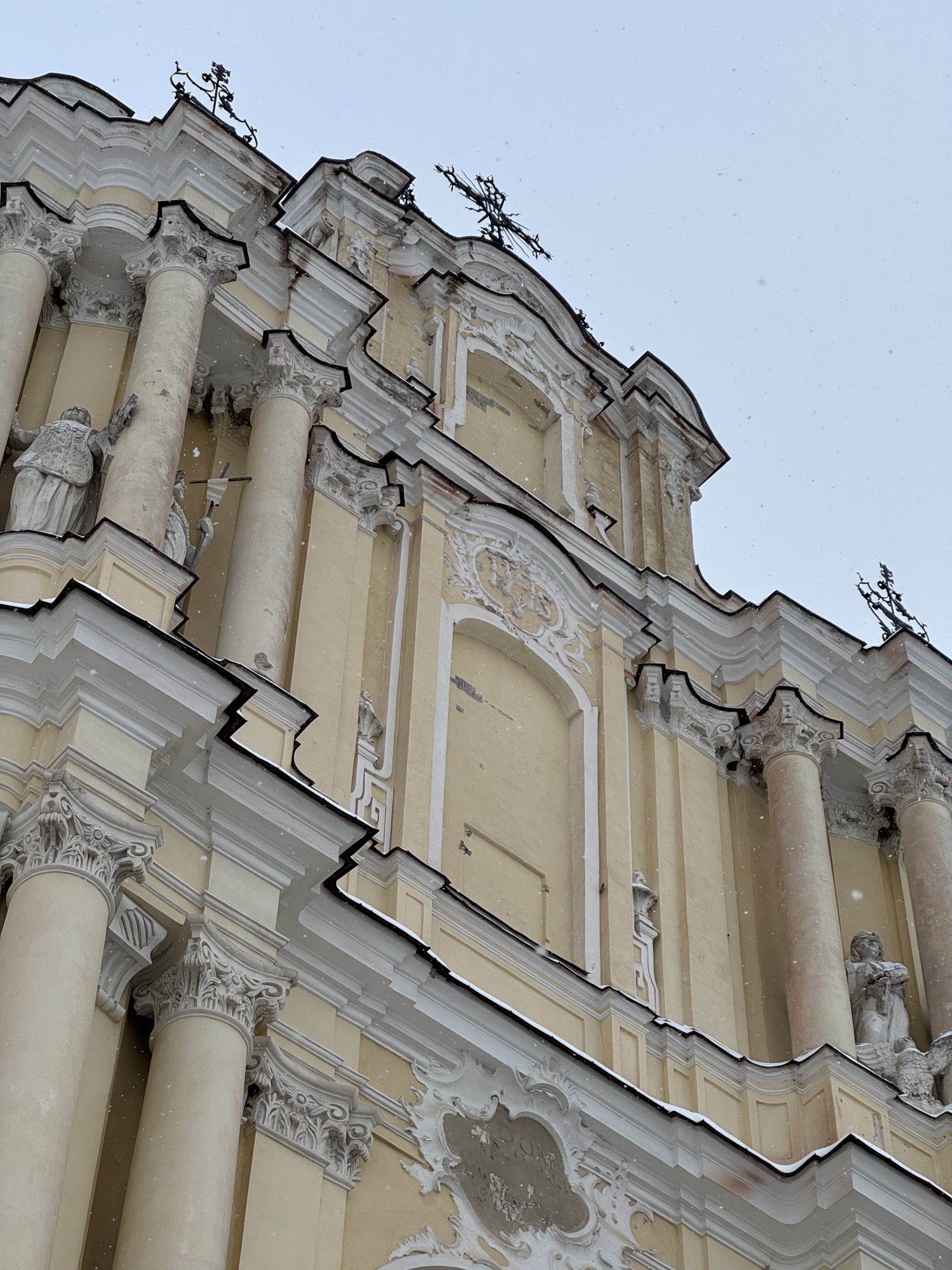
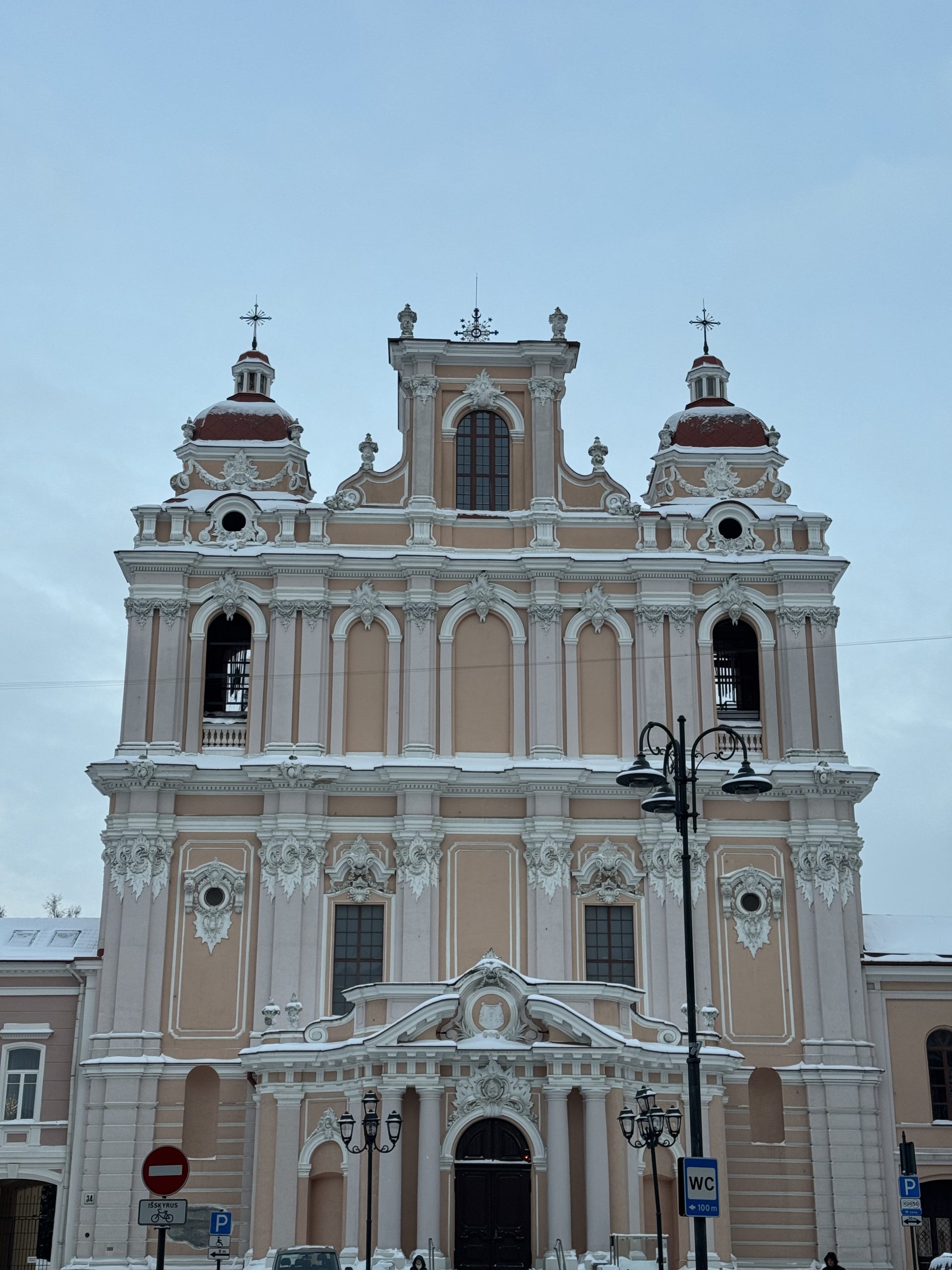
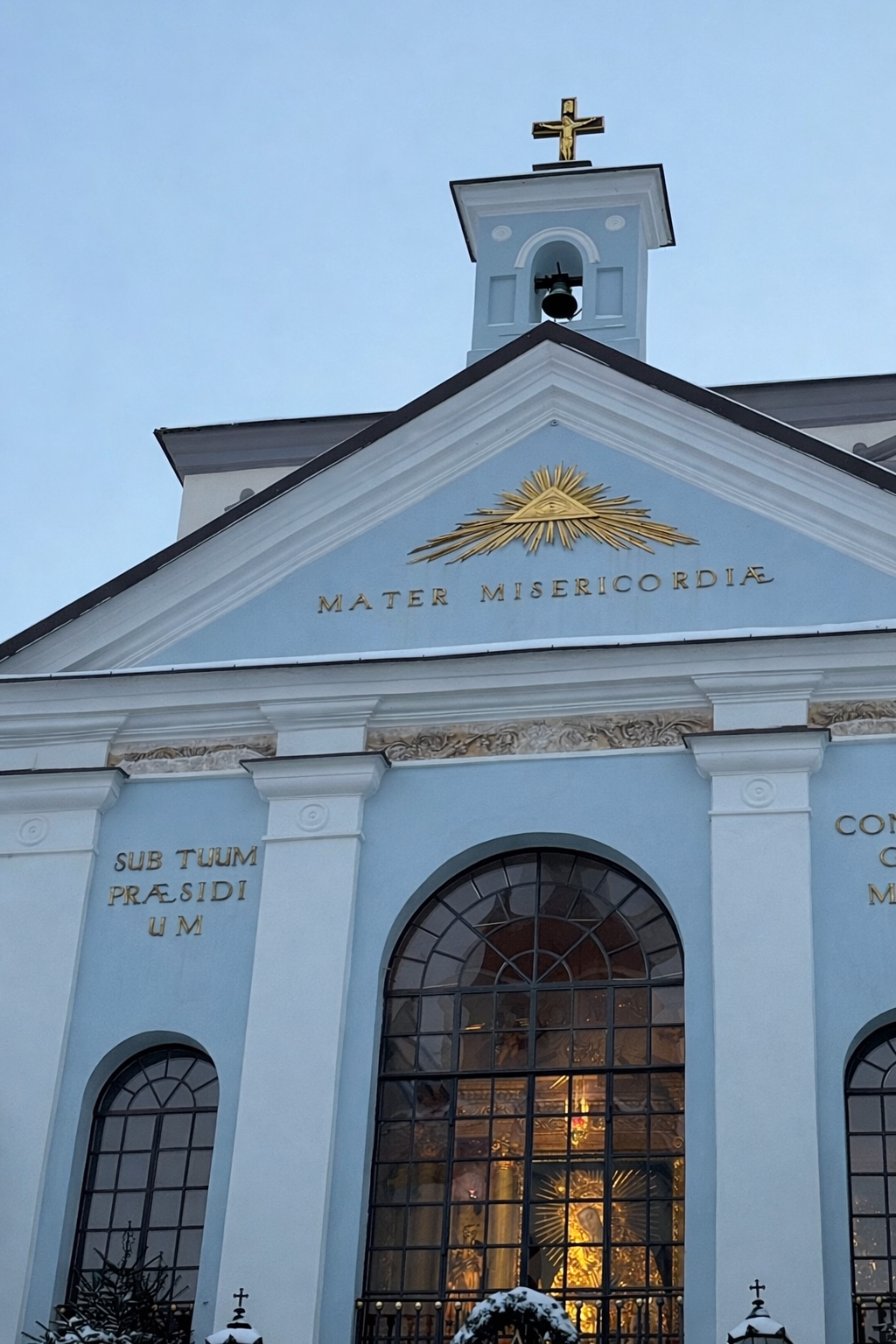
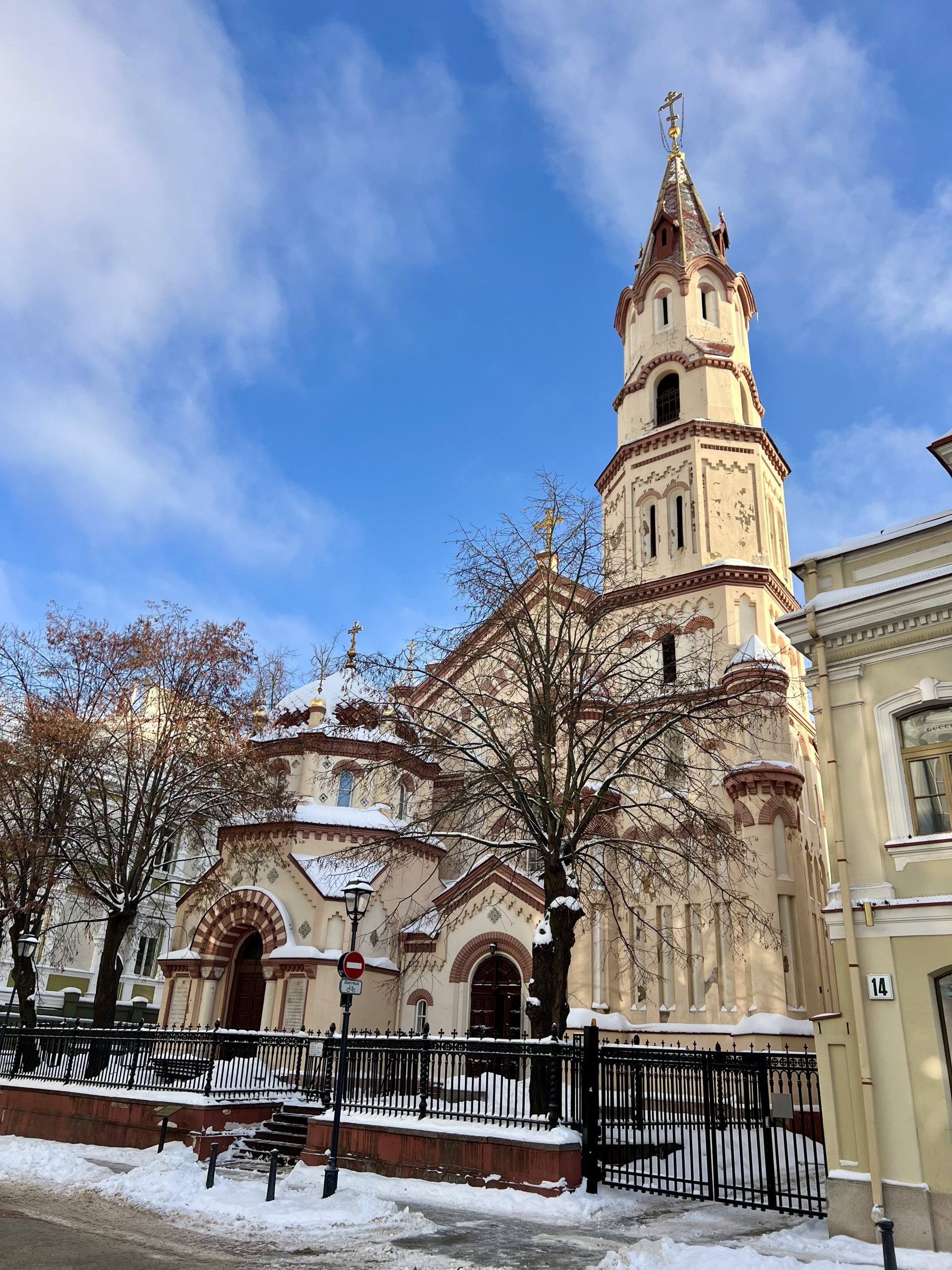
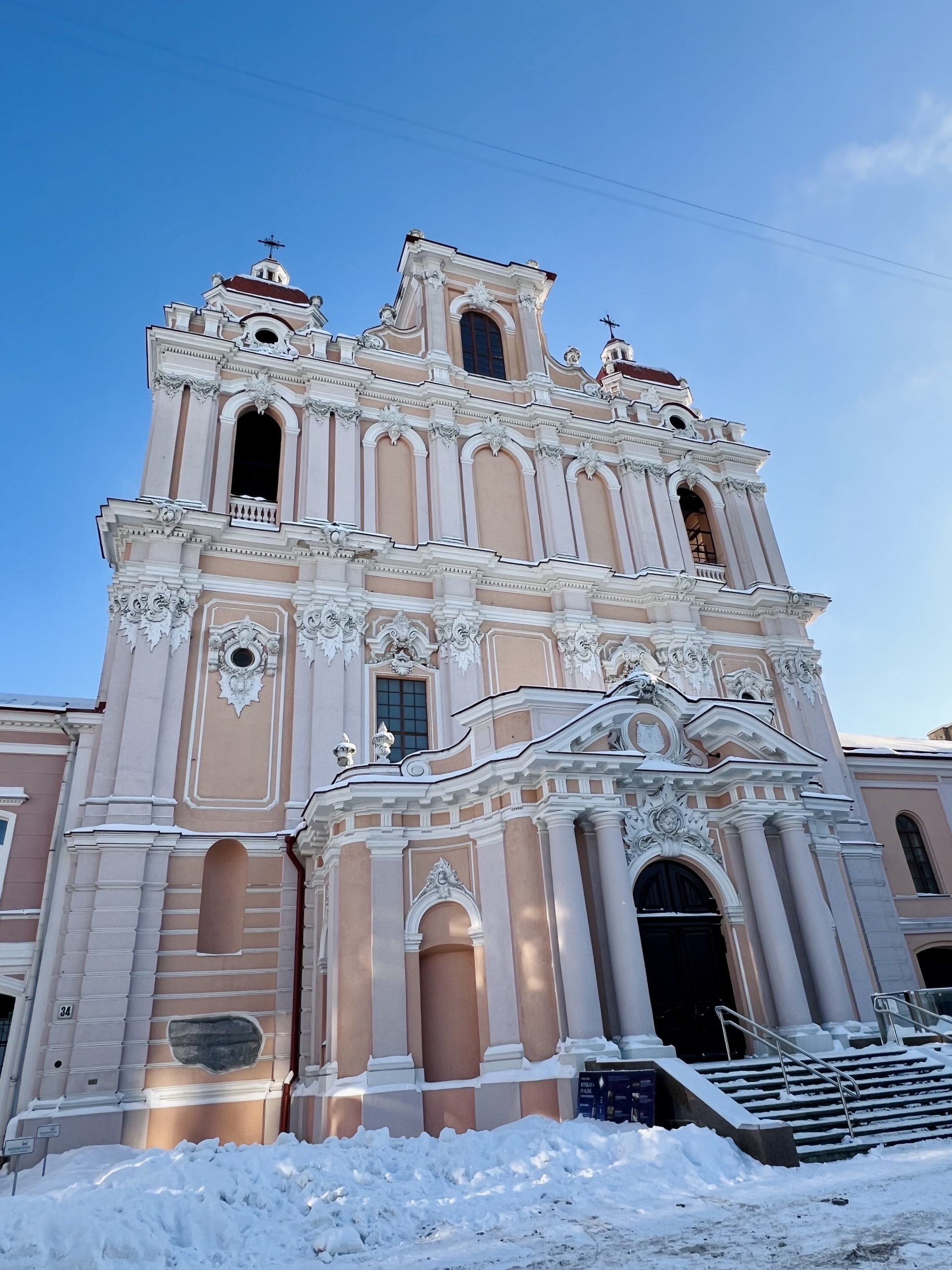
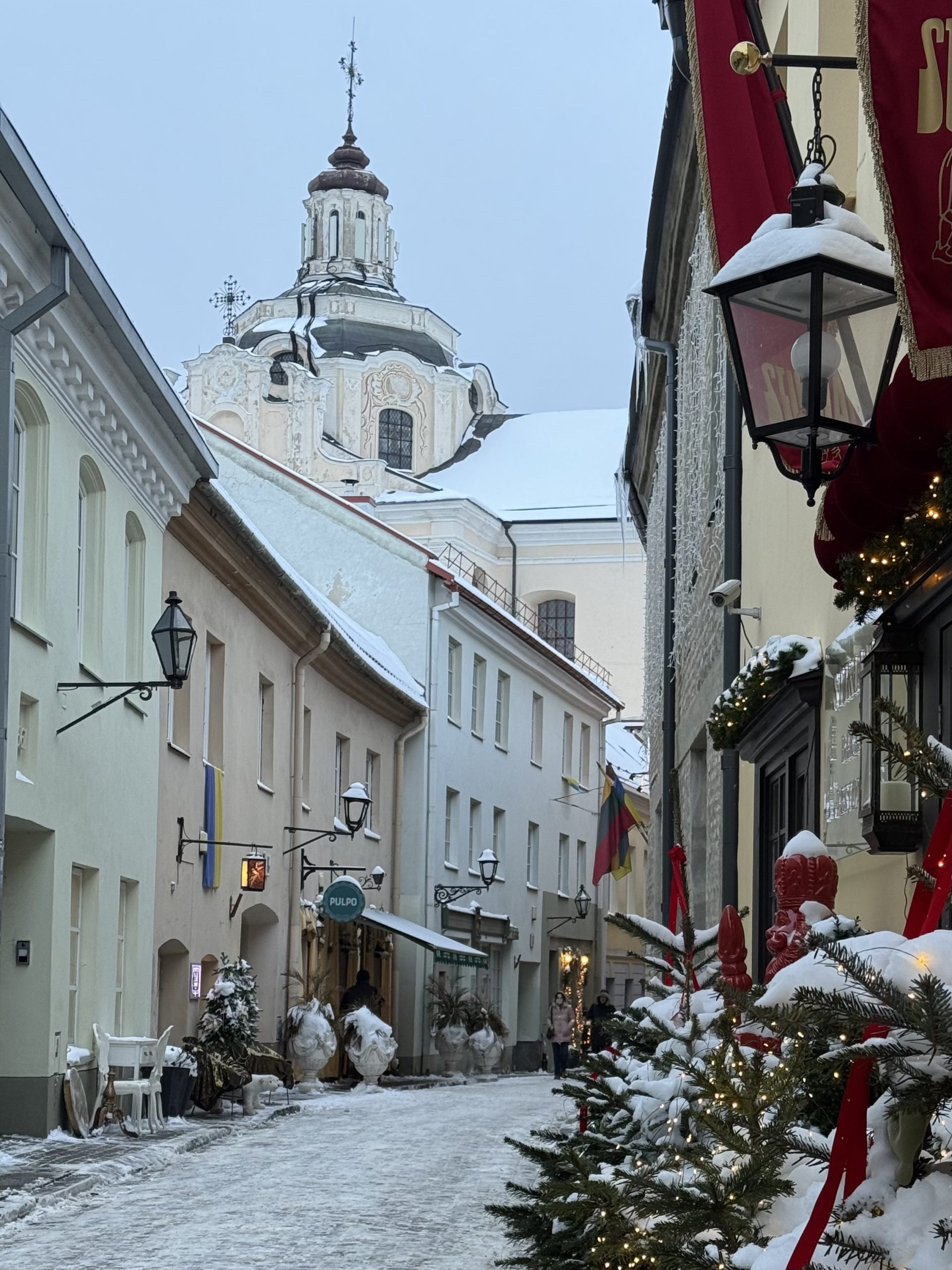
It’s fun emerging in the morning into a city that’s completely unknown. It was snowing and a bright, biting cold as we headed out in search of coffee to kickstart the day. By the time we’d made the 10 minute walk to the earmarked cafe, I’d already fallen for Vilnius. The Old Town is incredibly, gently beautiful. Totally different from Riga’s big city vibes and grand, statement architecture, and a world away from Tallinn’s medieval tour-group perfection. Vilnius Old Town is gentle, pastel baroque beauty. Ornate churches, elegant renaissance and classical buildings, all gentle colours against the white snow-filled sky. Vilnius immediately felt soft – feminine even – contrasted with the more masculine energy of Riga.
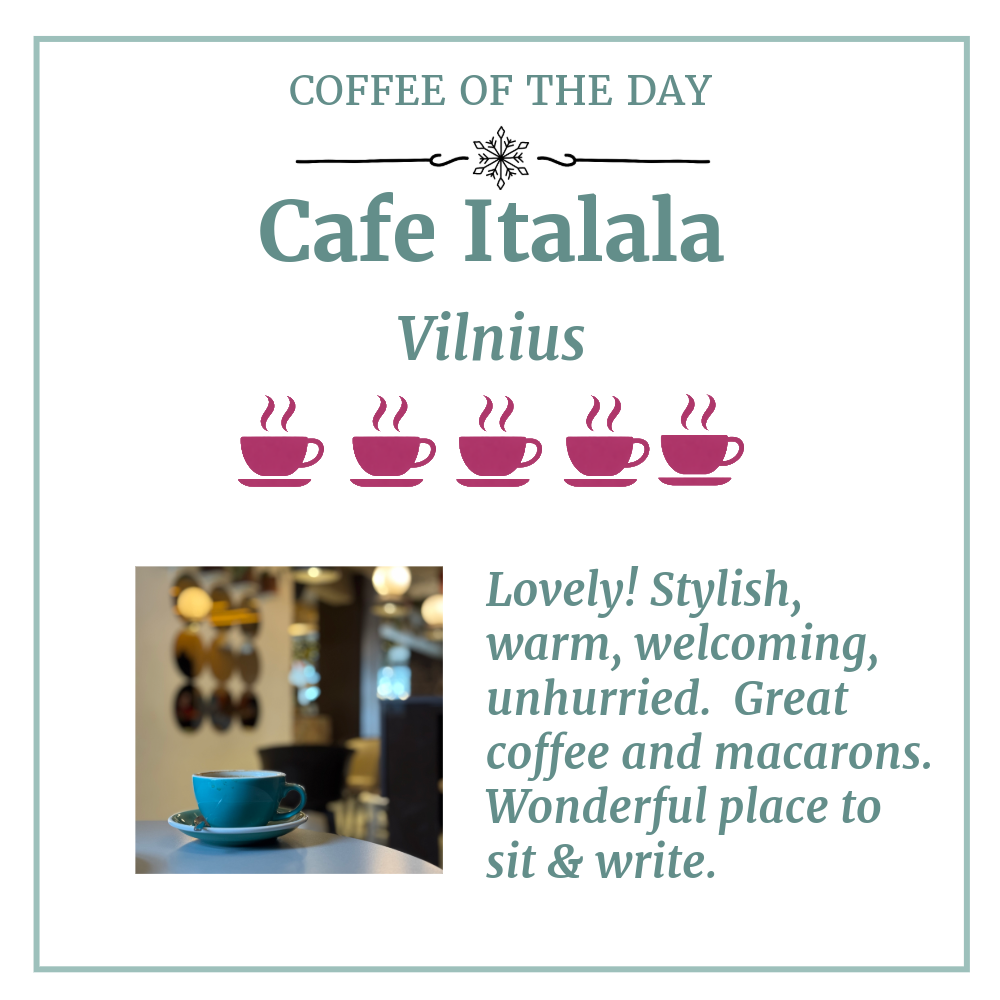
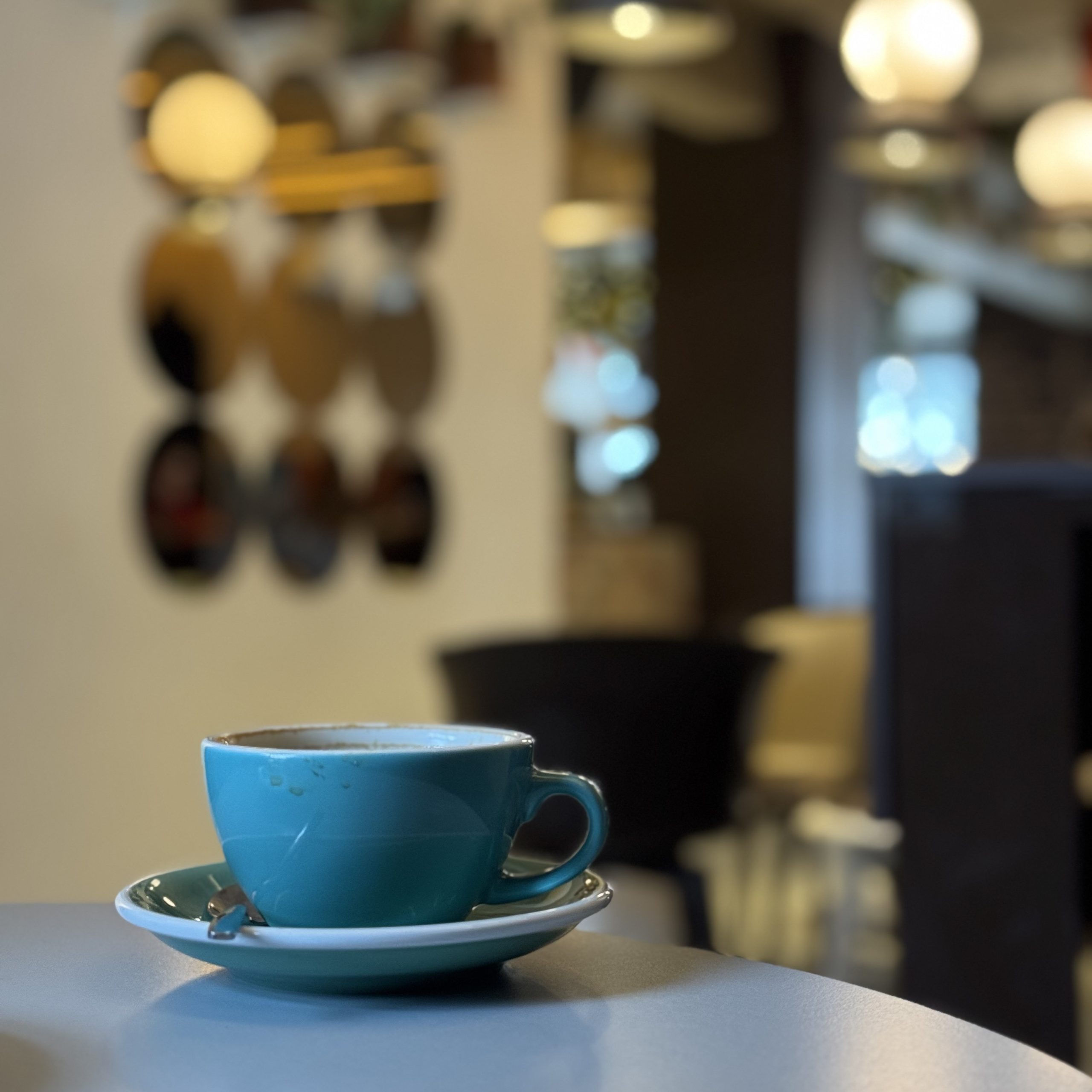
A good town/city doesn’t work for me until I’ve found a good cafe to call home. In Vilnius you’re unbelievably spoilt for choice. Our first pick, Cafe Italala, was spot on and a perfect reflection of the Vilnius vibe. Modern and stylish but still warm and welcoming, gently humming with conversation – and top-notch coffee. Vilnius base established!
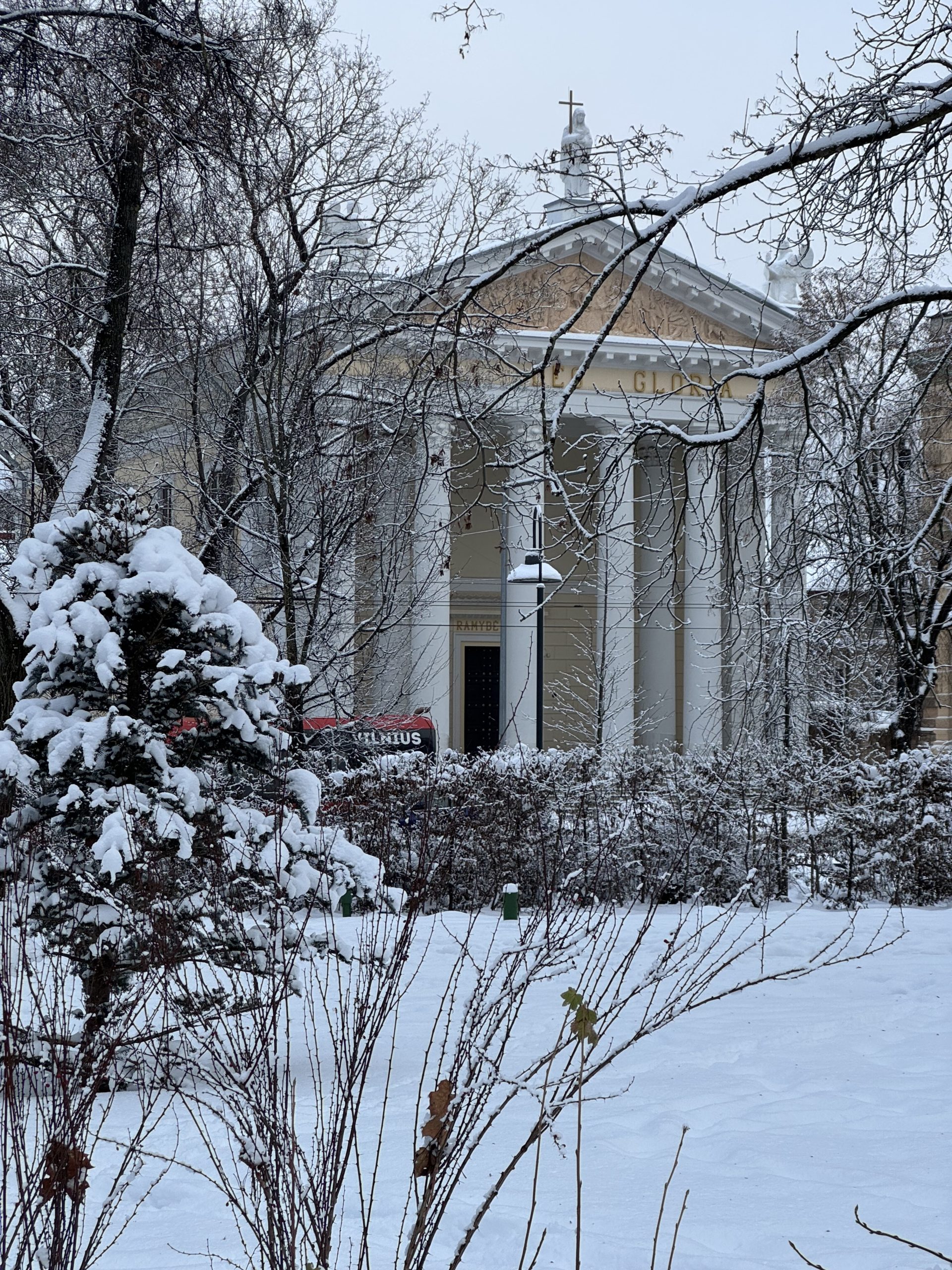
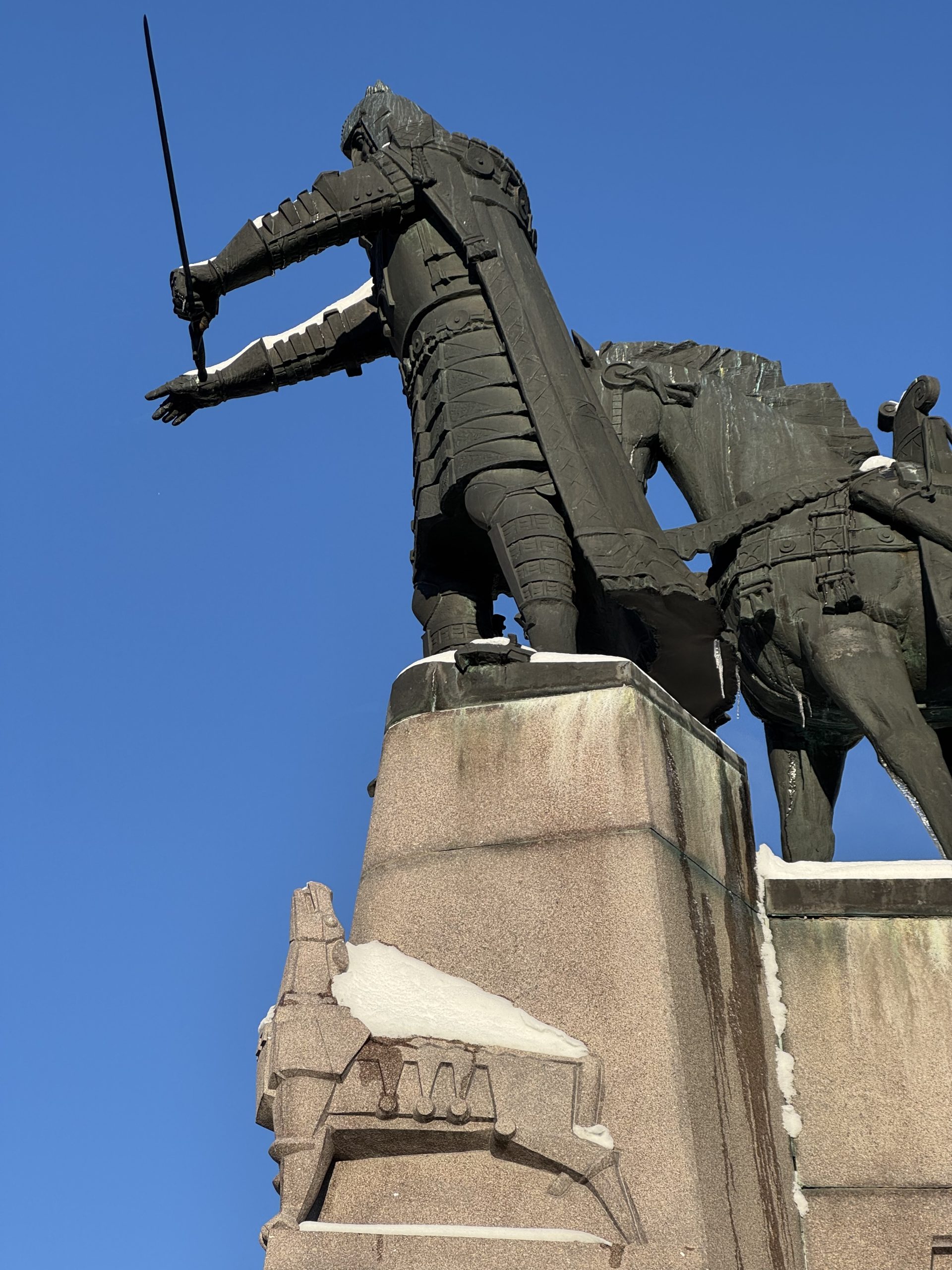
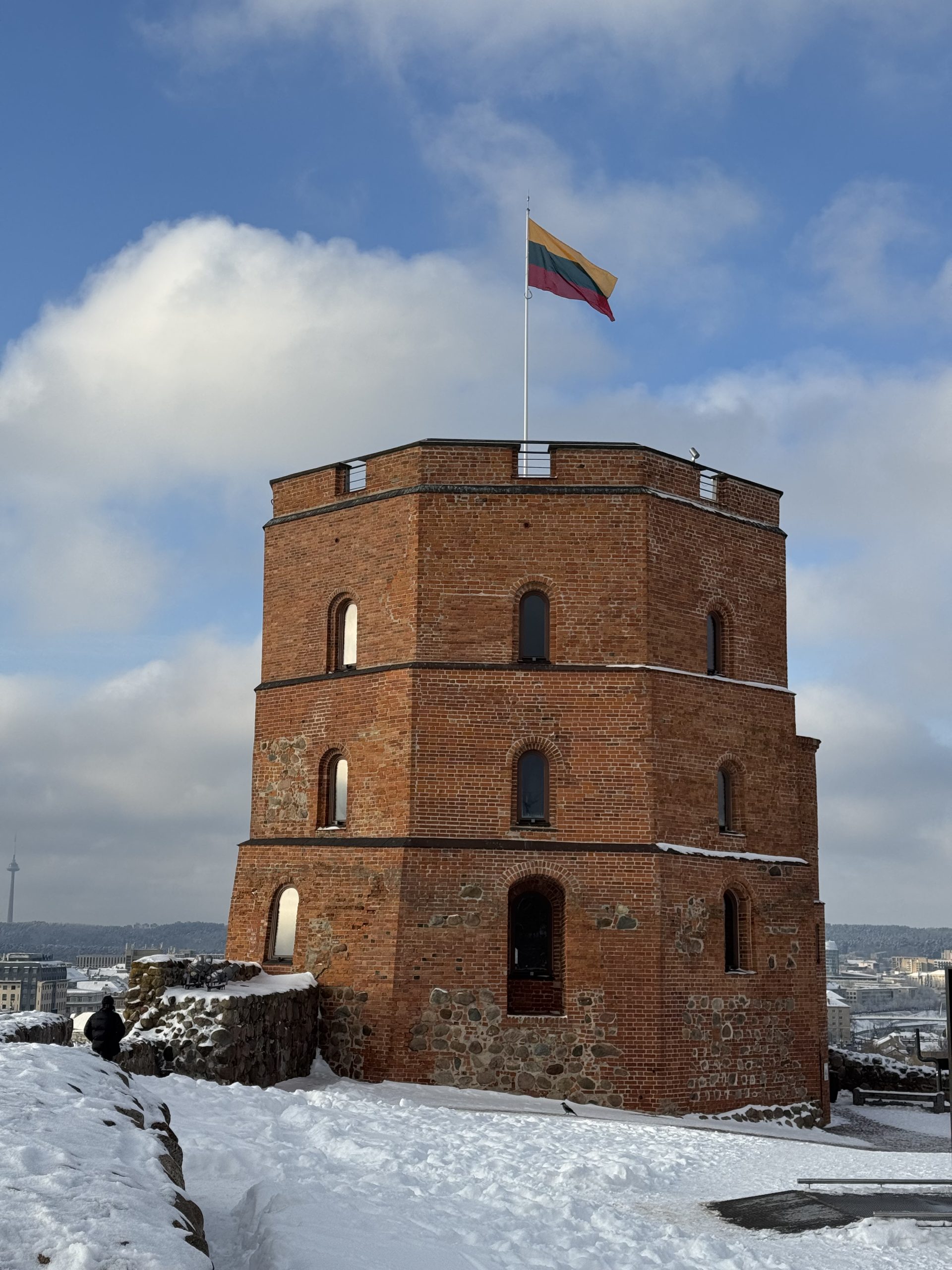
We spent our first morning on a walking tour of Vilnius with local resident Ugne, who did a brilliant job of bringing the city to life for our small group of four. Walking the city in heavy snow, we learnt the story of Gediminas, who was inspired to form Vilnius after a dream of a howling iron wolf. His statue stands in front of the white cathedral, and the remains of a medieval castle in his name stand on the hill behind.
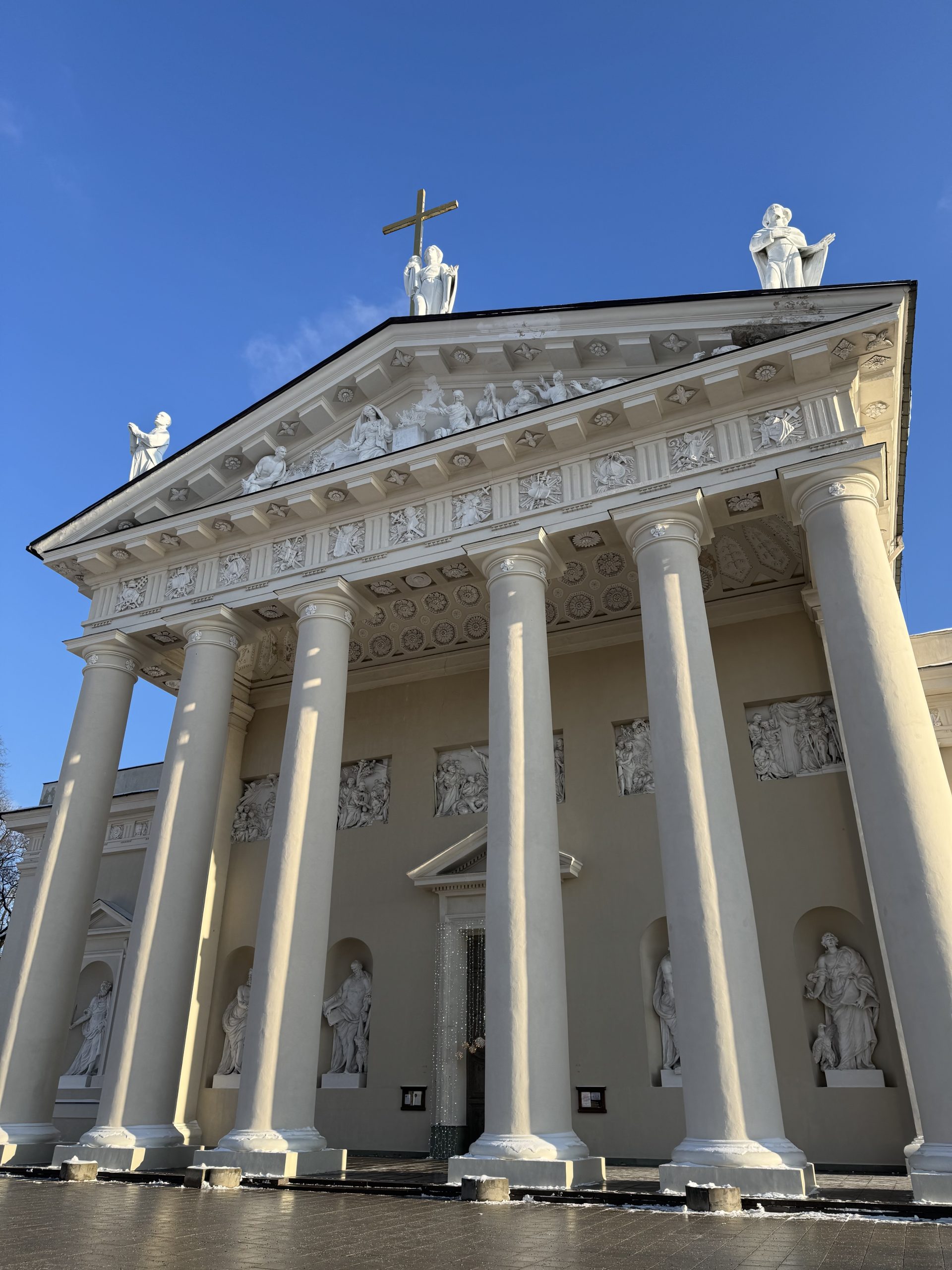
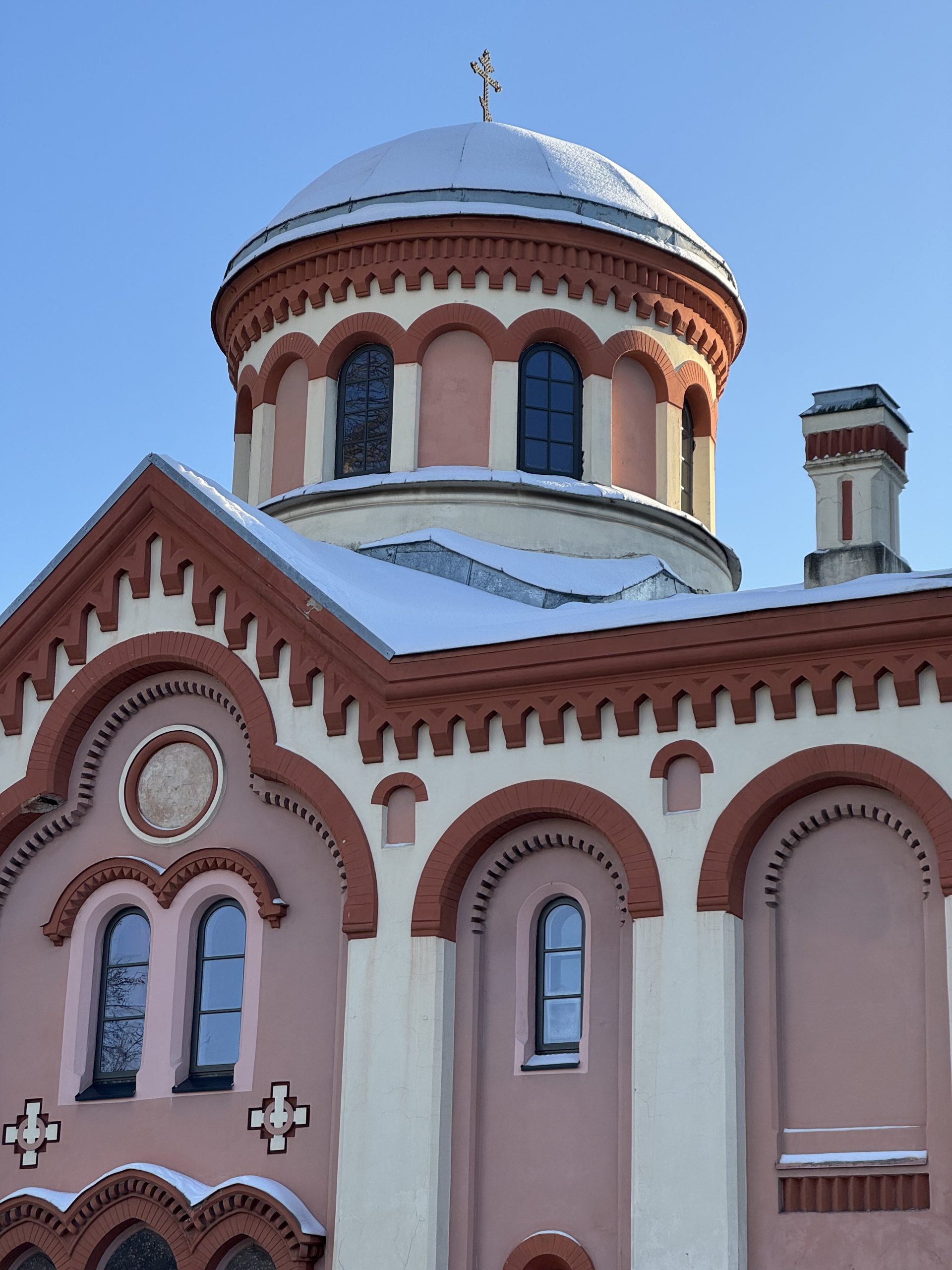
Vilnius is a city of churches (one of the highest densities in Europe), many of them Catholic and built in intricate, baroque style. Lithuania is predominantly a Catholic country (unlike neighbouring Latvia, which is predominantly Lutheran and has a correspondingly different architectural style). That said, Lithuania maintains strong pagan roots (it was the last European country to convert to Christianity) and a deep reverence for nature and folk traditions.
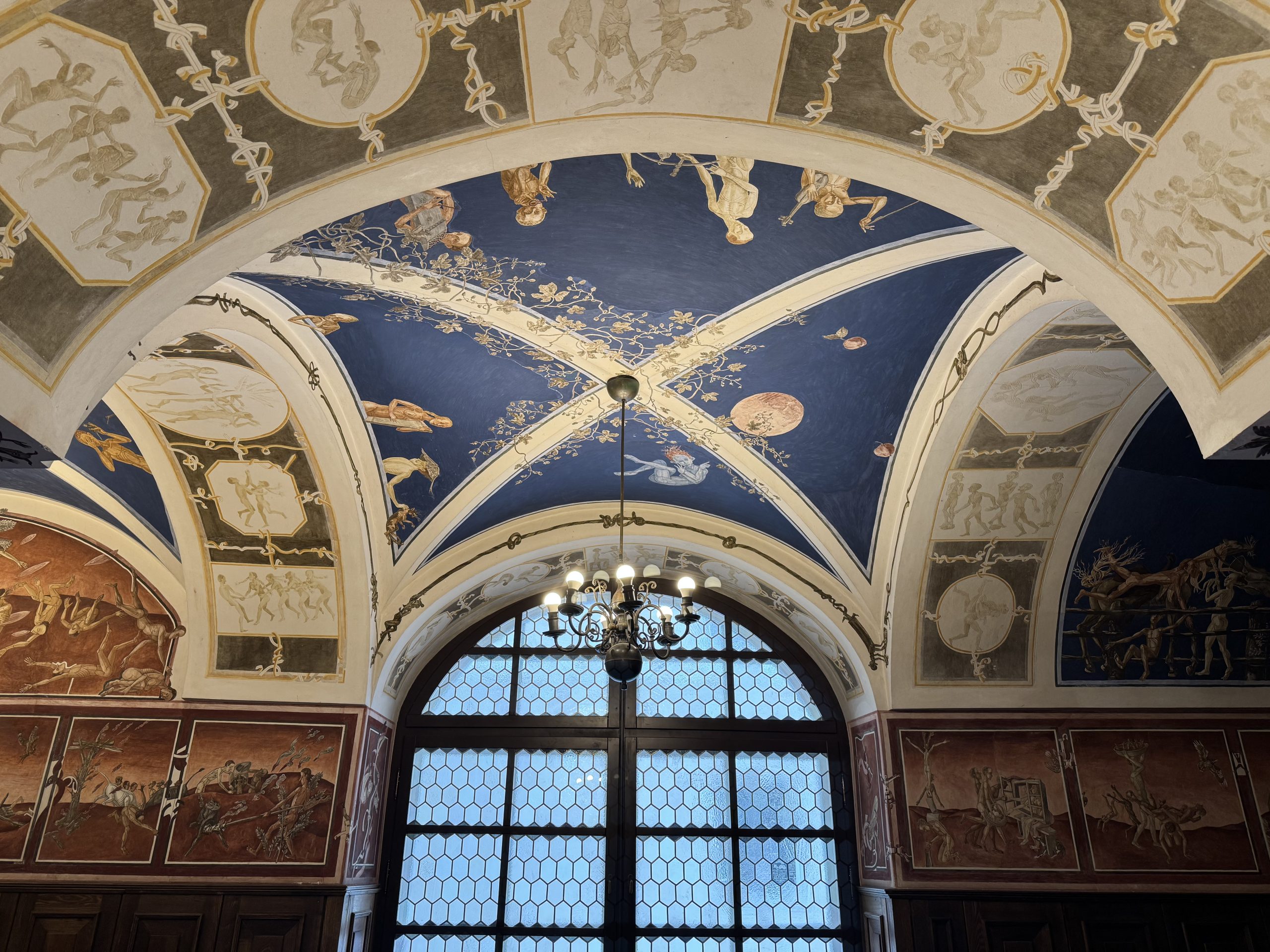
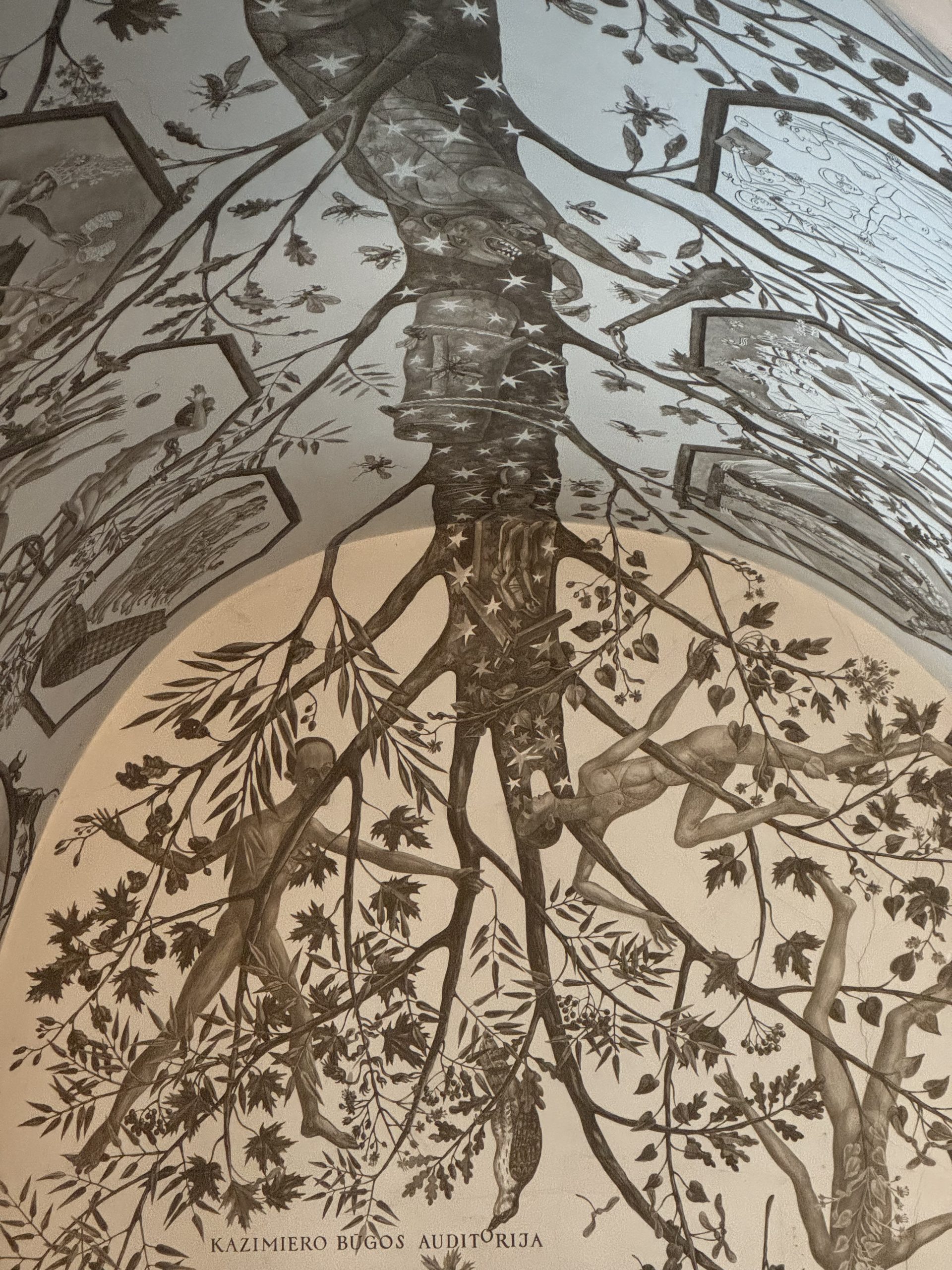
We visited Vilnius University with Ugne, a prestigious university dating back to the 16th century, set in beautiful buildings around courtyards. Highlight of our brief visit was the stunning ‘Four Seasons’ fresco, painted in 1979 to celebrate the 400th anniversary of the university. Painted across the arches of a vaulted ceiling, the work depicts each of the seasons, through nature, folk traditions and beliefs. Rituals to defeat winter; the rebirth of spring; ceremonies and celebrations. Lithuanians have a strong love for trees, which are protected and revered here; one section of the fresco depicts trees as a link to the spirit world and our ancestors.
As we explored the city together, we got a sense from Ugne of a country which is proud of the way it has rebuilt and grown since it regained its independence from the Soviet Union. Proud members of the EU, growing economically, with a strong sense of identity, pride and citizenship. A huge value is placed on education (everyone is entitled to free education right through to PhD) and there’s a thriving service and tech sector. Of course Lithuania is not without its problems, both domestically and geopolitically right now, but Vilnius feels like a thriving city: beautiful, cared for, clean and tidy, sophisticated and elegant.
It’s also as quirky and fun as it is elegant. To the edge of the Old Town, boundary marked by a bend in the river, is the ‘Republic of Užipis’: an arty, bohemian community that declared itself an independent republic on April Fool’s Day in 1997. It has its own currency (Euros also welcome!), flag, president and constitution. A sign by the bridge that leads to Užipis reminds you to smile. Quirks aside, there’s a genuine community living here, trying to build a different and egalitarian way of life, and a sense of international friendship through links with other arty communities across the world.
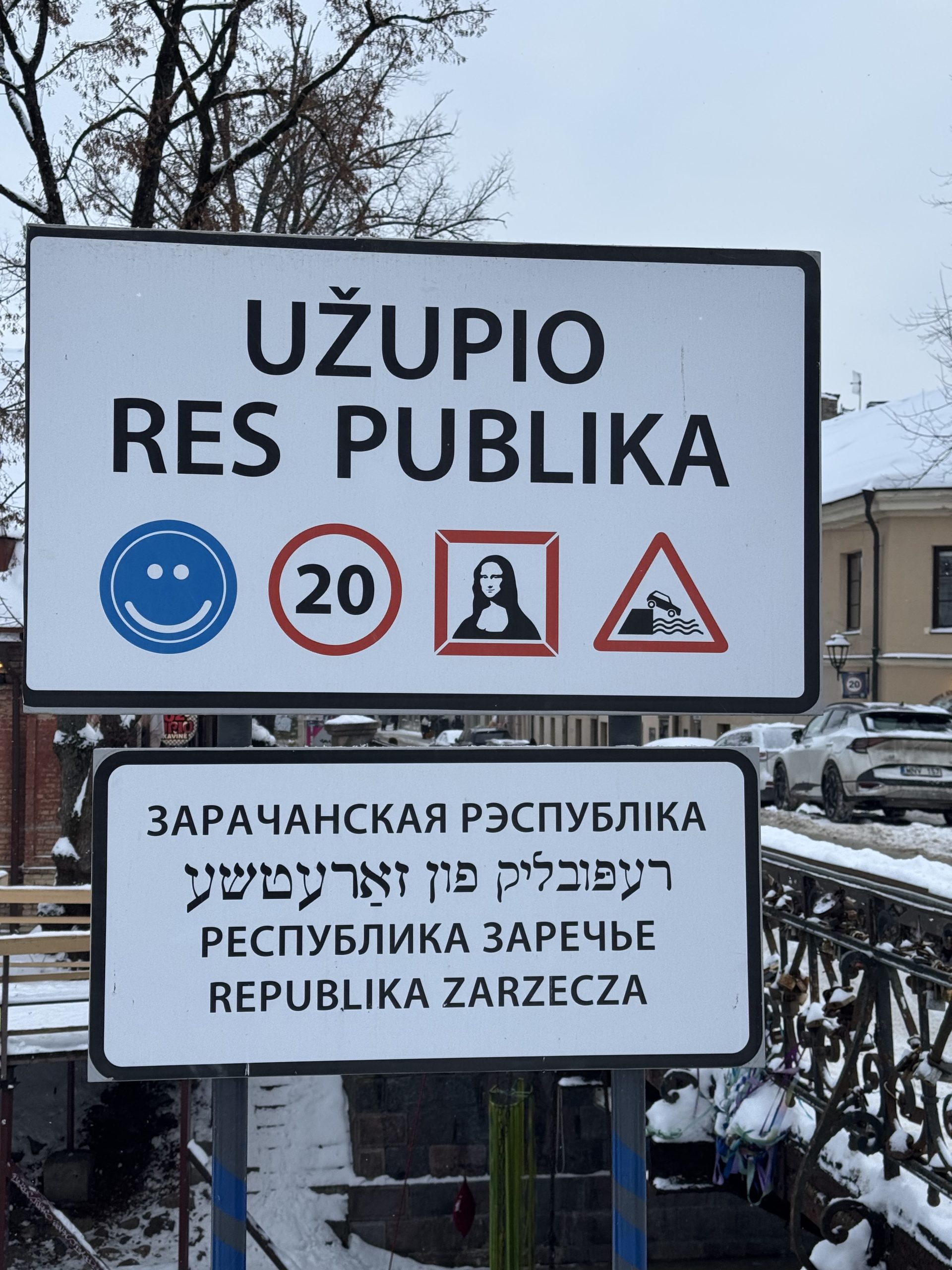
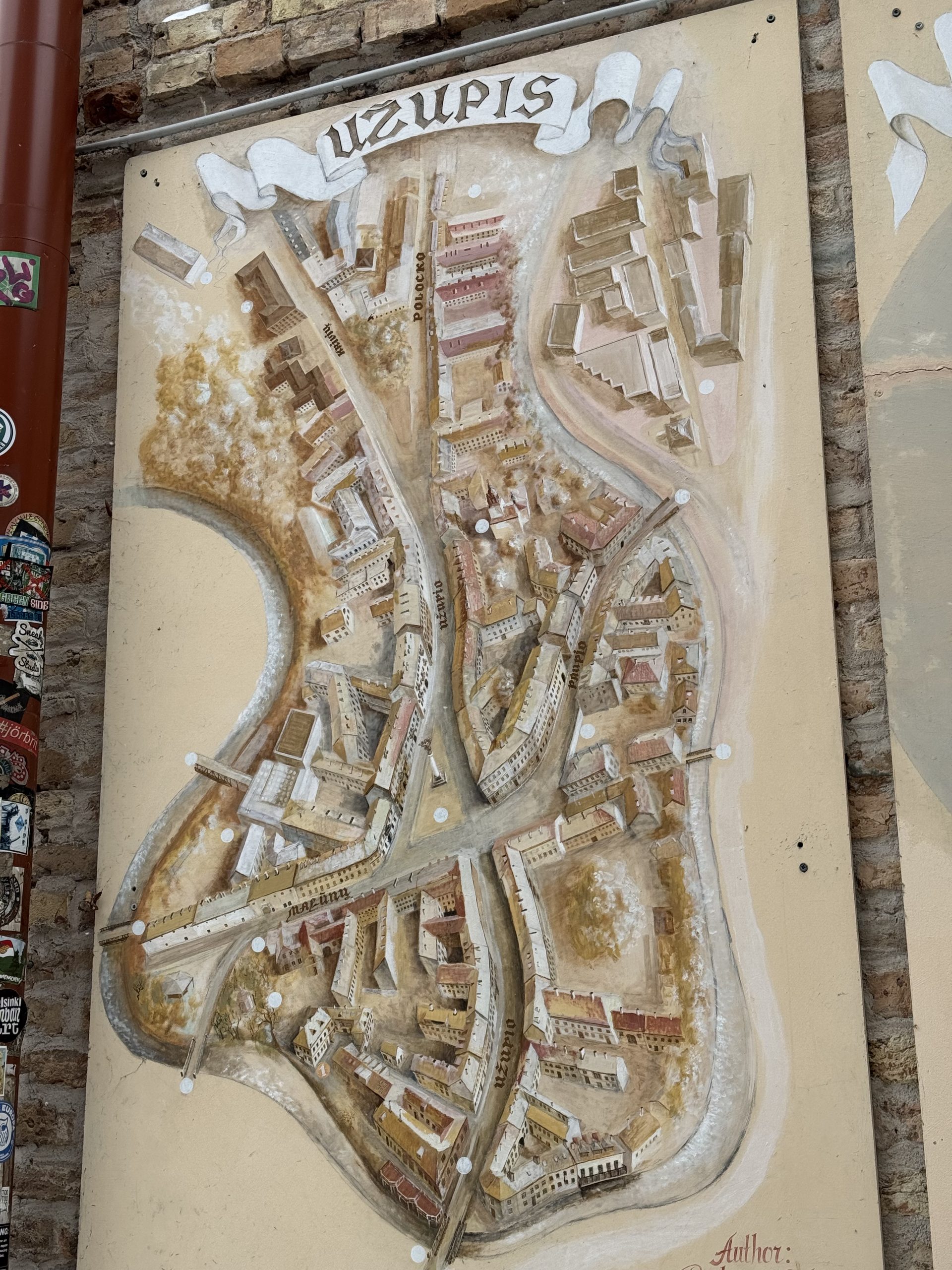
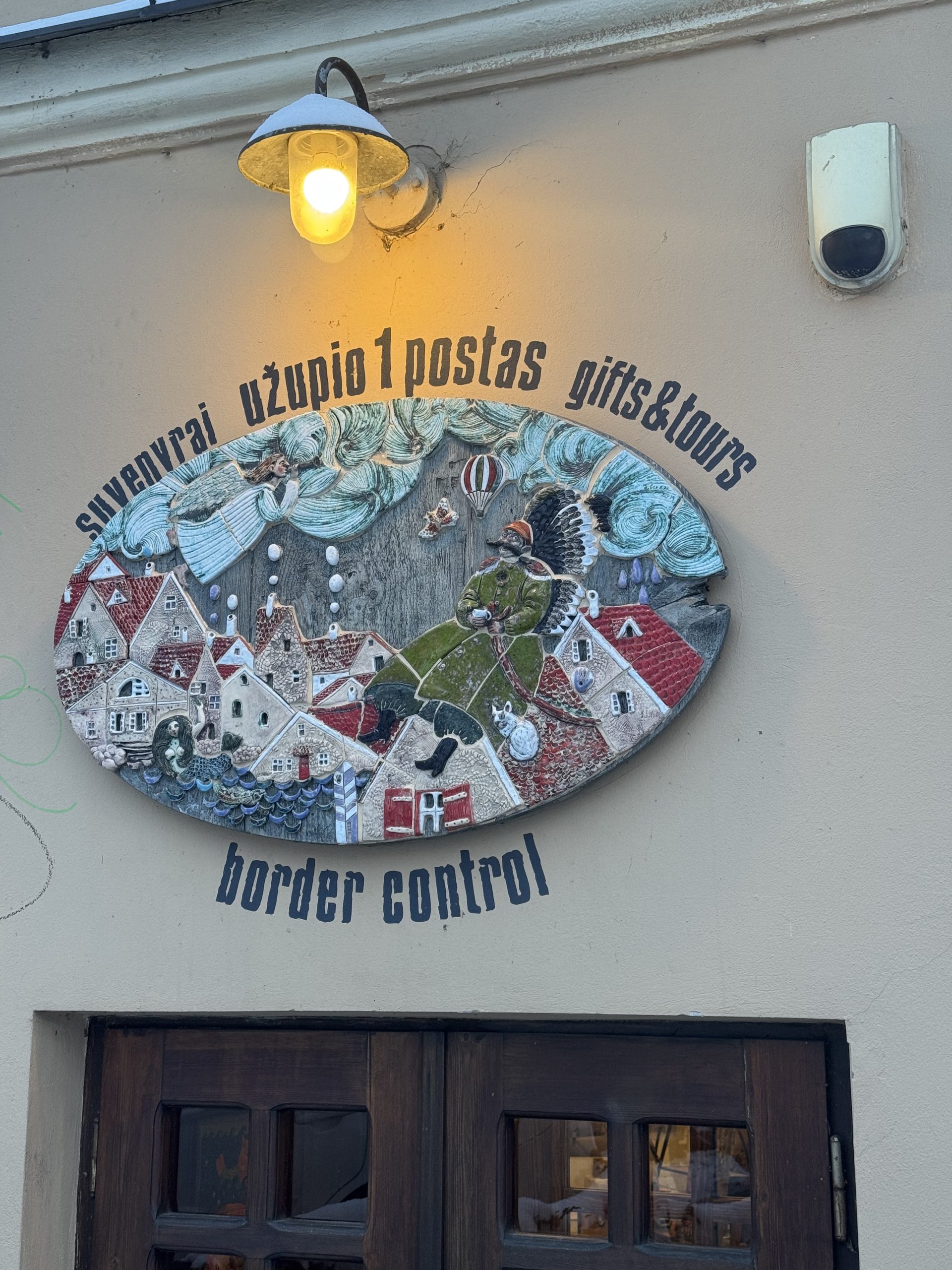
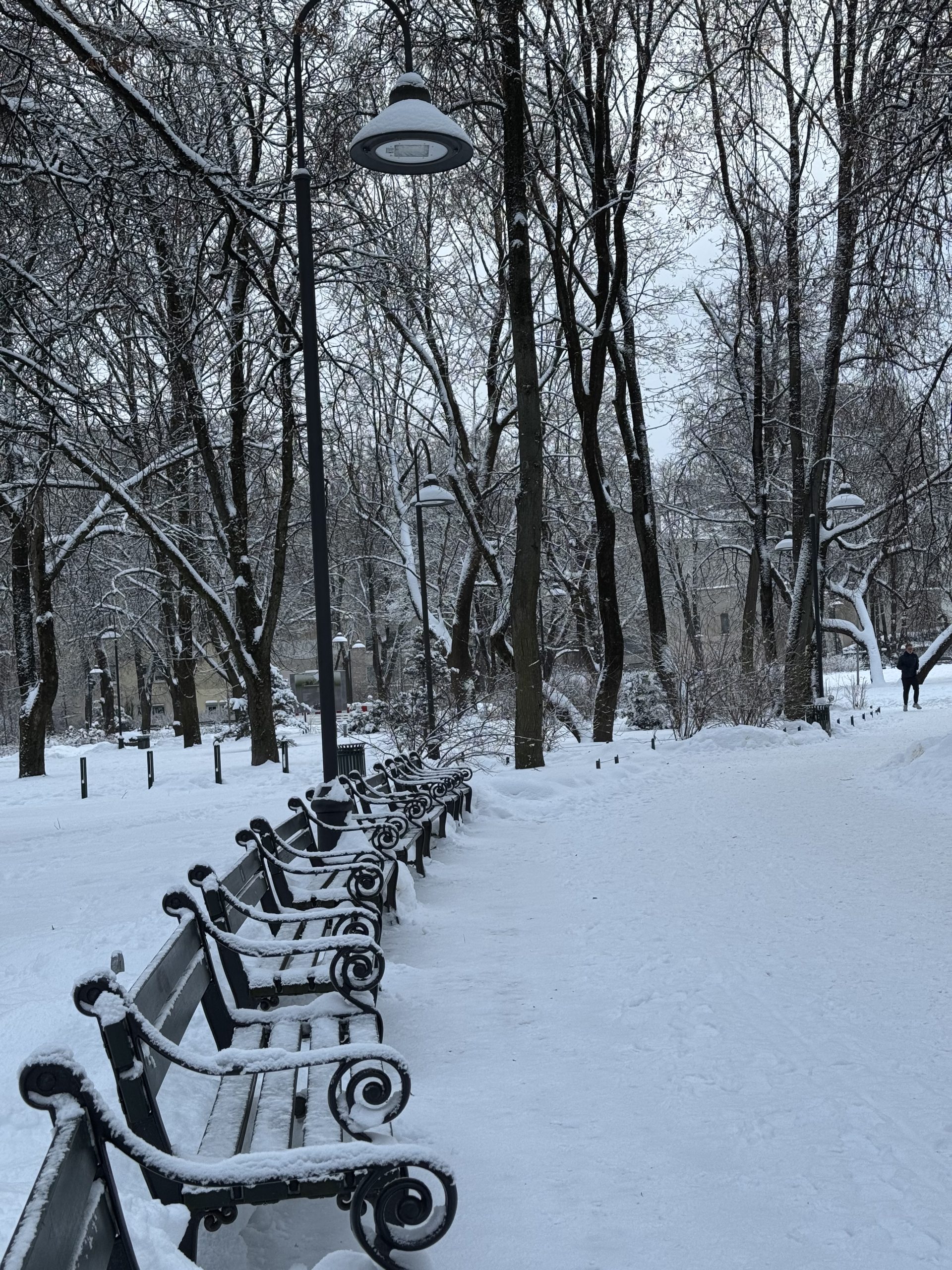
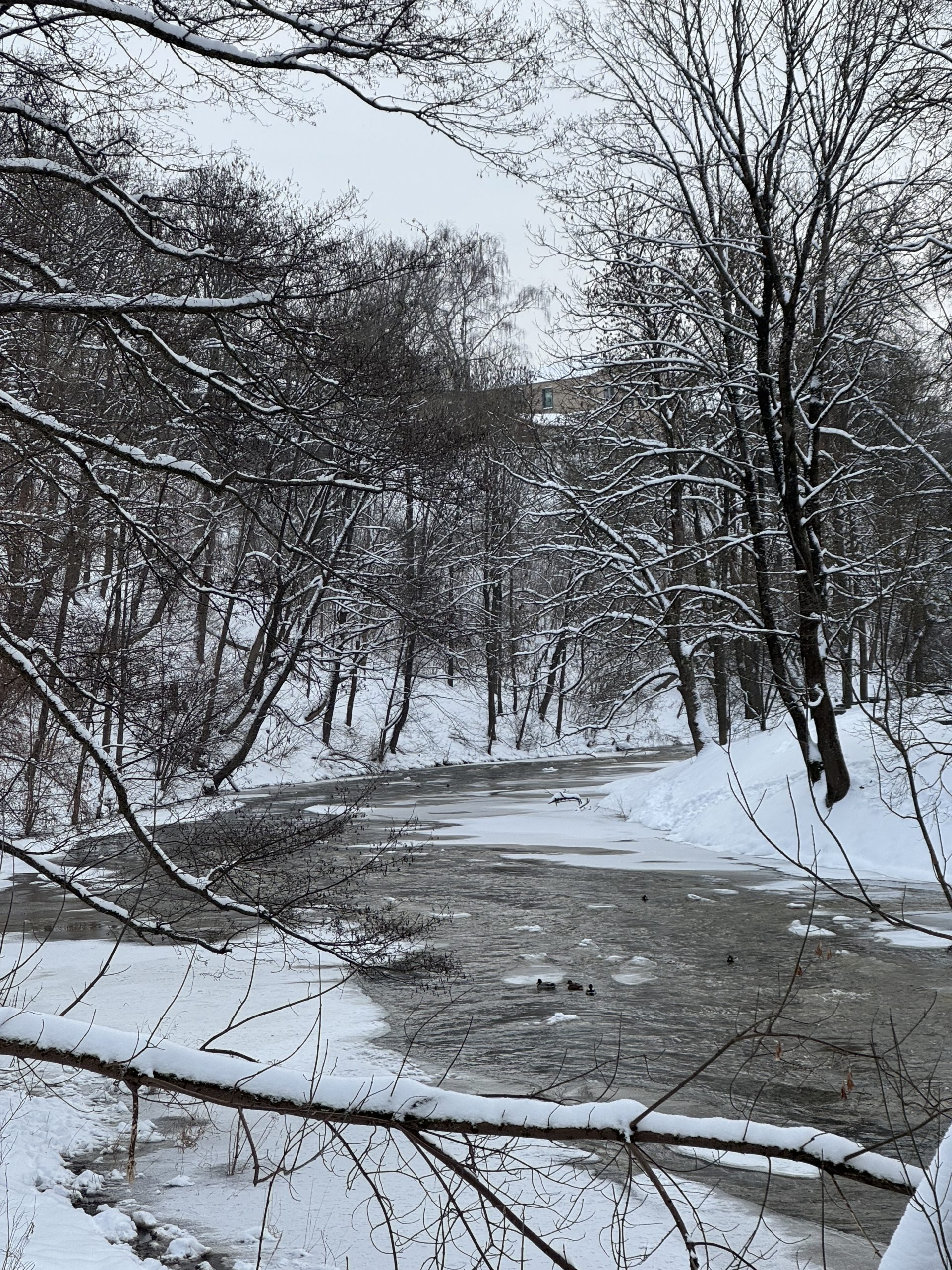
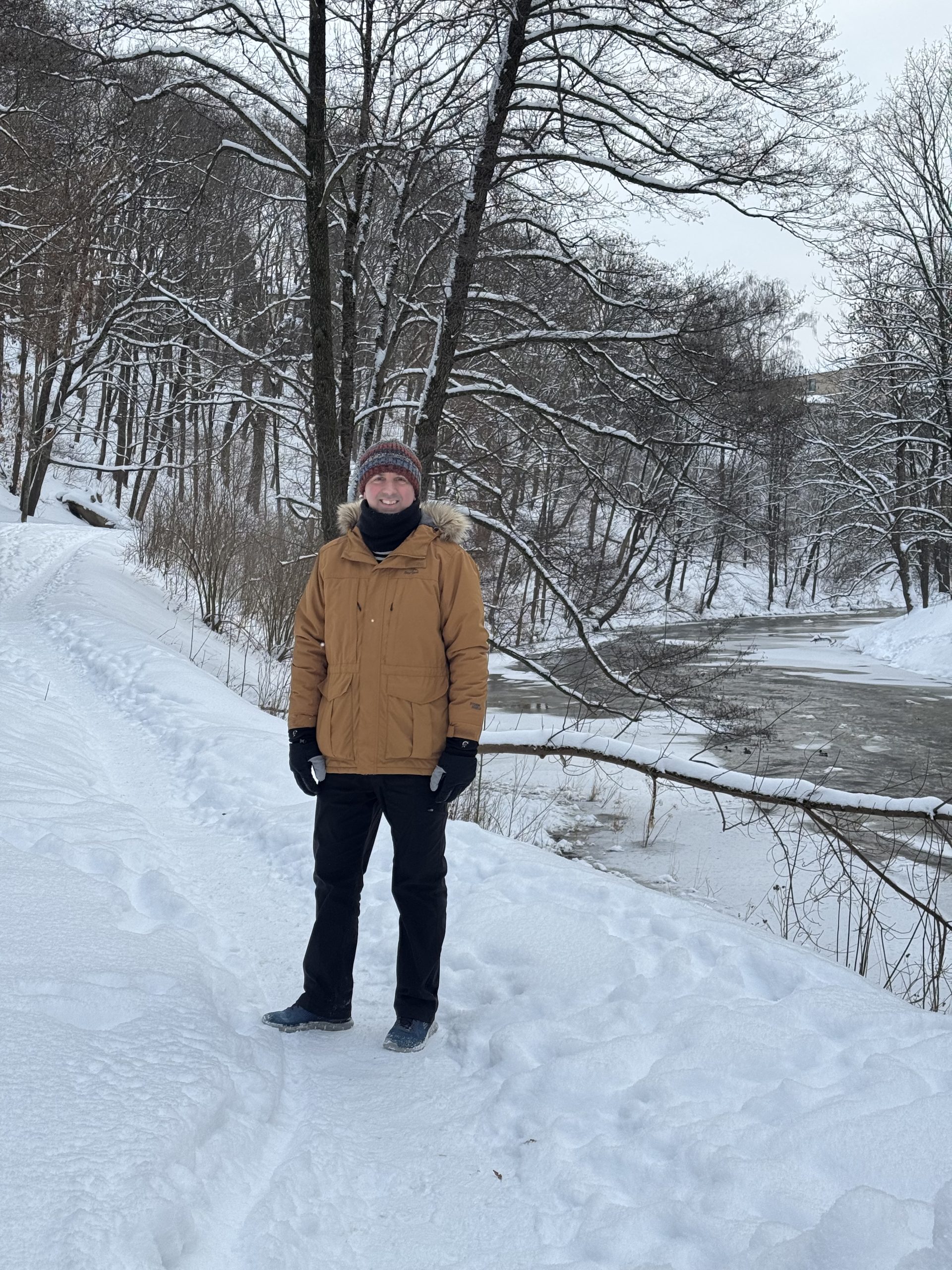
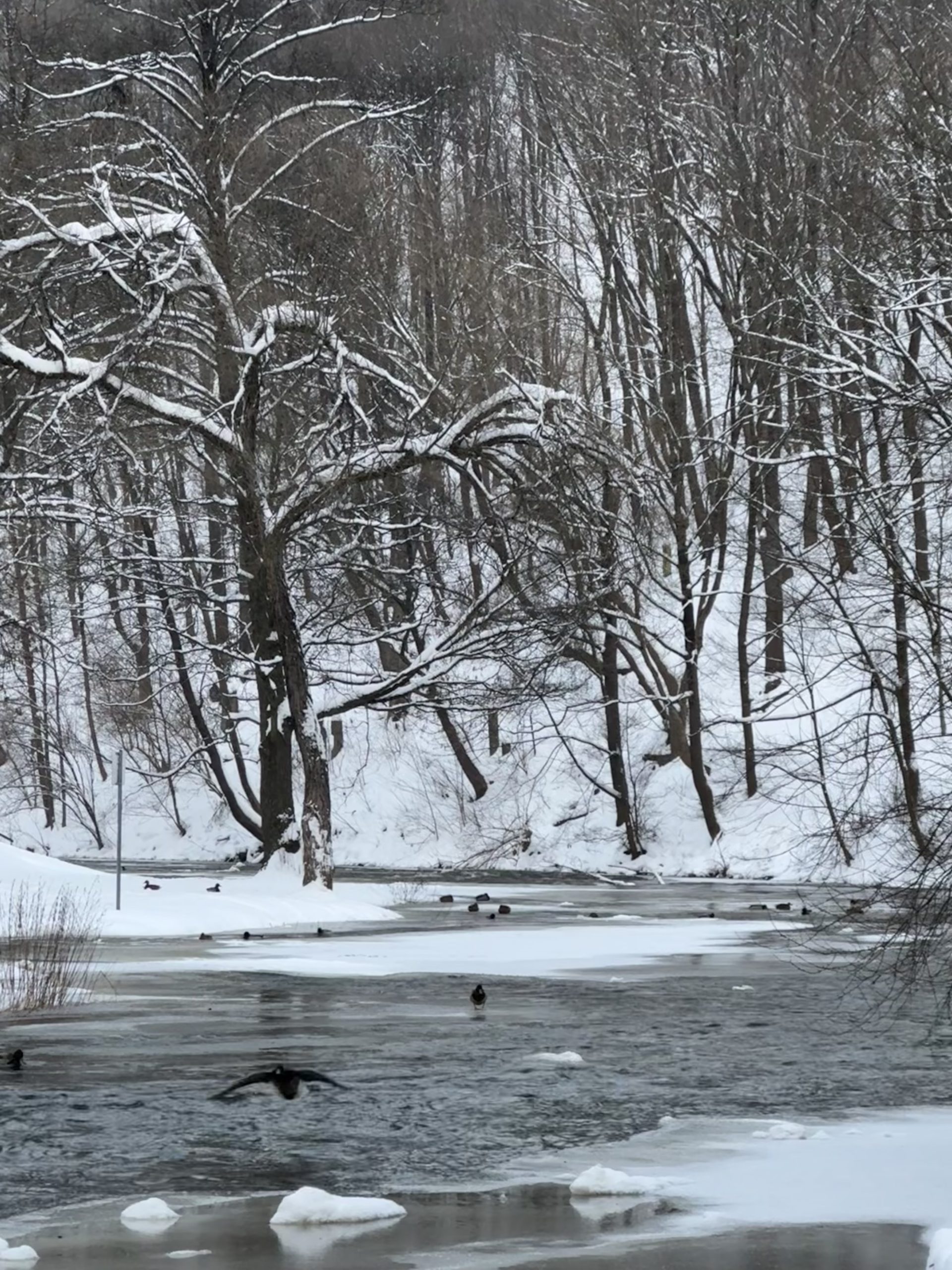
The city is full of green space (61%, according to the tourist board) with lovely snowy walks all around. After walking through Užipis, we headed up a hill to a lookout point over the city. Beautiful, well-tended paths cut in the snow, lovely trees and a great view across the city. We picked our way carefully down the zigzag staircase on the other side to the river Vilnia. White trees, patchy ice and a feeling of wild nature which was more like a mountain stream than a city centre river. Only the ducks wandering around on the ice gave it away as being more urban. Really beautiful, and such a lovely spot to find in the very centre of a city.
It should also be noted that we had not brought our life-saving YakTrax with us (pull-on city crampons which have kept us upright through most of this trip) – and we therefore made our way along a slightly treacherous river bank with a distinct lack of elegance (and at one point, full deployment of the ‘slide down on my bottom’ technique to get down an icy hill). Not what we expected in a city centre, and all the more fun for it.
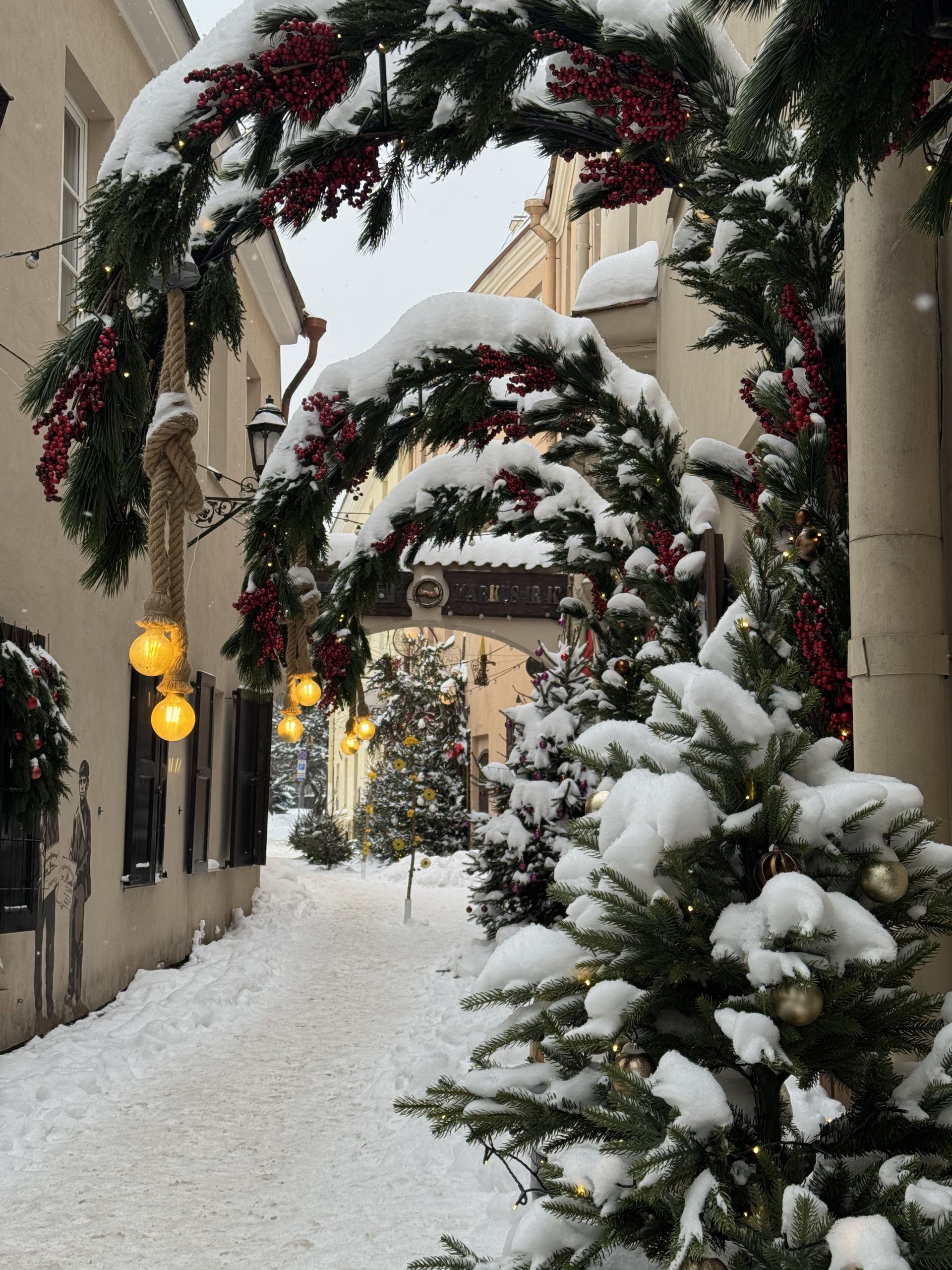
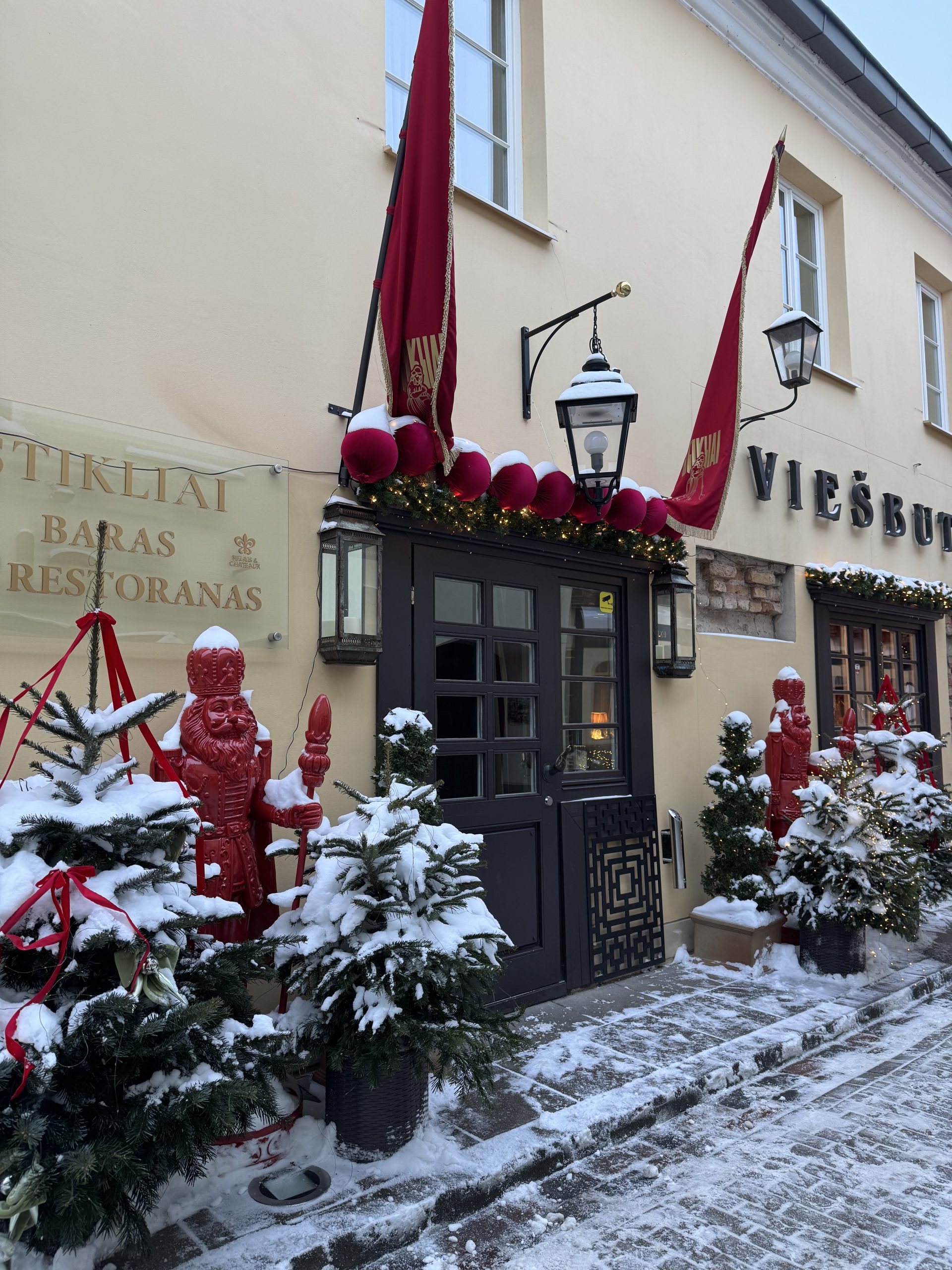
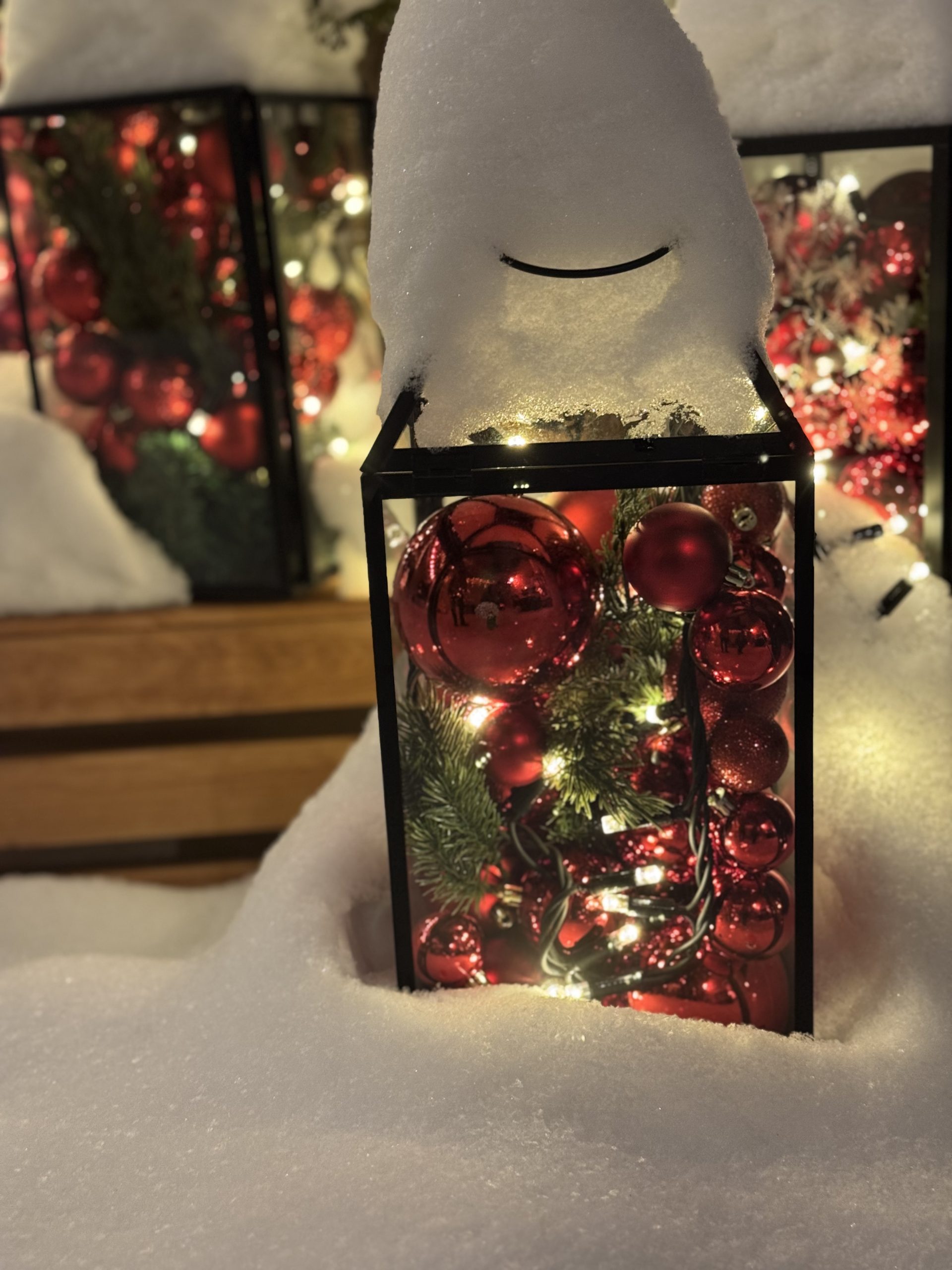
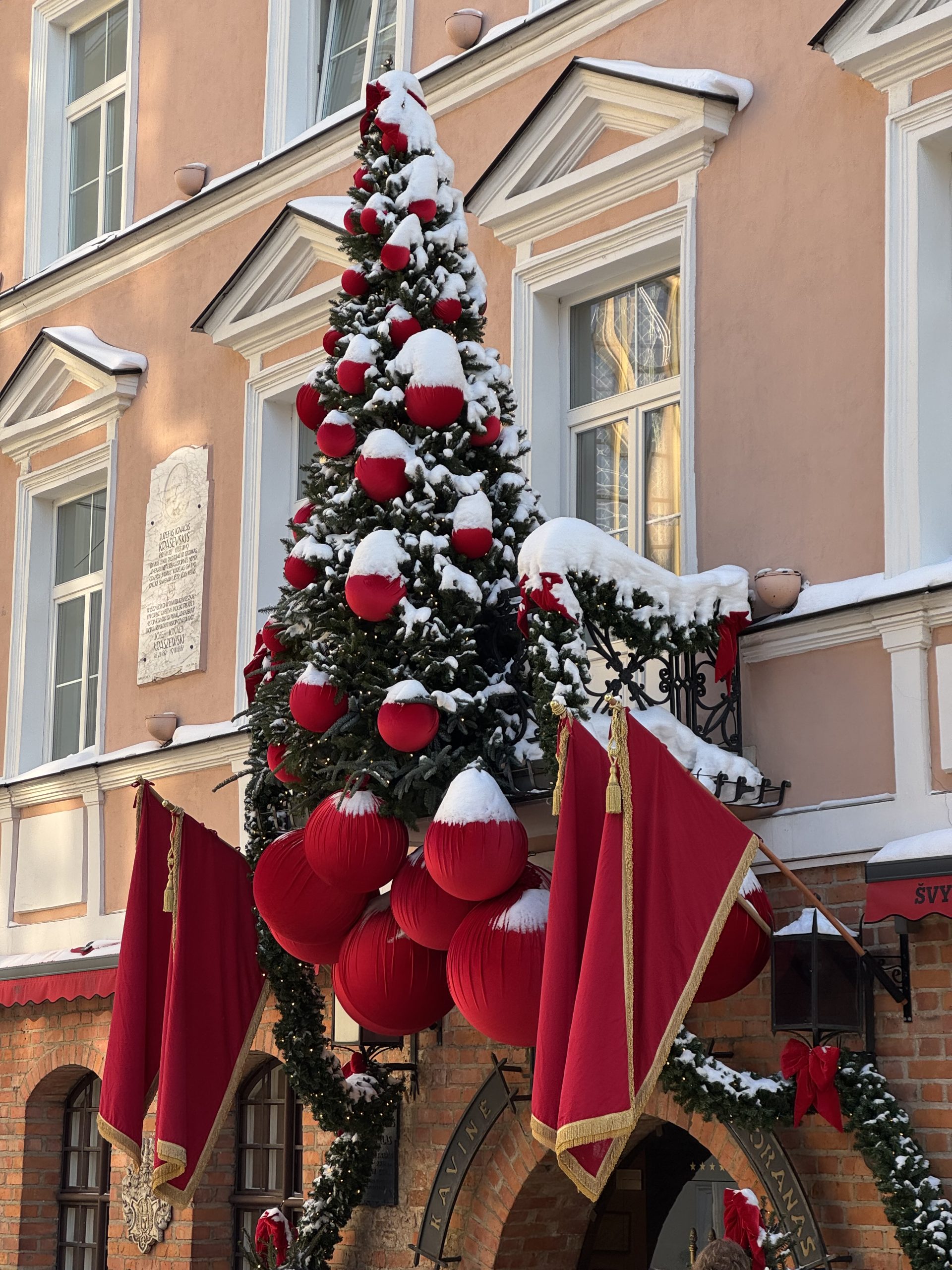
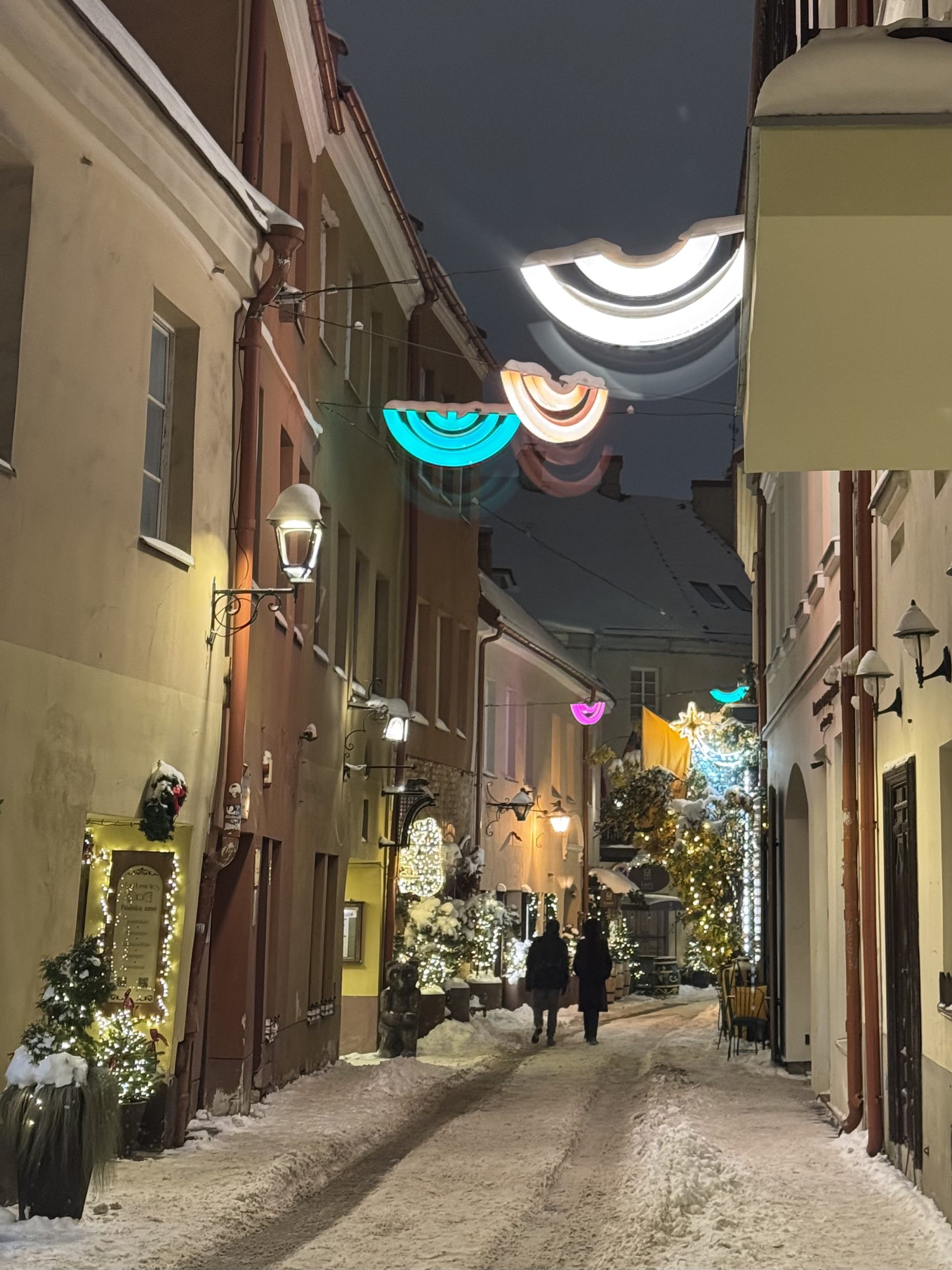
Vilnius is still in full-on Christmas mode, and looking so beautifully full of rich colour and light. Every shop and restaurant has an array of Christmas trees outside the door, many sporting deep red baubles and ribbons, lit with fairy lights and lanterns. In the narrow, winding Jewish quarter, smart boutiques and elegant bars are beautifully decorated, making it a stunning place to wander at night. Wall art alongside reminded us of the terrible history of this area and the huge devastation to Lithuania’s Jewish population during the holocaust. For all the elegance, modernity and sophistication of this city, the past is also right there, at the centre of everything, whether that’s the distant past of the churches and cathedrals of the old town, or the more recent and difficult history of the occupations and wars of the 20th century.
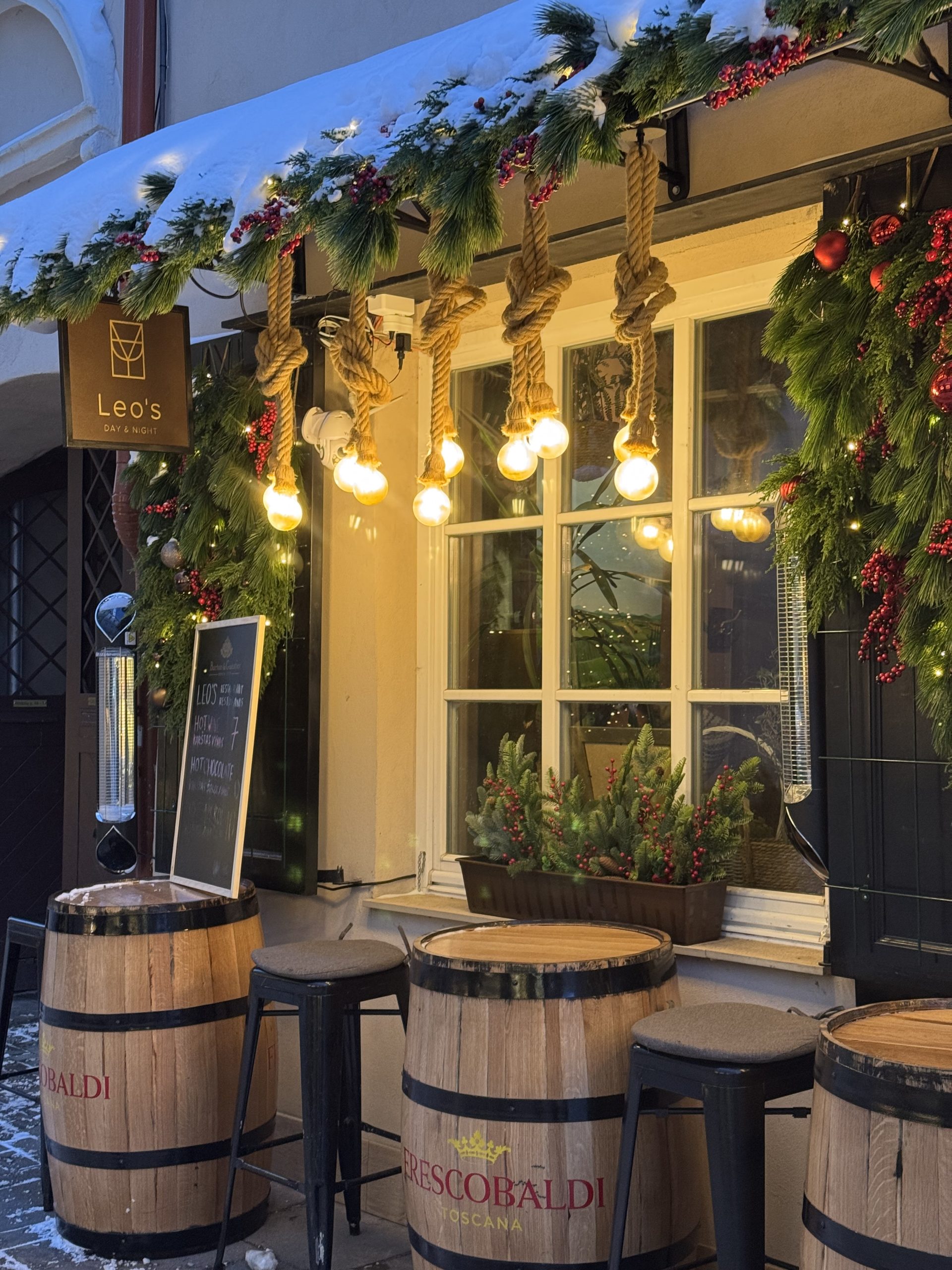
We were enjoyed Vilnius so much, we stayed for an extra night to be able to relax into its gentle, happy vibe. There’s no sense of capital city noise and hurry here in the old town. The streets are calm and quiet, cafes and bars are gentle and mellow, and it feels incredibly safe both by day and by night. Although Vilnius covers a a large area geographically, the population size is relatively small, and tourist numbers also low at this time of year, giving a sense of unhurried space.
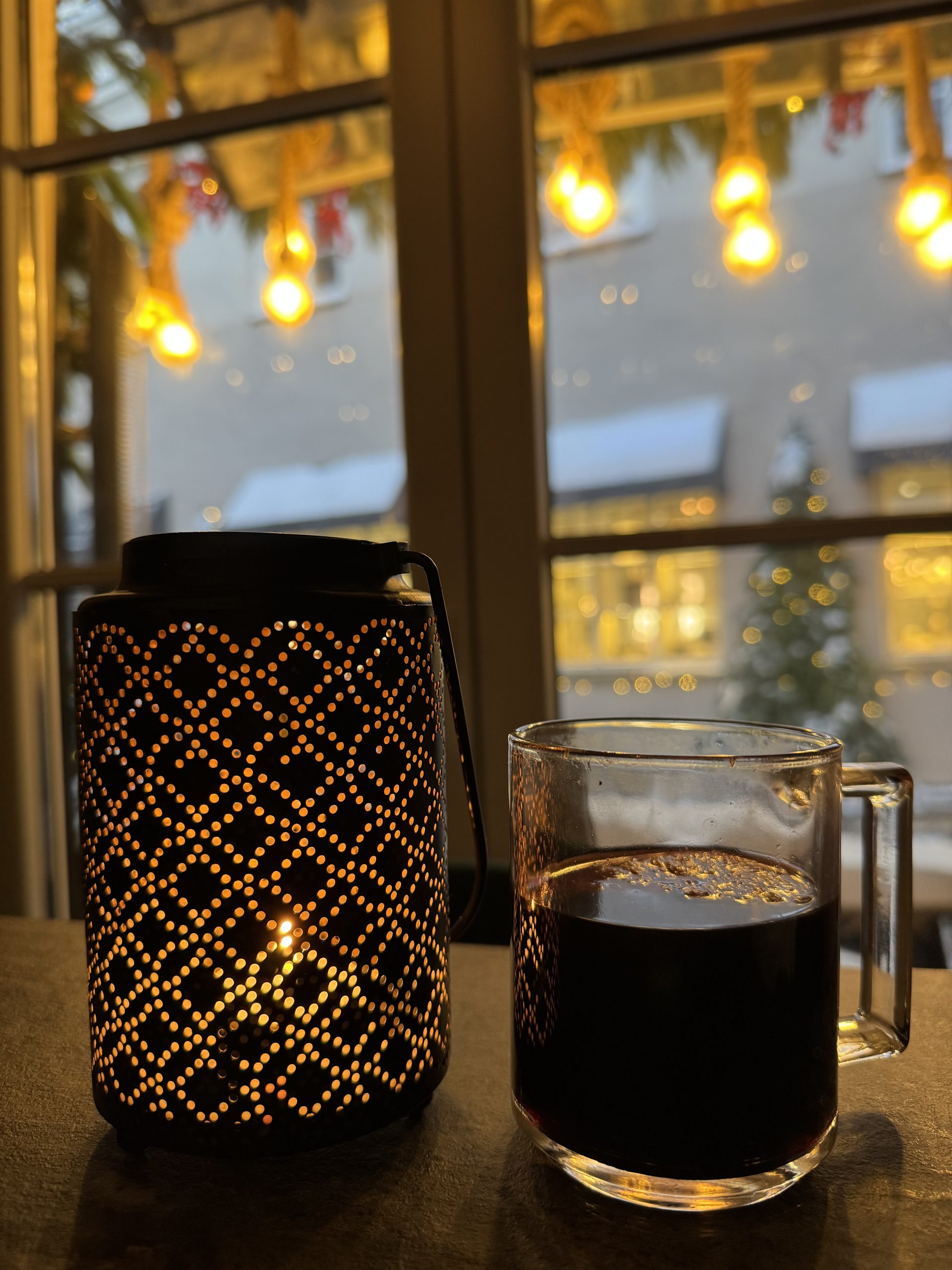
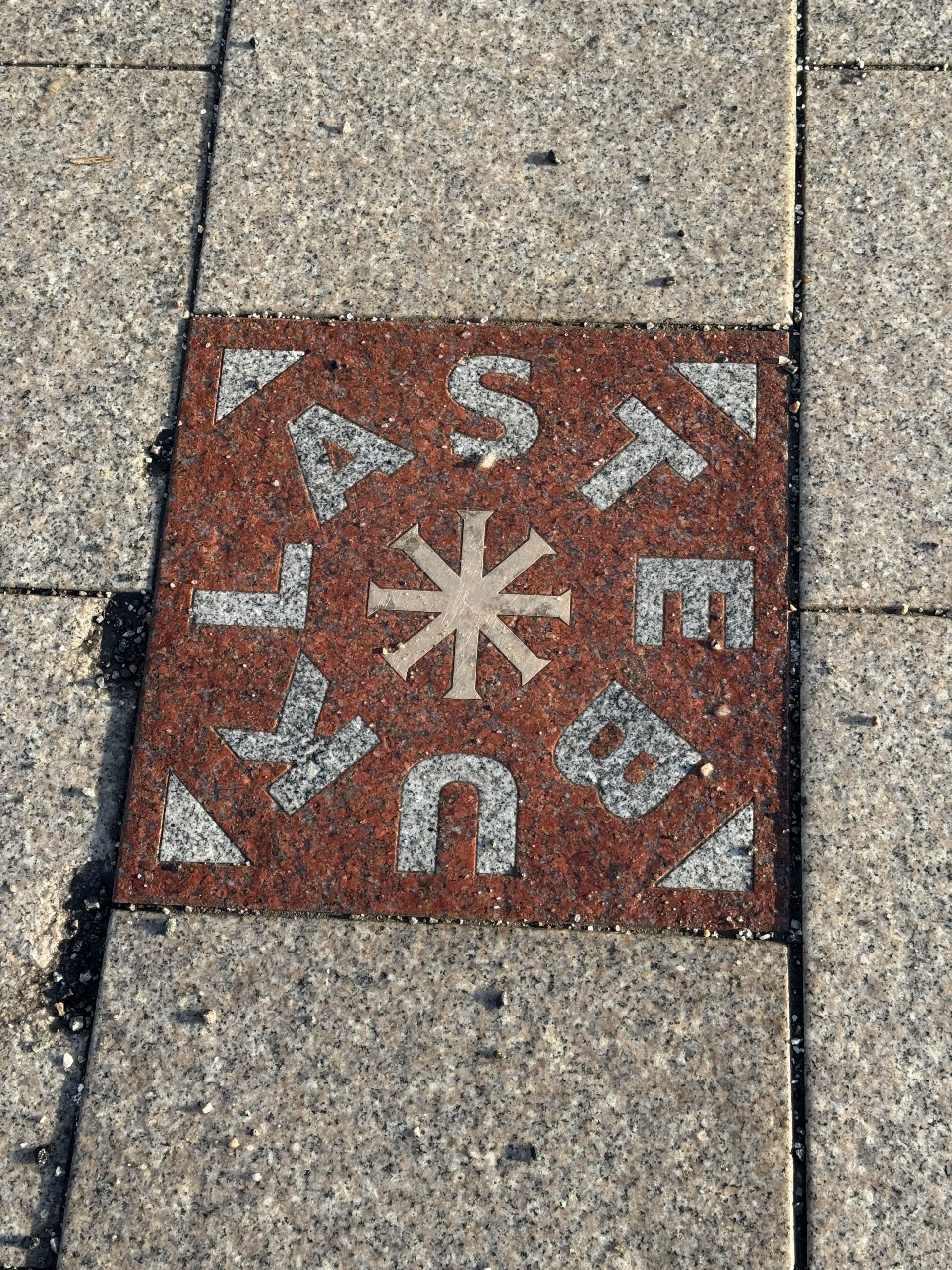
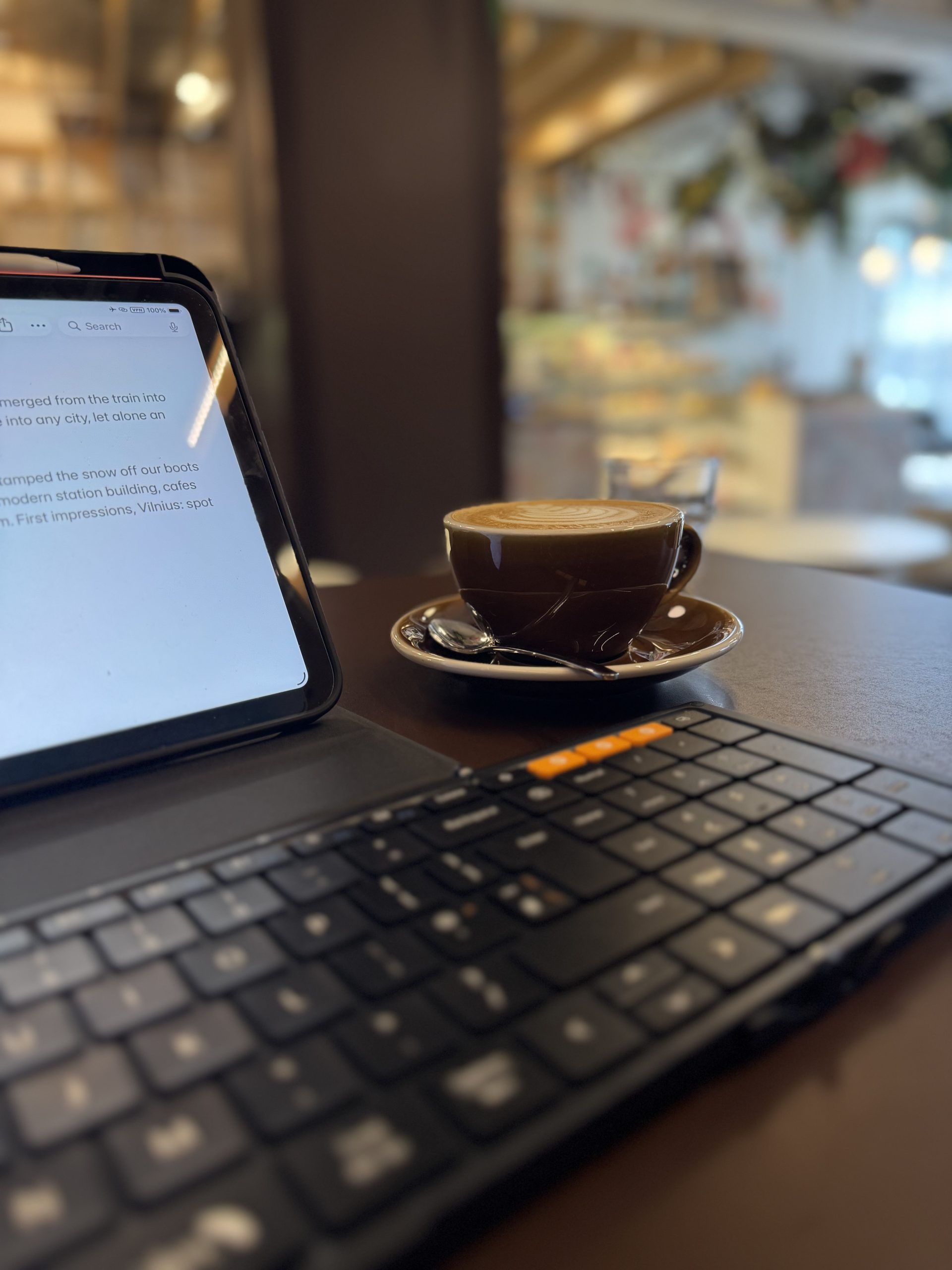
We kicked off day two back at Italala, Tim then heading out for a walk while I made the most of the lovely cafe buzz to sit and write for a while. Later we headed out together into glorious sunshine and a stunning blue sky, which was as welcome as it was short-lived. We wandered to the cathedral to find the ‘miracle stone’. Famous for its wish-granting properties, it also marked the end point in Vilnius of the Baltic Way, the human chain we saw in video at the Museum of Occupation in Riga. Incredible to think that 1.5 million people linked hands all the way from Tallinn to this point here on this lovely square in August 1989. Another reminder of the past – and of the incredible power of people to stand together.
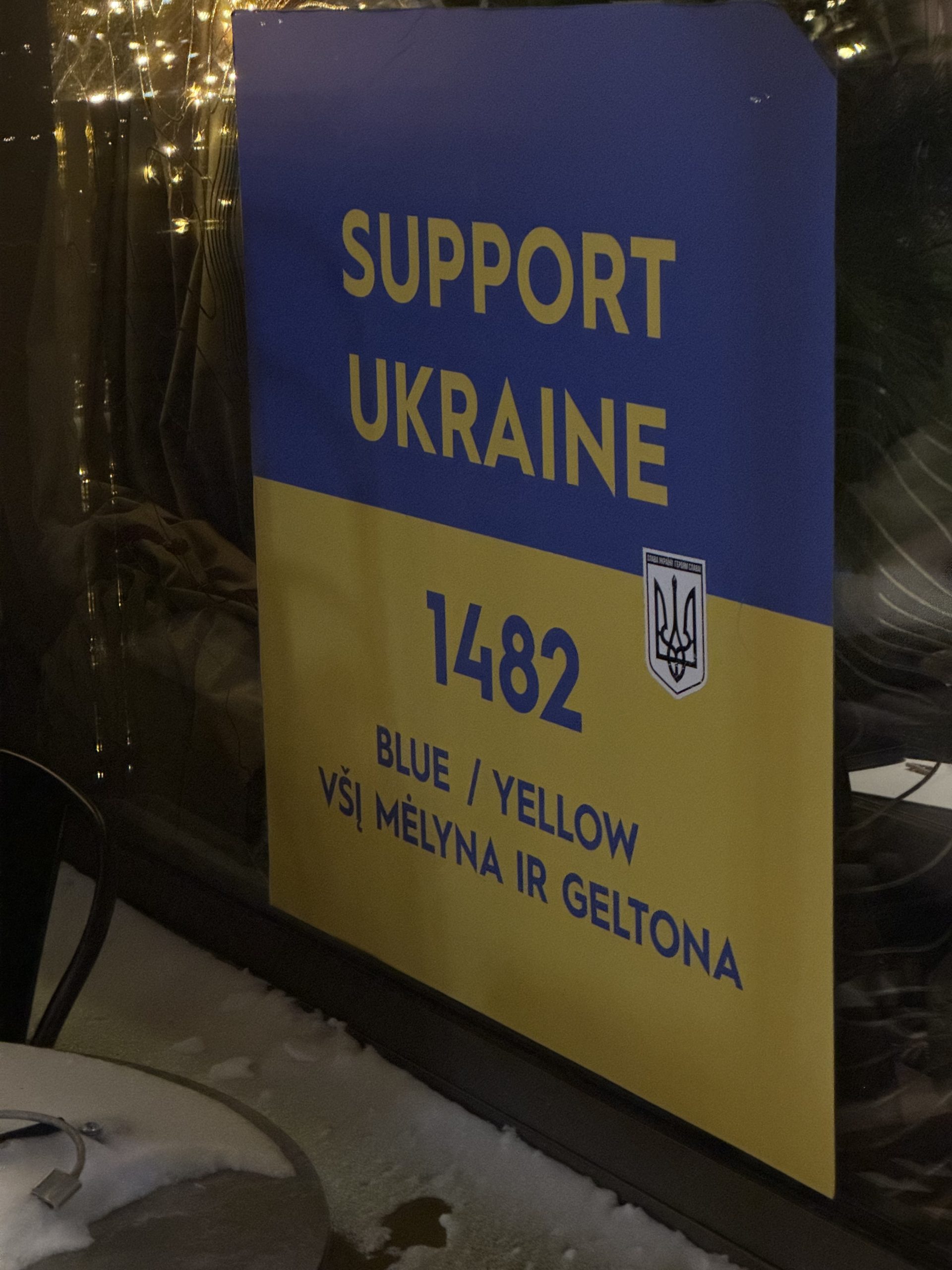
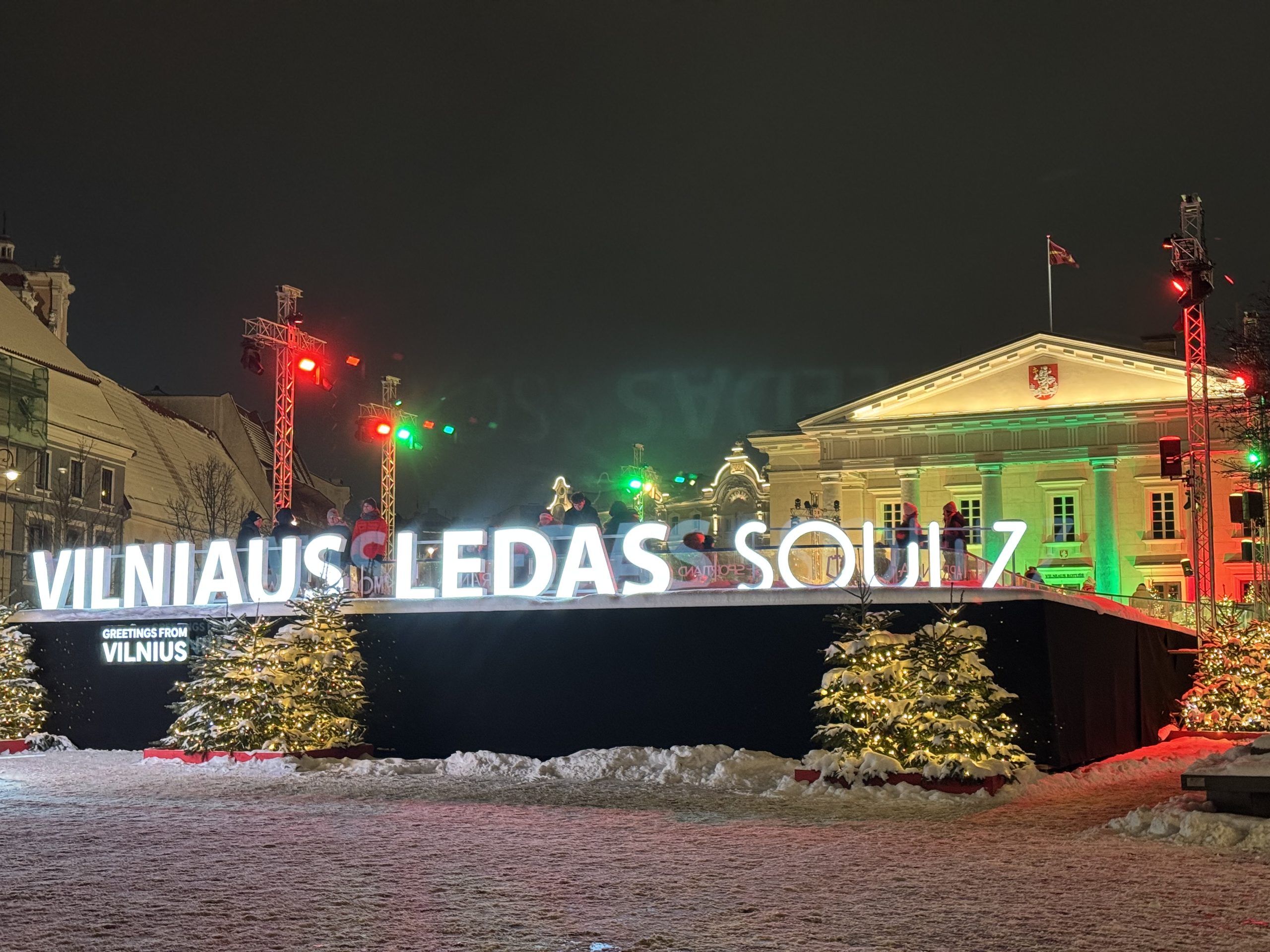
There’s a strong sense of international friendship and solidarity in Vilnius, as well as standing firm for freedom. Ukrainian flags are everywhere, flying from public buildings, sitting in counters in shops and cafes, posters in windows declaring support for Ukraine. We’ve seen this from Helsinki onwards, right the way across the Baltic states, and at its strongest here in Vilnius, closest to Ukraine both geographically and historically.
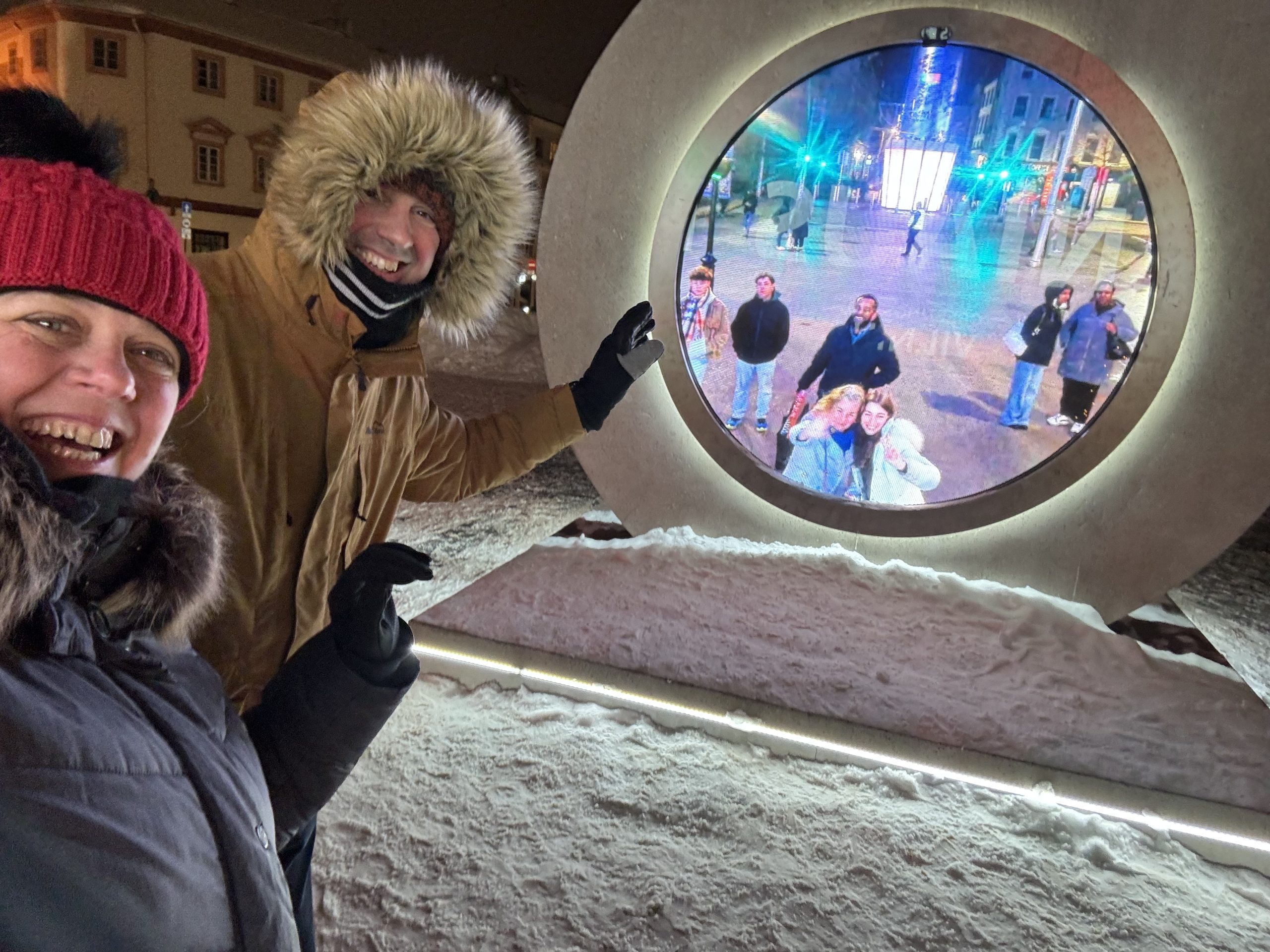
There’s also a fun link to other communities. Right on the town hall square, the ‘portal’ is a round concrete structure with a screen in the middle. The screen shows live webcam views from partner cities, who in turn are seeing Vilnius live through their ‘portals’. We loved popping by to see which city was on the screen, and had great fun waving to people in Lublin, Dublin and Ipswich while we were passing. Dublin win the award for biggest smiles and waves. Ipswich – definitely the rainiest!
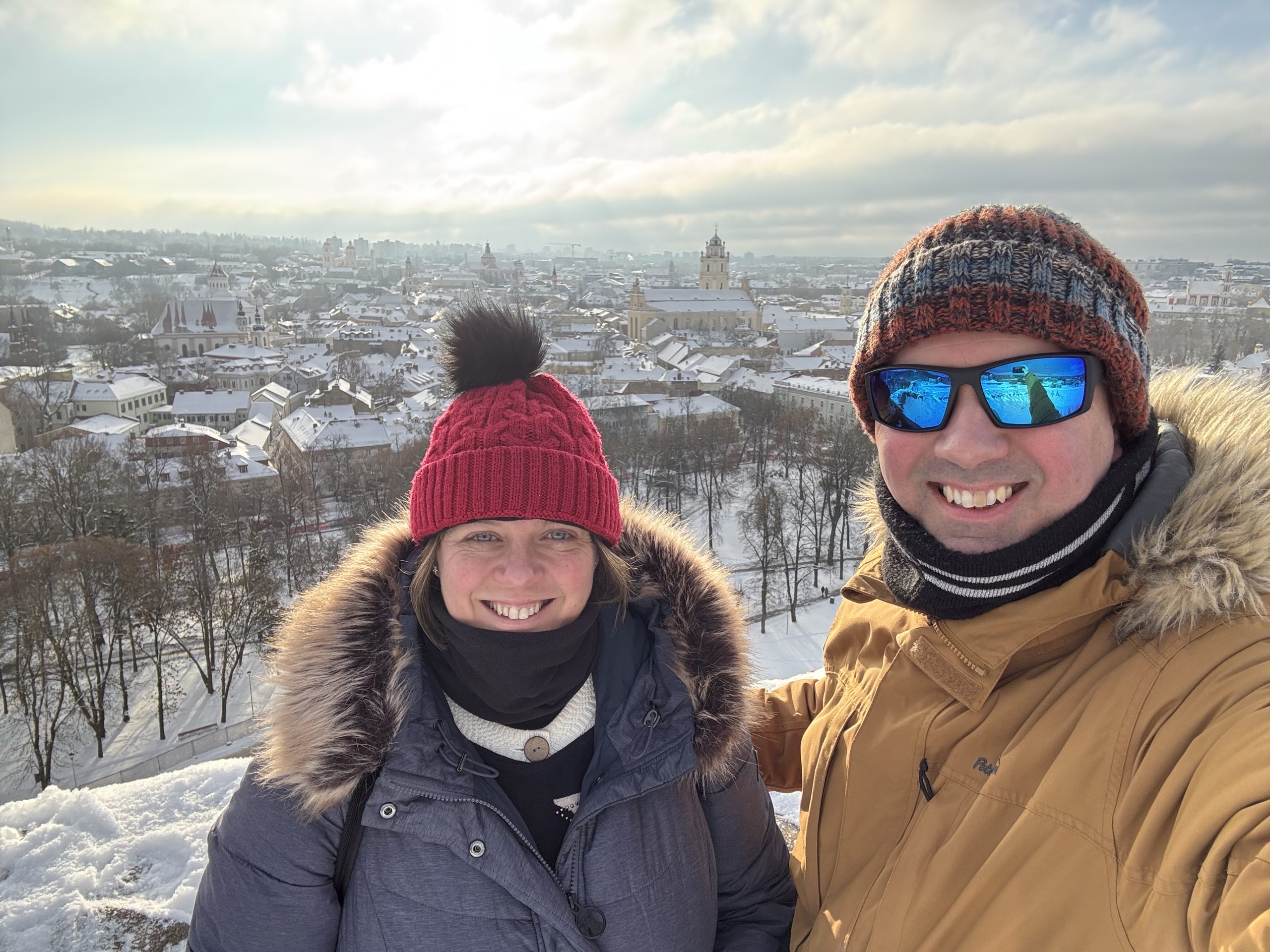
Vilnius has been a city where we’ve been happiest just walking and exploring. We climbed the hill to Gediminas tower for some lovely views over the old town and beyond to distant hills. We popped into MO for some interesting modern art – but then got back out to just wander the lovely streets and squares.
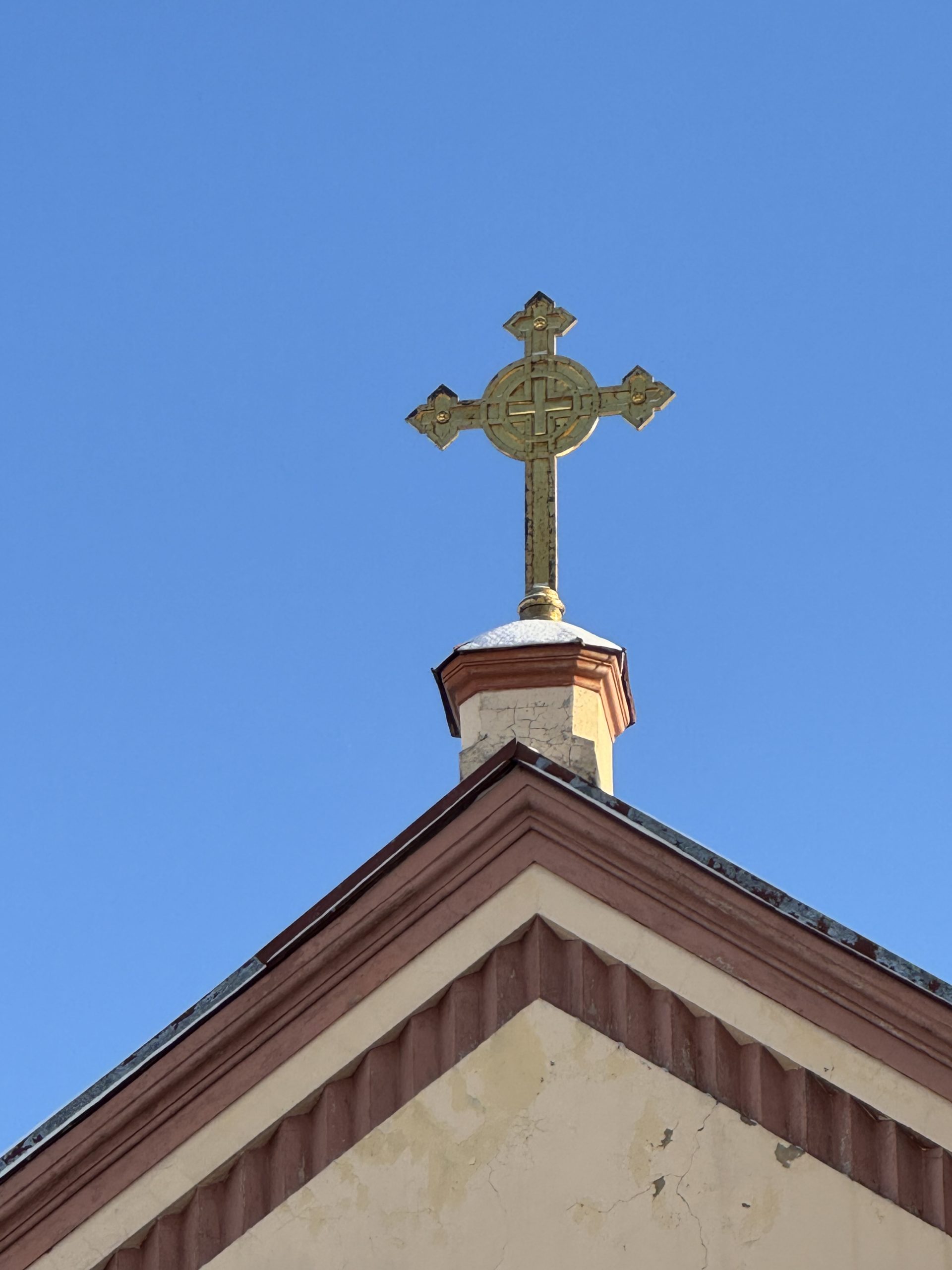
Vilnius Old Town is a UNESCO-listed World Heritage site. Also listed by UNESCO are the crosses which adorn churches here. Stunning, ornate, often decorated with stars, suns and moons, they are a lovely and distinctive feature of the Vilnius skyline, once you’ve spotted them there’s always an excuse to look skywards.
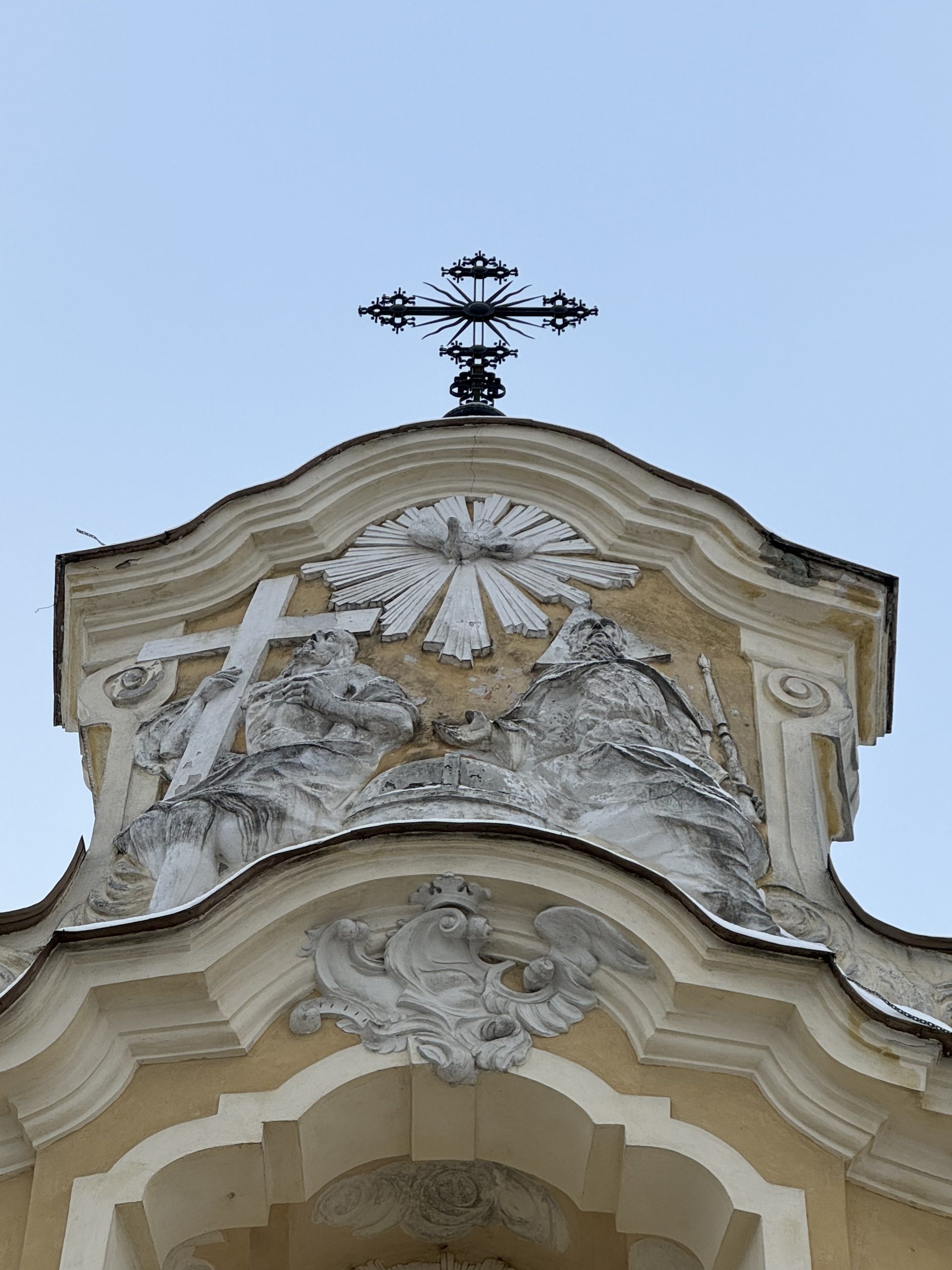
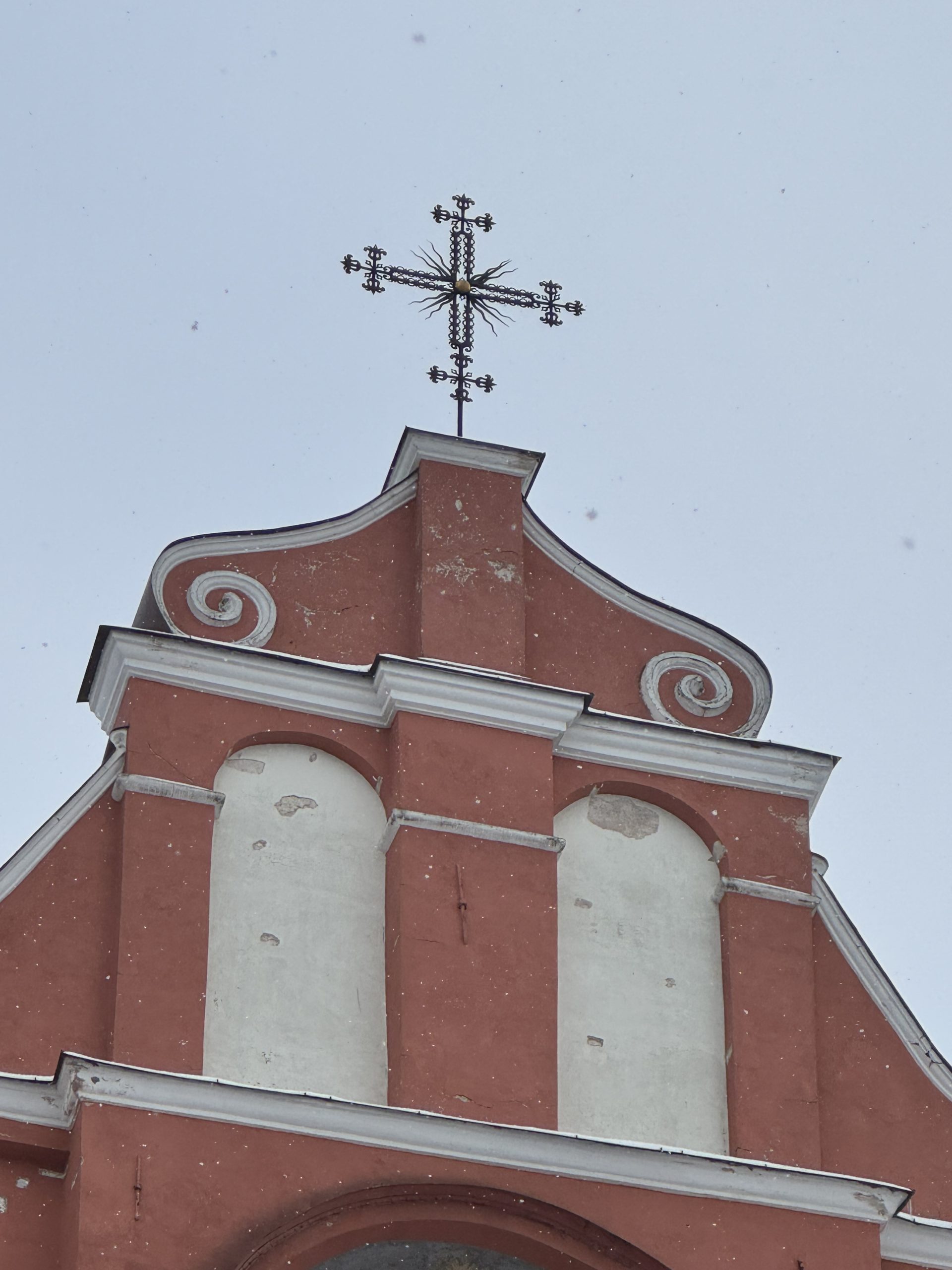
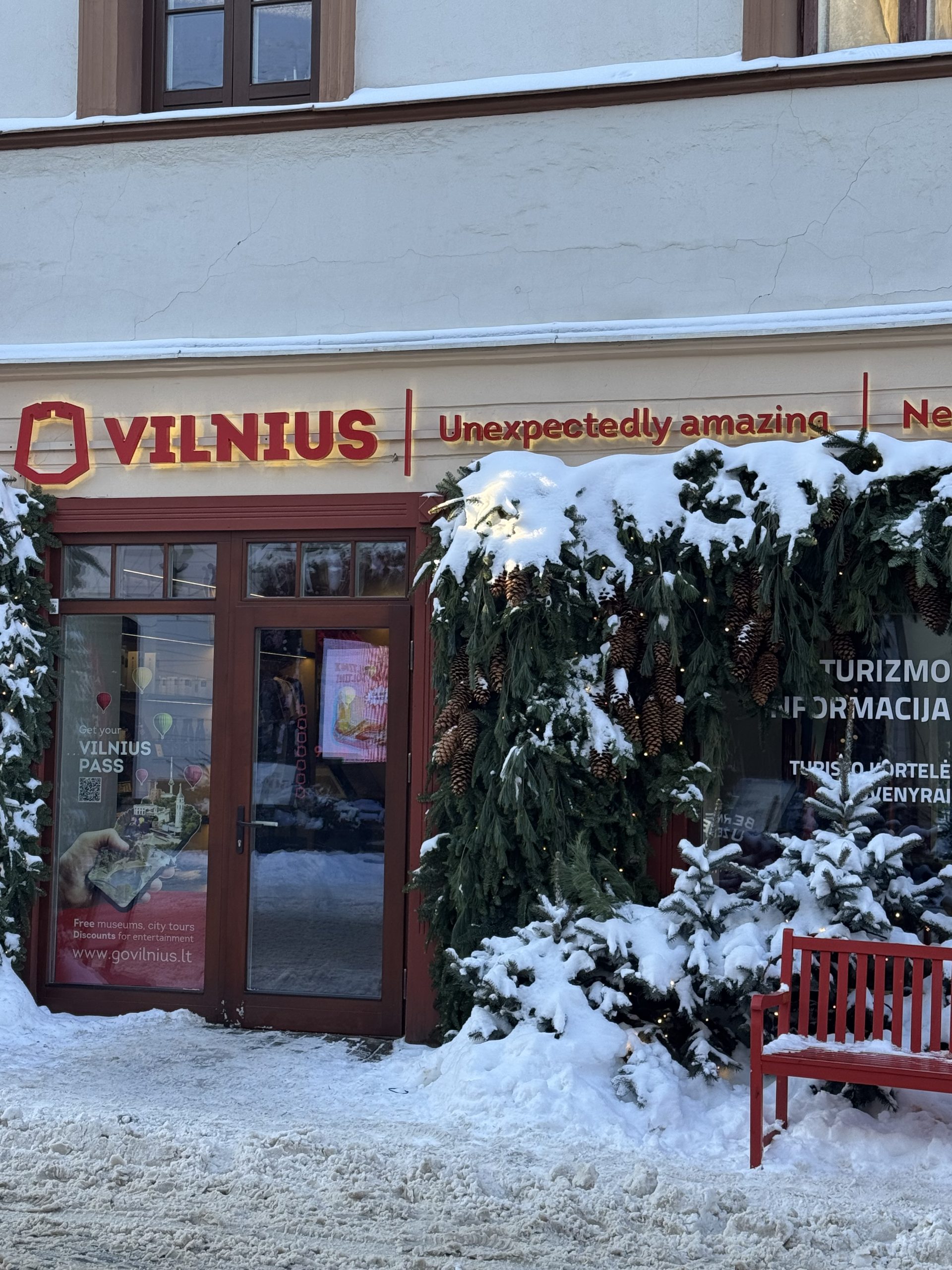
This has been one of my favourite stops on the trip – and yet one of the hardest to capture in words. Yes, it’s full of beautiful things to see, with lovely architecture and of course all the usual sights of a capital city. But the magic is in the feeling on the streets, and that’s harder to put into words. To feel immediately happy, at ease and relaxed in a city you don’t know – that’s really special. Someone at the tourist board absolutely nailed it with their slogan: ‘Vilnius. Unexpectedly Amazing’. I knew very little before we visited this pretty, mellow, green and spacious dream of a city. Having spent three lovely nights there, I’d revisit in a heartbeat.
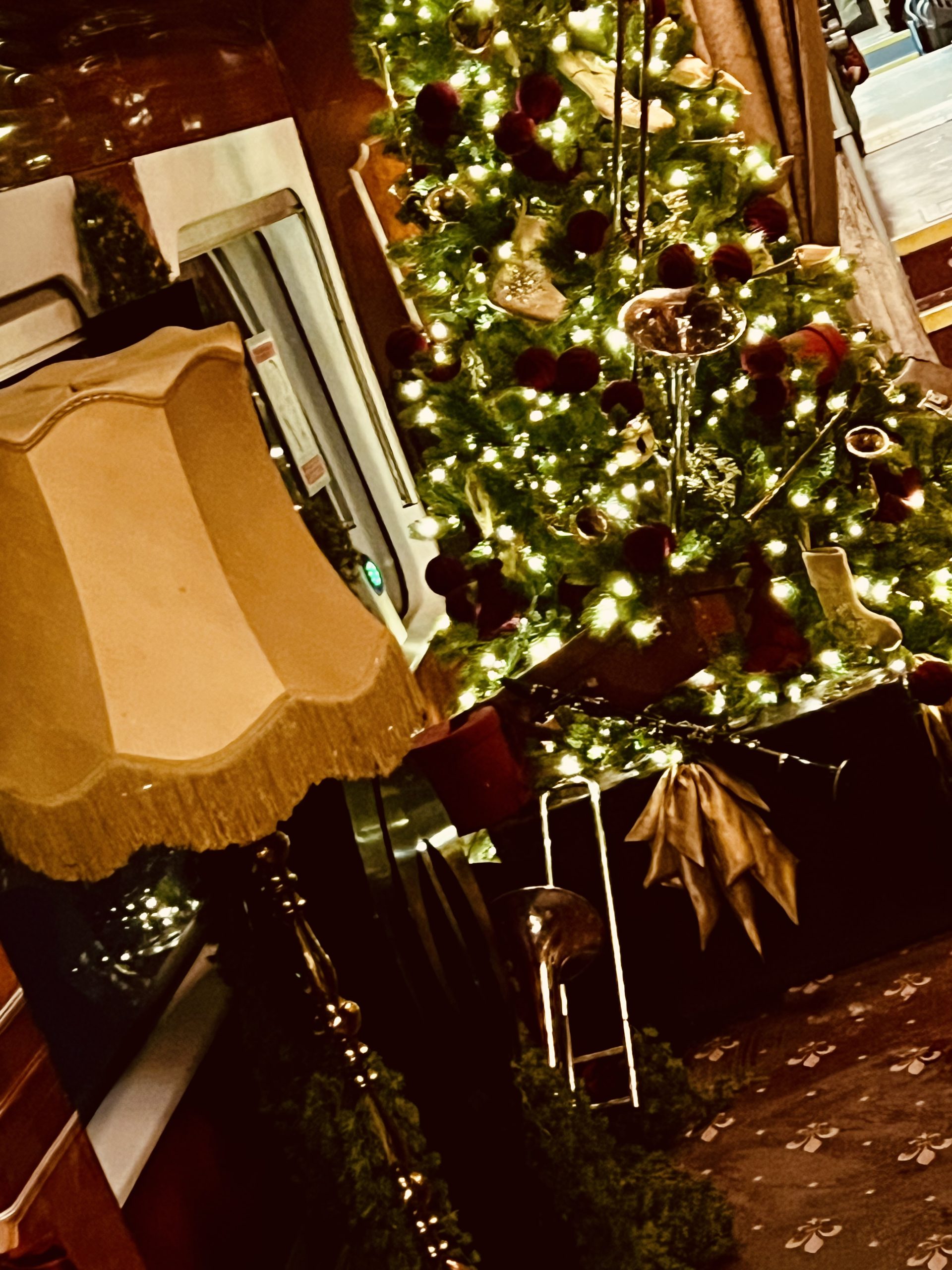
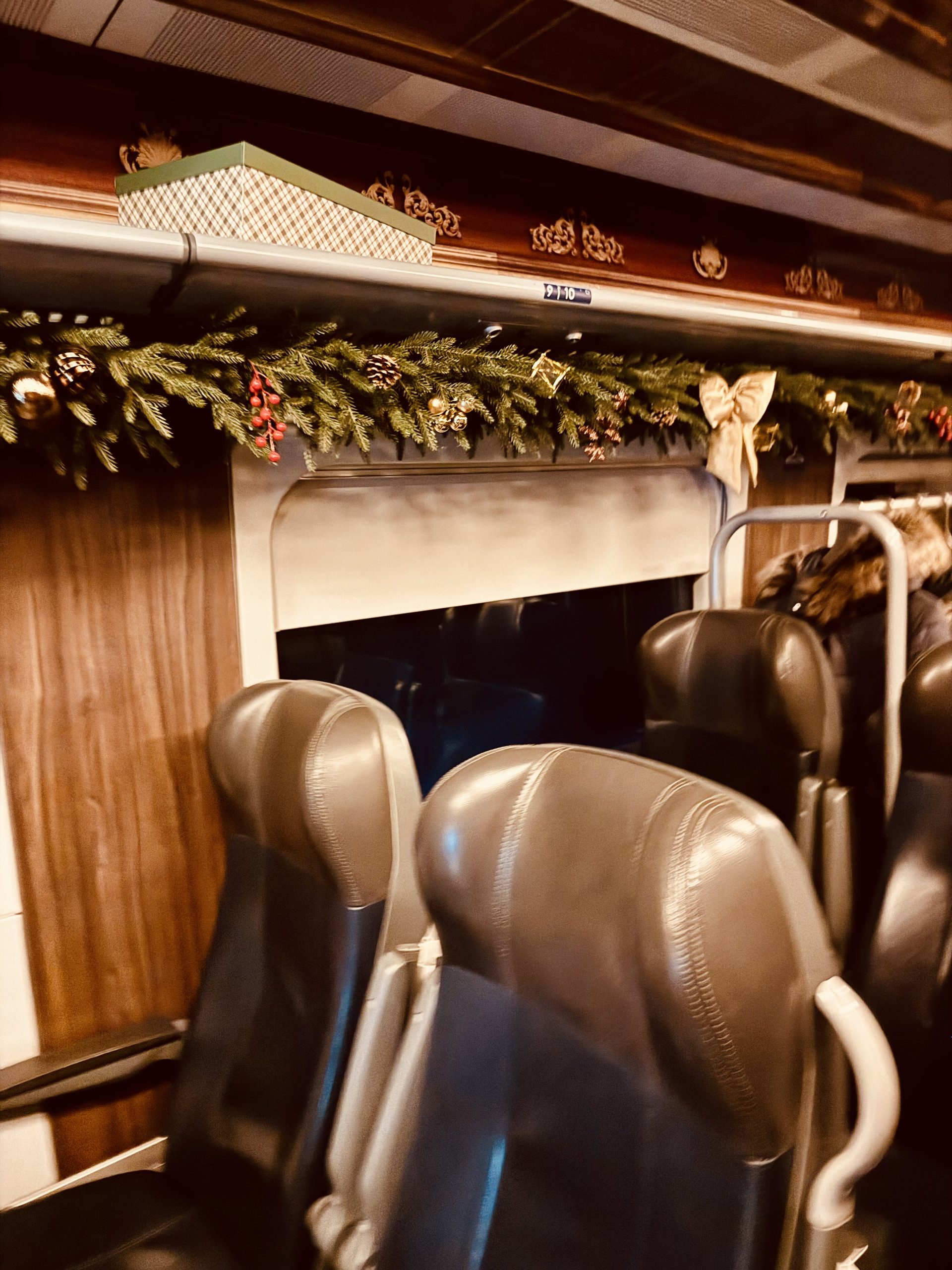
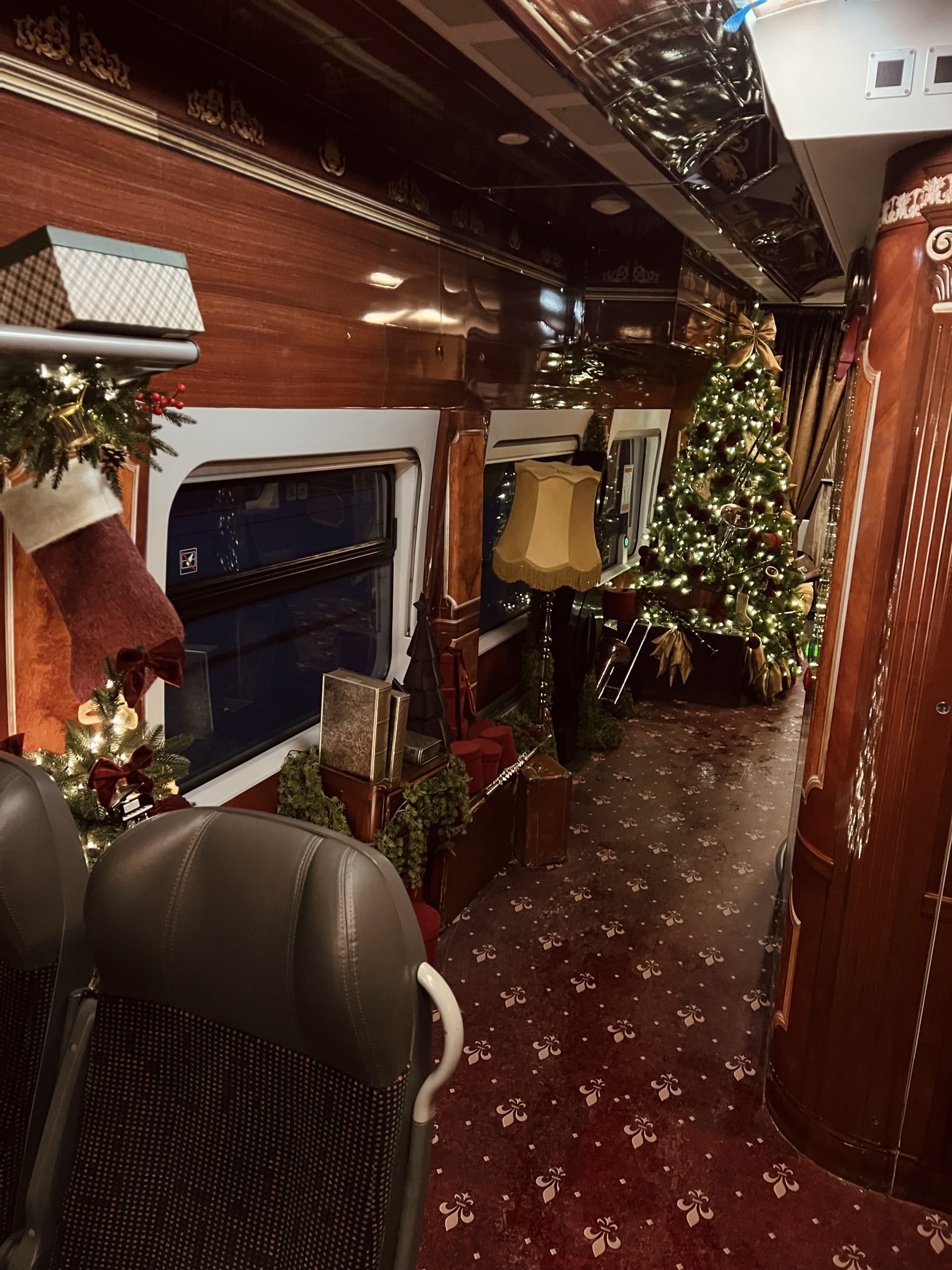
Leaving Vilnius this morning, Lithuania has given us one final, unexpected gift: a beautiful, vintage-style train. Our first class carriage has a panelled ceiling, old-style suitcases decorating the racks and a stunning Christmas garland strung throughout. Further down the train, there are two perfectly decorated Christmas trees in the vestibule. Lithuanian trains are fabulous: the train manager introduces the team by name at the start of the journey, the tea and coffee is good, the trains clean and calm. Thanks, Lithuania – next time, I’ll explore more of this lovely country.
Leaving Vilnius marks the end of our Baltic adventure. We’ve spent a week travelling across the three Baltic states; enough time to get a flavour of these lovely, diverse yet linked nations. It’s a fabulous part of Europe: welcoming, beautiful, individual and interesting, each country with such a strong sense of identity and pride. I’d highly recommend this part of the trip to anyone wanting to explore somewhere new (and in a few years time, the Baltic Express route will slash the train travel time and make it even easier).
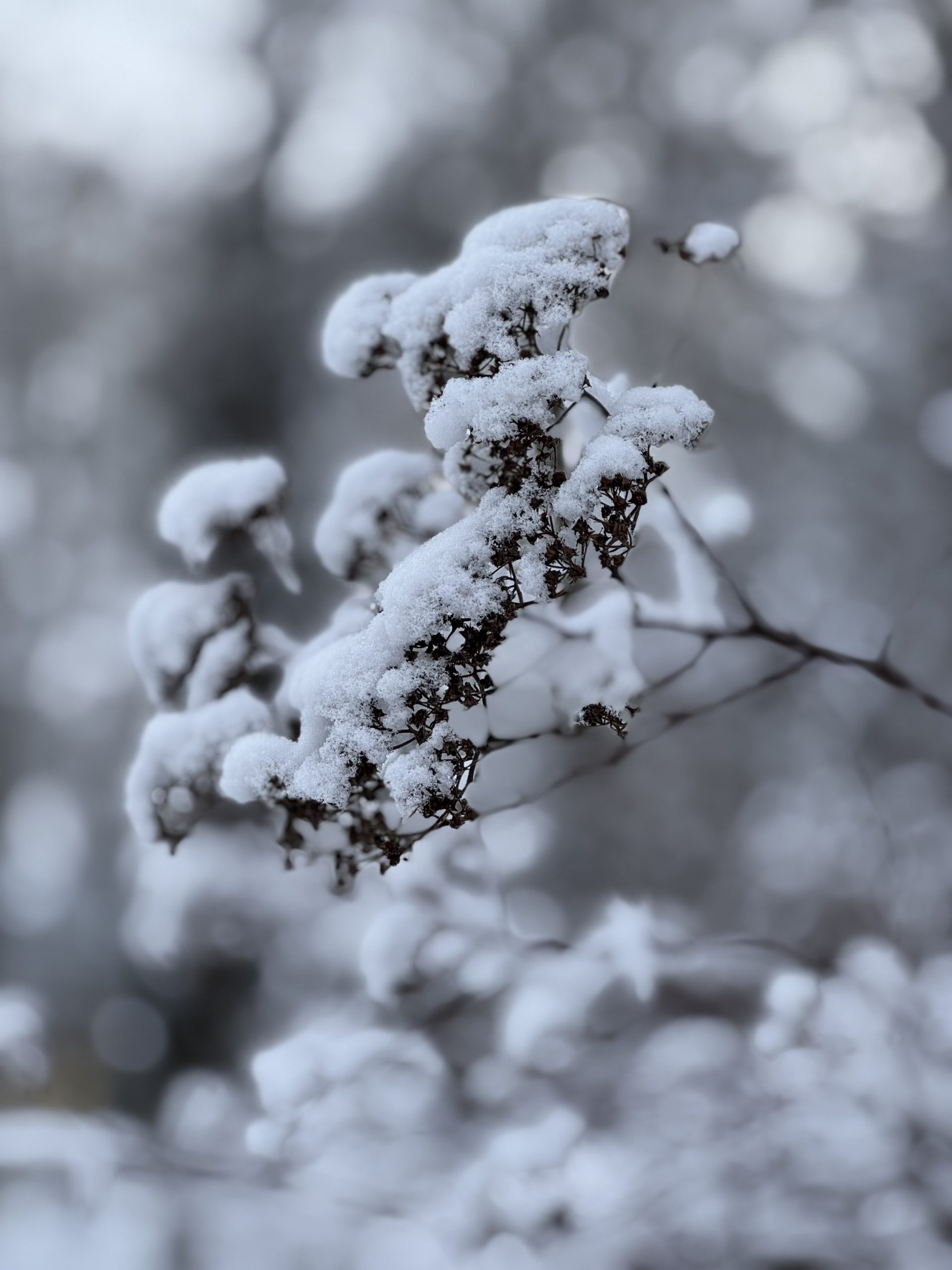
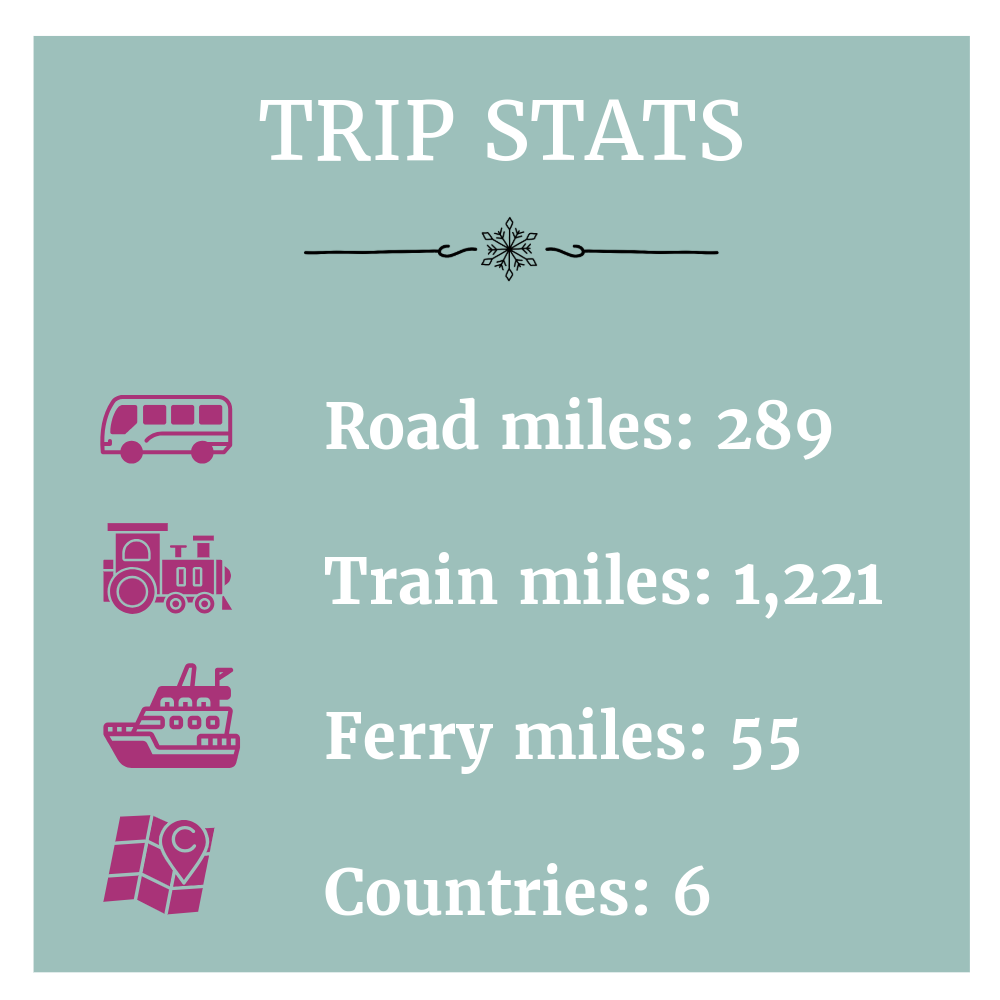
Today probably also marks the end of cold, snowy winter, as we wave goodbye to -16°c in Vilnius to take a long (12-hour) train journey south through Poland. It’s hard to imagine not walking out into the crisp air of snow each morning. I’ll miss the wonderful light it brings, the way snow turns the most ordinary view into something magical. The sense of hush that descends on a city when snow is falling. The crunch of snow under my boots, the now-routine of stamping the snow off shoes before entering a building, brushing it from your hood and hat. The jeopardy of placing your feet – ice, or snow? – and strange satisfaction in learning how to walk efficiently in everything from ice-rink slush to deep crispy snow. The sound of snow shovels on steps, the mini snow ploughs at constant work keeping the pavements clear. The feel of snowflakes on my eyelashes and the sight of them dancing and swirling gently in front of city lights.
We’ve been in the grip of deep winter for two and a half weeks now and it’s been magical. It’s given me a lasting sense of the beauty and patterns of true winter, which I’ll hold close for a long time.